1. Ambient Light Interference and Signal-to-Noise Ratio
Infrared photoelectric sensors rely on detecting modulated infrared light, but ambient sources like sunlight, incandescent lamps, or other IR emitters can introduce significant noise. The primary challenge is designing receivers with high rejection of background radiation while maintaining sensitivity to the intended signal. Engineers often employ optical bandpass filters, synchronous demodulation, and advanced pulse-coding techniques to differentiate the signal from noise. However, in high-ambient-light environments (e.g., outdoor automation), the dynamic range of the photodiode and amplifier must be carefully managed to avoid saturation, which degrades detection accuracy.
2. Optical Path Contamination and Lens Fogging
In industrial settings, dust, oil mist, water droplets, and chemical vapors can accumulate on the sensor’s lens or emitter window, attenuating the infrared beam. This leads to false triggers or missed detections. The challenge is twofold: first, selecting housing materials and seal designs (e.g., IP67 or higher ratings) to prevent ingress; second, implementing self-cleaning mechanisms or anti-fog coatings. Engineers must also account for gradual signal degradation over time, requiring adaptive threshold algorithms that recalibrate based on long-term signal strength trends.
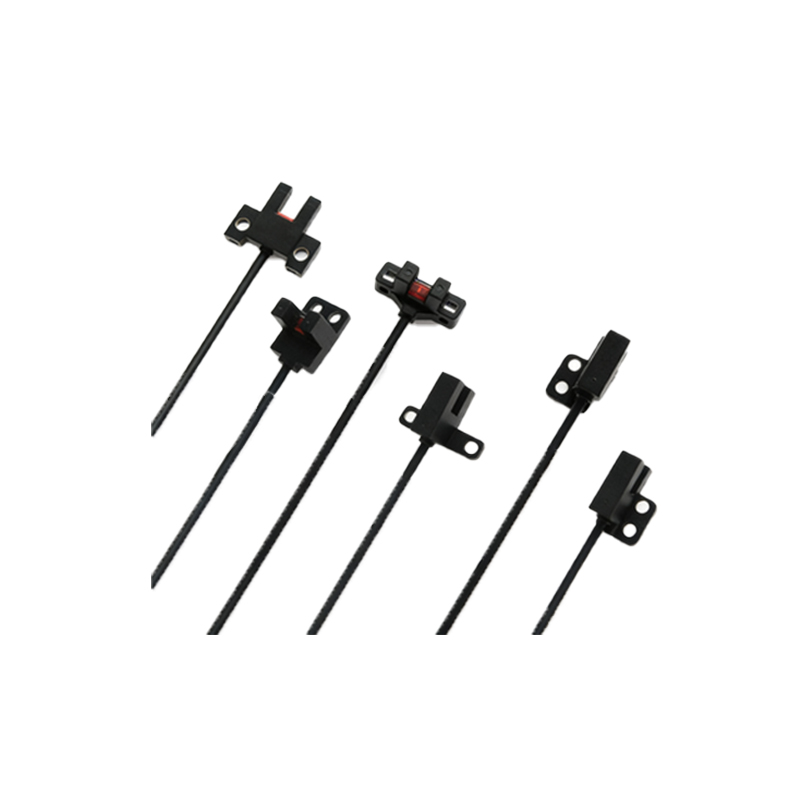
3. Target Surface Reflectivity and Color Sensitivity
Infrared sensors are often affected by the target’s surface finish, color, and material composition. Dark or matte surfaces absorb more IR energy, reducing effective detection range, while shiny surfaces can cause specular reflections that confuse the receiver. The technical difficulty lies in balancing emitter power and receiver gain to handle a wide range of reflectivities without increasing power consumption or crosstalk. Beam polarization, multiple emitter-receiver pairs, and time-of-flight compensation are common mitigation strategies, but they increase system complexity and cost.
4. Response Time vs. Detection Range Trade-off
Fast-moving objects require high-speed sensors with short response times, but achieving both high speed and long detection range is challenging. A longer range typically demands higher emitter power or larger apertures, which can slow down switching due to increased capacitance or thermal lag. Engineers must optimize the photodiode’s rise time, amplifier bandwidth, and comparator hysteresis to meet application-specific requirements. For example, in high-speed conveyor systems, a response time below 1 ms might be necessary, but this often reduces maximum range by 30-50%.
5. Temperature Drift and Long-Term Stability
Infrared LEDs and photodiodes exhibit temperature-dependent characteristics: emitter output decreases with rising temperature, while receiver dark current increases. Over a wide operating range (e.g., -20°C to +70°C), these shifts can cause false triggers or detection failures. The technical solution involves temperature-compensated driver circuits, reference channels, or digital calibration routines that store correction factors in EEPROM. However, implementing such compensation without adding latency or cost remains a significant design hurdle.
6. Crosstalk in Multi-Sensor Arrays
In applications requiring multiple infrared sensors in close proximity (e.g., robotic grippers or smart conveyors), optical crosstalk between adjacent units becomes a major issue. The emitted beam from one sensor may be picked up by another’s receiver, leading to erroneous readings. Engineers must design physical barriers, time-division multiplexing, or unique modulation frequencies for each sensor. The challenge is to maintain independent operation while keeping the overall system compact and cost-effective, especially in dense industrial environments.