Introduction to Array-Type Photoelectric Sensors and Their Dimensional Significance
Array-type photoelectric sensors are critical components in modern industrial automation, offering precise object detection, position verification, and quality control. Unlike standard single-beam sensors, array sensors utilize multiple light emitters and receivers arranged in a linear or matrix pattern to cover a broader detection area. The physical dimensions of these sensors directly influence their installation flexibility, detection range, and compatibility with machinery. In electrical engineering practice, the size of an array sensor is not merely a mechanical specification but a functional parameter that determines performance in applications such as conveyor belt monitoring, packaging, and robotic guidance. Key dimensional factors include overall housing length, width, height, aperture size, and the spacing between individual sensing elements. Engineers must carefully evaluate these dimensions to ensure seamless integration into existing systems while maintaining optimal detection accuracy and response time.
Key Dimensional Parameters: Housing, Aperture, and Element Spacing
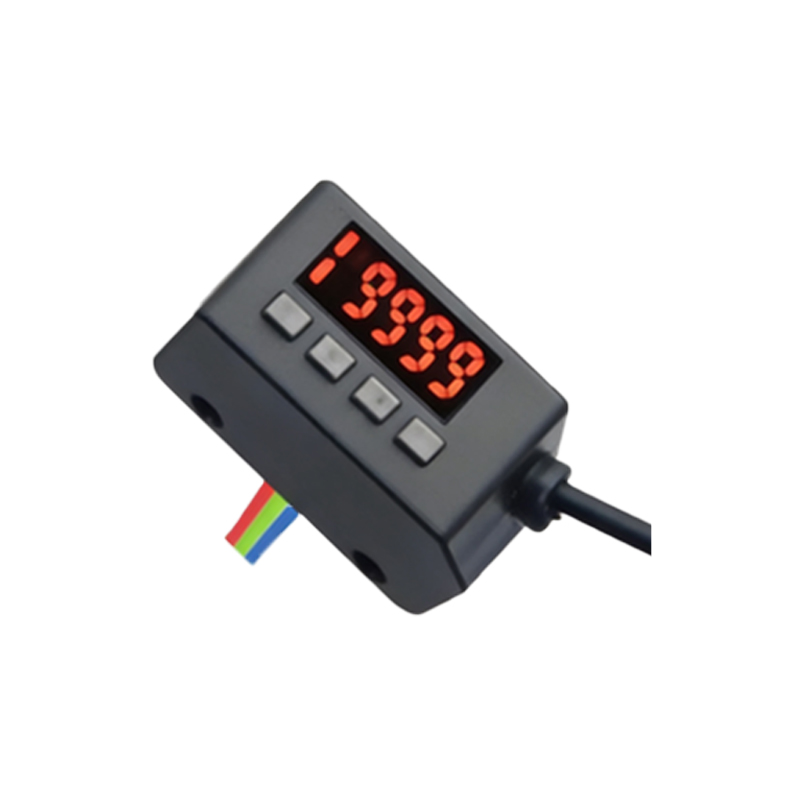
The housing dimensions of array-type photoelectric sensors typically range from compact models measuring 20 mm x 30 mm x 10 mm for micro-applications to larger units exceeding 100 mm in length for industrial environments. The outer casing, often made of metal or reinforced plastic, protects internal optics and electronics from dust, vibration, and temperature variations. A critical dimensional aspect is the aperture size, which defines the window through which light beams pass. A larger aperture, such as 50 mm x 5 mm, allows for wider object coverage but may reduce resolution if the sensor array uses fewer elements per unit length. Element spacing, measured in millimeters between adjacent photodiodes or LEDs, directly affects detection granularity. For instance, a sensor with 1 mm spacing can distinguish smaller objects or gaps, while a 5 mm spacing is suitable for larger items. Engineers must match these dimensions to the target object size and conveyor speed to avoid blind spots or false readings.
Impact of Sensor Length on Detection Range and Alignment
The length of an array sensor determines its effective detection field, typically calculated as the product of element count and spacing. For example, a 100-element sensor with 2 mm spacing provides a 200 mm detection zone. Longer arrays, such as those extending 500 mm, are ideal for monitoring wide conveyor belts or sorting systems. However, increased length requires precise mechanical alignment to ensure uniform signal strength across all elements. Misalignment by just 1-2 degrees can cause signal attenuation at the edges, reducing reliability. Additionally, the sensor's height affects its ability to detect objects at varying distances. Most array sensors have a fixed focal length, so the housing height must accommodate the lens assembly. Standard heights range from 15 mm to 40 mm, balancing optical performance with space constraints in tight machinery compartments.
Width and Depth Considerations for Mounting Integration
The width and depth (thickness) of array sensors are often overlooked but are vital for mounting in confined spaces. Width typically varies from 10 mm to 50 mm, influencing how the sensor fits between rollers, rails, or other obstacles. Deep designs, exceeding 30 mm, may interfere with adjacent components or require custom brackets. For linear array sensors, a slim profile of 12 mm width is common for side-mounting on conveyor frames. Engineers should also consider the cable exit orientation and connector size, as these add to the overall footprint. When retrofitting old systems, matching the sensor's width to existing mounting slots reduces modification costs. In contrast, matrix array sensors, which have two-dimensional dimensions, require careful planning of X and Y clearance to avoid collision with moving parts.
Environmental and Application-Specific Dimensional Tolerances
Dimensional tolerances become critical in harsh industrial environments. For instance, sensors deployed in high-temperature areas may expand, requiring housing materials with low thermal coefficients. Standard tolerances for array sensors are typically ±0.1 mm for critical dimensions like element spacing, as even minor deviations can create cumulative errors across the array. In washdown zones, sealed housings add 1-2 mm to dimensions but ensure IP67 or IP69K protection. Application-specific designs, such as those for food processing, often have rounded edges and smooth surfaces to prevent contamination, which slightly alters the outer dimensions. Engineers must specify tolerance classes based on production quality, with precision-grade sensors offering tighter controls for high-speed sorting lines.
Selecting the Right Dimensions for Your System: Practical Guidelines
To choose appropriate array sensor dimensions, start by defining the minimum object size to detect. For objects as small as 1 mm, select a sensor with element spacing equal to or less than 0.5 mm, but note that this increases sensor length for a given field of view. Next, measure the available mounting space, including clearance for connectors and cables. Use a 3D model or template to verify fit. For systems with high vibration, opt for sensors with robust mounting flanges that add 5-10 mm to width but improve stability. Finally, consider future scalability: a modular array system with standardized dimensions allows easy replacement or expansion. Always cross-reference the sensor's dimensional datasheet with the machine's mechanical drawings to avoid costly revisions. By prioritizing dimensional compatibility, engineers can enhance system reliability and reduce downtime.