Understanding the Core Definition of Precision
In industrial automation, the precision of a photoelectric sensor refers to its ability to consistently and accurately detect the presence, position, or characteristics of an object within a specified range. This metric is distinct from repeatability, which measures the sensor's ability to produce the same output under identical conditions. Precision is typically expressed in terms of resolution—the smallest detectable change in distance or position—and is influenced by factors such as optical design, signal processing algorithms, and environmental conditions. For example, a high-precision sensor may achieve resolution down to 10 micrometers, enabling applications like micro-part alignment in electronics manufacturing.
Key Factors Affecting Precision: Optical and Environmental Aspects
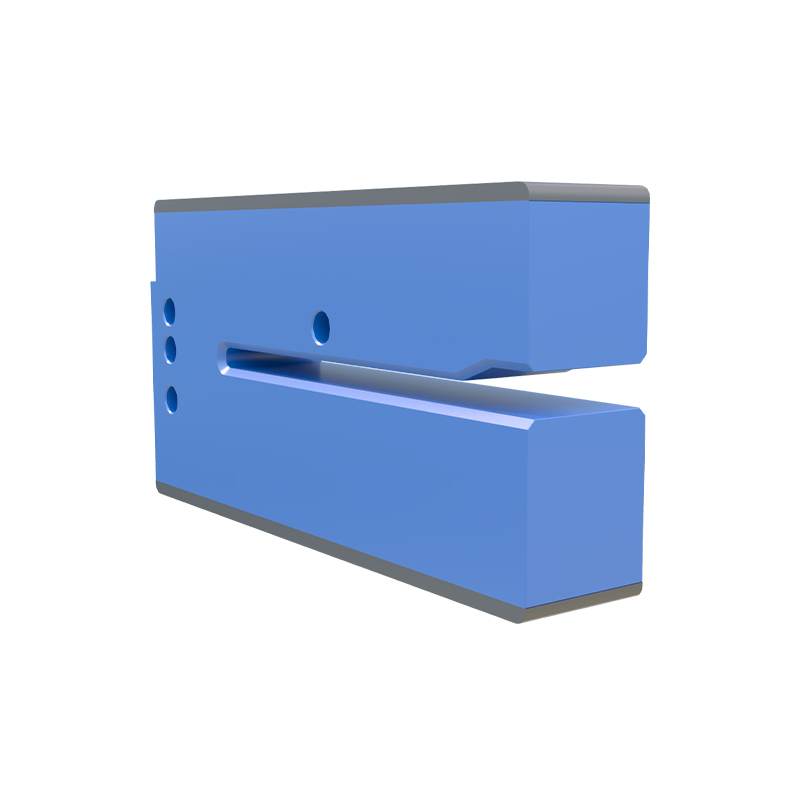
Several physical and environmental parameters directly impact photoelectric sensor precision. The beam type (e.g., laser vs. LED) plays a critical role: laser sensors offer narrower beam divergence (e.g., 0.1 milliradians), reducing spot size and enhancing spatial resolution. Ambient light interference, such as sunlight or intense artificial lighting, can degrade detection accuracy, necessitating sensors with built-in filters or modulated light frequencies. Additionally, target surface properties—color, reflectivity, and texture—affect signal strength; for instance, glossy surfaces may cause over-reflection, while matte black surfaces absorb light, reducing detection range. Temperature drift (>0.05% per degree Celsius) and vibration in harsh industrial environments further challenge precision, requiring robust sensor housing and adaptive calibration.
Precision vs. Accuracy: A Critical Distinction
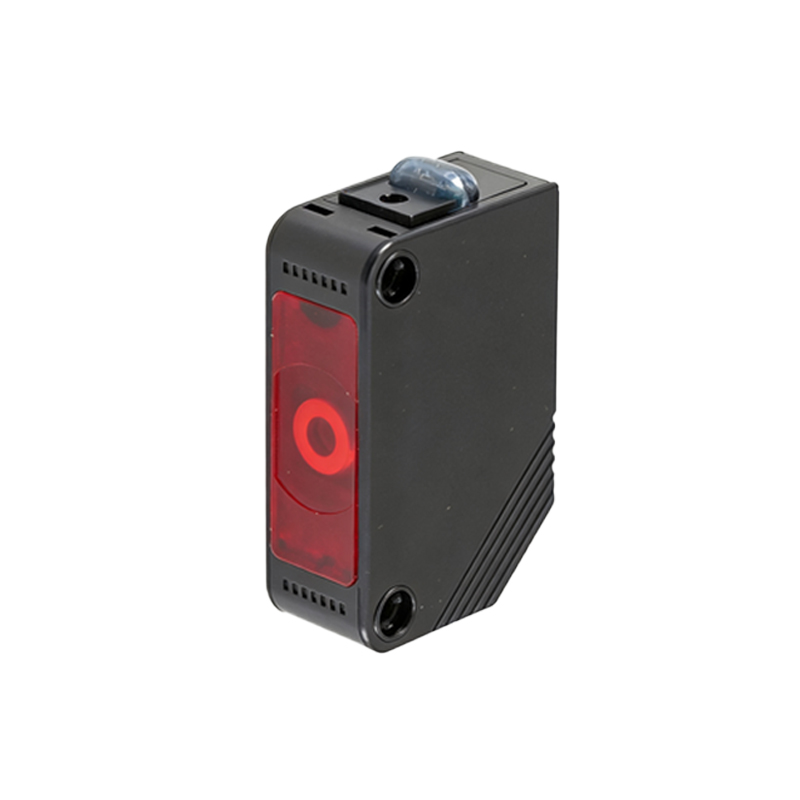
While often used interchangeably, precision and accuracy have distinct meanings in sensor technology. Precision indicates the sensor’s ability to produce stable, repeatable readings, whereas accuracy measures how close those readings are to the true value. A photoelectric sensor can be precise but inaccurate if it consistently reports a position offset by 0.1 mm due to misalignment. For manufacturing lines, achieving both is vital: a high-precision sensor (e.g., ±0.01 mm repeatability) paired with regular calibration ensures accurate part placement in pick-and-place robots. Engineers must verify sensor specifications under real-world conditions, as theoretical accuracy may deviate in practice.
Applications Requiring High Precision
High-precision photoelectric sensors are indispensable in industries demanding micron-level control. In semiconductor fabrication, they detect wafer alignment with sub-10-micrometer tolerance, preventing defects. Automated packaging lines use them for precise label positioning and edge detection on transparent films. In automotive assembly, sensors monitor the gap between components (e.g., door panels) to ensure uniform sealing. For medical device manufacturing, precision sensors verify needle tip alignment in catheters. These applications highlight the need for sensors with fast response times (e.g.,<1 ms) and minimal jitter to maintain throughput without compromising quality.
Selecting the Right Sensor: Balancing Precision and Cost
Choosing a photoelectric sensor involves trade-offs between precision, cost, and environmental robustness. For general material handling, standard through-beam sensors with 0.5 mm resolution may suffice. However, for high-speed sorting of tiny parts (e.g., resistors), a laser-based sensor with 0.01 mm resolution is necessary. Engineers should evaluate the sensor’s excess gain—a measure of signal strength margin—to ensure reliable detection under dust or fog. Additionally, consider output types (analog vs. digital) and connectivity (e.g., IO-Link), as digital sensors offer better noise immunity and data logging. Regular maintenance, including lens cleaning and drift compensation, sustains precision over time.
中不要返回正文标题