Introduction to Micro Photoelectric Sensors
Micro photoelectric sensors are compact, high-precision devices widely used in industrial automation for detecting objects, positions, and distances without physical contact. These sensors utilize light emitters (typically LEDs or laser diodes) and receivers to generate signals based on changes in light intensity. Their miniature size allows integration into tight spaces, making them ideal for modern manufacturing lines, robotics, and packaging systems. Key advantages include fast response times, non-wear operation, and immunity to electrical noise. This guide explores common types, their working principles, and typical applications.
Through-Beam Micro Sensors
Through-beam sensors consist of a separate emitter and receiver placed opposite each other. The light beam travels directly from the emitter to the receiver; any object breaking the beam triggers a detection signal. These sensors offer the longest sensing range (up to 30 meters in some models) and high reliability, even in harsh environments with dust or fog. However, they require precise alignment and two mounting points. Typical applications include conveyor belt monitoring, automated door safety, and long-distance object detection in warehouses.
Retro-Reflective Micro Sensors
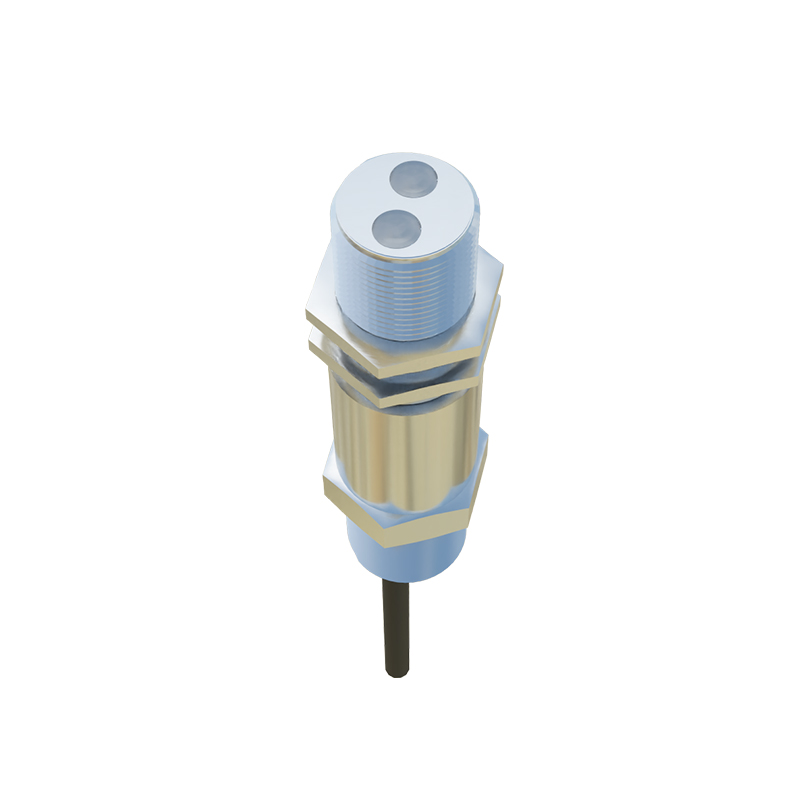
Retro-reflective sensors combine the emitter and receiver in a single housing, using a reflector to bounce the light beam back. When an object interrupts the light path, the receiver detects the loss of signal. This design simplifies installation compared to through-beam sensors, as only one unit needs wiring. Sensing ranges typically reach up to 10 meters. Common uses include detecting transparent or shiny objects (e.g., glass bottles, plastic films), where polarized versions reduce false reflections. They are popular in bottling lines and pharmaceutical packaging.
Diffuse Reflection Micro Sensors
Diffuse reflection sensors, also known as proximity sensors, integrate the emitter and receiver in one unit. The light beam reflects off the target object directly back to the receiver. These sensors do not require a separate reflector, making them compact and easy to install. Sensing range is shorter (usually up to 2 meters) and depends on object color, surface texture, and angle. Background suppression models filter out interference from background objects. Applications include part presence detection in assembly lines, counting small components, and palm detection in safety systems.
Fiber Optic Micro Sensors
Fiber optic micro sensors use flexible optical fibers to transmit light to and from a remote sensing head. This configuration allows detection in extremely confined or hazardous areas (e.g., high temperature, corrosive environments). The sensor base unit houses the electronics, while the fiber tip can be as small as 1 mm in diameter. Sensing modes include through-beam and diffuse reflection. They excel in detecting tiny objects (down to 0.1 mm), such as semiconductor wafers, microchips, or medical needles. Fiber optic sensors are essential in electronics manufacturing and lab automation.
Laser-Based Micro Sensors
Laser-based micro sensors utilize a focused laser beam for precise detection over short to medium ranges. They offer higher accuracy than LED-based models, with spot sizes as small as 0.05 mm. Common types include laser through-beam and laser triangulation for distance measurement. These sensors can detect minute position changes (up to 1 µm resolution) and are used in CNC machine tool positioning, robotic guidance, and quality control for high-speed production. Their immunity to ambient light makes them suitable for bright factory floors.
Color Mark and Contrast Sensors
Color mark sensors are specialized diffuse sensors that detect specific color patterns or contrasts on moving objects. They use RGB LEDs or white light to analyze reflected color spectra, enabling them to differentiate between shades or printed marks. Detection speed can reach 10 kHz, making them ideal for high-speed packaging lines, label alignment, and print registration. Contrast sensors, a simpler variant, detect differences in brightness (e.g., black vs. white) for edge detection or product sorting.
Choosing the Right Micro Sensor
Selecting a micro photoelectric sensor requires considering factors like sensing range, object material, environment (dust, light, temperature), and response time. For long-range detection, through-beam is best; for confined spaces, fiber optic or diffuse reflection work well. Retro-reflective sensors balance cost and convenience. Laser types are reserved for high-precision tasks. Always verify the sensor’s IP rating for washdown or dusty areas. Modern sensors also offer IO-Link communication for real-time diagnostics and parameter adjustment.
结束.