Introduction to Square Retro-Reflective Photoelectric Sensors
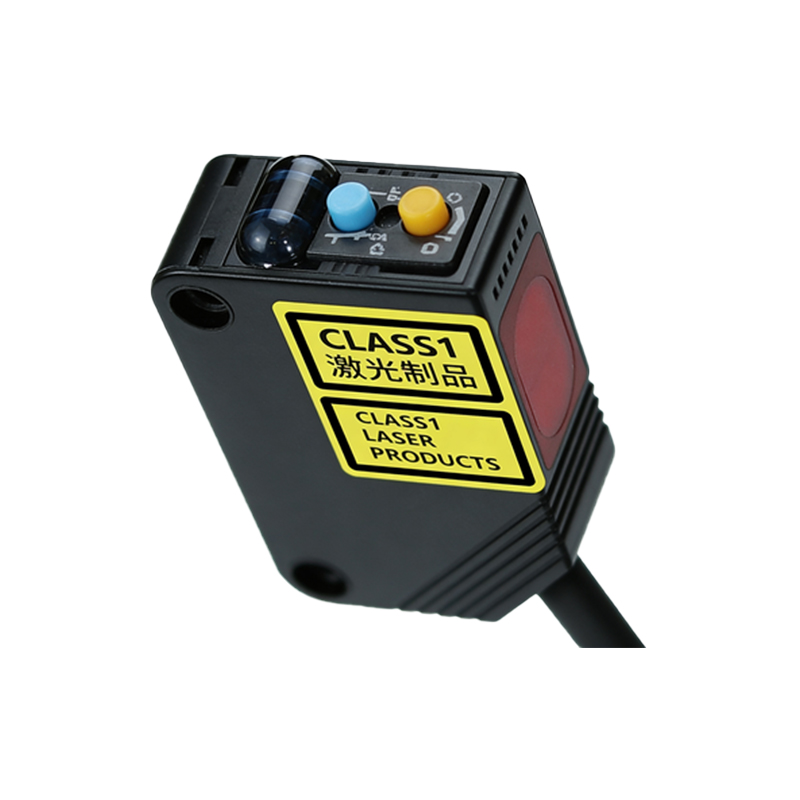
Square retro-reflective photoelectric sensors are a specialized type of optical sensor widely used in industrial automation for object detection, positioning, and counting. Unlike standard through-beam or diffuse sensors, the retro-reflective design emits a beam of light toward a reflector, which bounces it back to the receiver. When an object interrupts this light path, the sensor triggers an output. The square form factor offers distinct advantages in terms of mounting flexibility, alignment stability, and resistance to environmental interference. This article explores the key benefits, working principles, and practical applications of these sensors in modern manufacturing environments.
Working Principle and Optical Design
The core technology of a square retro-reflective sensor involves a light source (typically infrared or visible red LED) and a photodetector housed within a compact square body. The emitted light is directed at a special reflector—often a corner-cube or microprism array—which returns the beam along a parallel path, regardless of slight angular misalignment. This retroreflection mechanism ensures high reliability even in dusty or vibrating conditions. The square shape allows for optimized lens geometry and better heat dissipation compared to cylindrical designs, enhancing sensor longevity. Advanced models incorporate background suppression and polarization filters to differentiate between reflective targets and the reflector itself.
Key Advantages in Industrial Applications
One major benefit of square retro-reflective sensors is their long detection range, often exceeding 10 meters, while maintaining a narrow beam for precise cutoff. Their compact square housing enables easy integration into tight spaces, such as conveyor systems, packaging machines, and automated guided vehicles (AGVs). Additionally, the retro-reflective design minimizes wiring complexity since the emitter and receiver are in a single unit, unlike through-beam sensors requiring separate components. This reduces installation time and maintenance costs. The sensors also excel in harsh environments, with IP67 or higher ratings protecting against moisture, dust, and chemical splashes.
Challenges and Solutions for Reliable Detection
Despite their robustness, square retro-reflective sensors face challenges with highly reflective or transparent objects, such as glossy metal or glass. When such targets pass between the sensor and reflector, they can reflect enough light back to the receiver, causing false non-detection. To mitigate this, engineers often use polarized retro-reflective sensors. These models incorporate a polarizing filter that only allows light with a specific orientation to return from the reflector, while random reflections from shiny objects are suppressed. Another solution involves adjusting the sensing distance or using a smaller reflector to reduce the detection zone.
Installation Best Practices and Alignment Tips
Proper alignment is critical for optimal performance. The sensor and reflector must be positioned so that the light beam is perpendicular to the reflector surface. Even a few degrees of misalignment can reduce the effective range. Mounting using slotted brackets allows fine adjustment. For multi-sensor setups, avoid cross-talk by spacing sensors apart or using different modulation frequencies. In dusty environments, regular cleaning of both the sensor lens and reflector is recommended. Use a clean, lint-free cloth and mild solvent to maintain signal strength. Additionally, consider using a visible red LED for easier manual alignment during setup.
Case Study: Square Sensors in a High-Speed Packaging Line
A real-world example involves a beverage bottling plant that upgraded from cylindrical diffuse sensors to square retro-reflective models. The previous sensors suffered from false triggers due to bottle reflections and limited range. After installation, the new sensors provided stable detection of clear plastic bottles at speeds exceeding 600 units per minute. The square housing allowed flush mounting within the machine frame, and the polarized filter eliminated false signals from glossy labels. The result was a 15% reduction in downtime and a 20% improvement in counting accuracy.
Future Trends and Conclusion
As Industry 4.0 advances, square retro-reflective sensors are evolving with integrated IO-Link communication for real-time diagnostics and parameter adjustments. Smart sensors can now report signal strength, contamination levels, and alignment status, enabling predictive maintenance. Miniaturization is also a trend, with square sensors shrinking to fit robotic grippers and compact assembly cells. In conclusion, the square retro-reflective photoelectric sensor remains a cornerstone of reliable, high-performance automation. Its combination of long range, ease of installation, and resilience to challenging materials makes it an essential tool for any industrial engineer seeking to optimize production line efficiency.