Introduction to Ultra-Compact Photoelectric Sensors
In modern industrial automation, space constraints often dictate the choice of sensing components. The ultra-compact photoelectric sensor with a 2cm detection range is designed to address these challenges. Unlike traditional sensors that require significant mounting depth or complex brackets, this sensor integrates a miniature housing, typically under 10mm in diameter, while maintaining reliable performance in confined areas. Its key advantage lies in providing non-contact detection for small objects, such as micro-components in electronics assembly or fine parts in packaging machinery. For electrical engineers, this sensor offers a solution where conventional inductive or capacitive sensors may not fit due to size or material limitations.
Technical Specifications and Sensing Principle
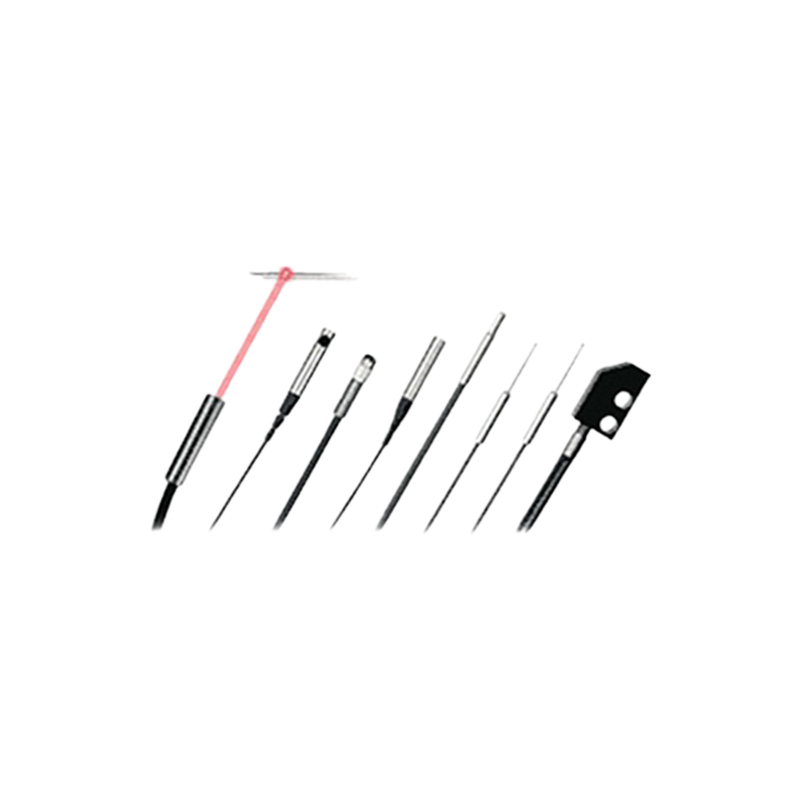
The sensor operates on the principle of diffuse reflection or through-beam mode, optimized for a detection distance of exactly 20mm (2cm). In diffuse mode, the emitted infrared or visible light beam reflects off the target object back to the receiver, triggering an output signal. The 2cm range ensures high sensitivity for small targets, with a minimum detectable object size down to 0.5mm in diameter. Key technical parameters include a response time of less than 1ms, an operating voltage range of 10-30V DC, and an output configuration supporting NPN/PNP or push-pull types. The sensor housing is often rated IP67, providing dust and water ingress protection suitable for washdown environments. Engineers should note that the 2cm range is calibrated for standard reflective surfaces; for highly absorbent or glossy materials, the effective range may vary by ±10%.
Installation and Integration in Control Systems
Integrating this sensor into an existing PLC or relay-based control system requires minimal wiring effort. Typically, three wires are used: brown for power, blue for ground, and black for the output signal. For through-beam versions, separate emitter and receiver units must be aligned within 2cm of each other. When mounting in tight spaces, such as along conveyor rails or inside robotic grippers, use the provided M3 threaded mounting holes or adhesive brackets. The sensor's small footprint allows it to be embedded directly into machinery frames without obstructing moving parts. Electrical engineers must ensure proper shielding against electromagnetic interference (EMI) from nearby motors or drives, as the sensor's low power consumption makes it sensitive to noise. A standard ferrite core on the signal cable can mitigate this issue.
Application Scenarios in Industrial Automation
This sensor excels in applications where space is at a premium. In PCB assembly lines, it detects the presence of tiny components on a moving conveyor, triggering pick-and-place robots with sub-millimeter accuracy. In pharmaceutical packaging, it verifies the insertion of small vials into blister packs, ensuring no missing items. Another common use is in automated guided vehicles (AGVs) for edge detection or obstacle avoidance within 2cm of the vehicle's base. The sensor's fast response time also suits high-speed sorting systems where objects pass at rates exceeding 1000 per minute. For engineers working in food processing, the IP67 rating allows use in wet environments, such as detecting bottle caps on a washing line.
Performance Considerations and Troubleshooting
While the 2cm detection range offers precision, it demands stable target positioning. Ambient light interference from sun or high-intensity LEDs can cause false triggers; installing the sensor with a narrow viewing angle lens or using a modulated light source helps. Common troubleshooting steps include cleaning the lens with a lint-free cloth to remove oil or dust, which can reduce sensitivity by up to 30%. If output instability occurs, check the power supply ripple; the sensor requires a clean DC source within ±5% tolerance. For through-beam setups, verify that the emitter and receiver are perfectly coaxial; even a 1-degree misalignment can reduce the effective detection distance to 1.5cm. Engineers should also test with actual target materials, as dark or matte surfaces may require a sensitivity adjustment via a potentiometer built into the sensor.
Future Trends and Recommendations
As Industry 4.0 advances, these sensors are evolving with IO-Link communication capabilities, enabling real-time monitoring of detection quality and sensor health. For current projects, selecting a sensor with a built-in amplifier reduces external components, simplifying panel wiring. When specifying for a new design, consider the ambient temperature range; most models operate from -25°C to +55°C. For harsh environments, such as those with metal shavings or chemical exposure, opt for a stainless steel housing variant. Always refer to the manufacturer's datasheet for exact mounting dimensions and electrical load ratings to ensure long-term reliability.