In the realm of data storage, hard drive laser sensors represent a critical advancement in precision technology. These components are integral to modern hard disk drives (HDDs), enabling higher data densities and improved reliability. Unlike traditional magnetic heads, laser-assisted sensors utilize focused laser beams to heat specific areas of the disk platter during writing processes. This localized heating reduces the magnetic coercivity of the material, allowing for smaller bit sizes and more stable data recording.
The core mechanism involves a near-field transducer that concentrates laser energy onto a nanoscale spot. This process, known as heat-assisted magnetic recording (HAMR), permits data to be written on media that would otherwise be too stable for conventional methods. By precisely controlling the laser's intensity and duration, manufacturers can achieve areal densities exceeding 1 terabit per square inch. Such advancements directly translate to higher-capacity drives without increasing physical dimensions, meeting the growing demand for compact storage solutions in data centers and consumer devices.
Laser sensors operate in conjunction with other drive components, including actuators and read/write heads. Their integration requires meticulous calibration to ensure alignment with spinning platters. Environmental factors like temperature fluctuations and vibration can affect performance, prompting engineers to develop robust error-correction algorithms and protective housings. These measures maintain data integrity across millions of read-write cycles, crucial for applications ranging from enterprise servers to personal computers.
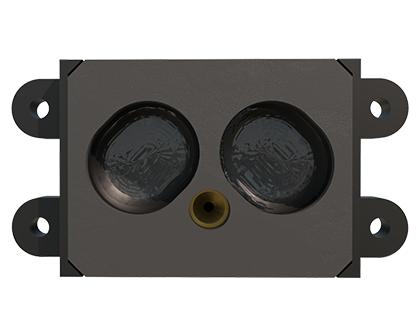
From a manufacturing perspective, producing laser sensors demands cleanroom facilities and advanced lithography techniques. Materials such as gallium arsenide and silicon are commonly used for their optical properties. Quality control involves testing each sensor for wavelength accuracy and thermal stability, as even minor deviations can lead to write errors or reduced drive lifespan. Industry leaders continually refine these processes to lower costs while enhancing precision, driving broader adoption of HAMR technology.
The evolution of laser sensors reflects broader trends in data storage. As cloud computing and artificial intelligence generate unprecedented data volumes, the need for efficient storage becomes paramount. Laser-enabled HDDs offer a balance of capacity, speed, and cost, complementing solid-state drives in hybrid storage architectures. Future developments may include multi-laser arrays or integration with quantum storage concepts, pushing the boundaries of what's possible in digital preservation.
For consumers and businesses alike, understanding this technology aids in making informed purchasing decisions. Drives utilizing laser sensors typically feature higher terabytes per dollar ratios and lower power consumption per gigabyte. When selecting storage, consider factors like intended use-case, durability requirements, and compatibility with existing systems. Regular maintenance, including firmware updates and environmental monitoring, can further optimize performance and longevity.
In summary, hard drive laser sensors exemplify how optical innovations transform data storage. By enabling denser, more reliable recording, they support the infrastructure of our digital world. As research progresses, these components will likely become standard in next-generation drives, ensuring that storage technology keeps pace with humanity's ever-expanding data footprint.