The global market for 3D laser sensors is experiencing unprecedented growth, driven by demands for precision in automation, quality control, and robotics. Selecting the right manufacturer is critical for system integrators and engineers aiming to implement reliable and high-performance solutions. This analysis provides an overview of leading companies that are defining industry standards through innovation, product range, and application expertise.
A key player renowned for its technological depth is Keyence Corporation. Hailing from Japan, Keyence has established a formidable reputation with its extensive portfolio of laser displacement sensors and profile scanners. Their sensors are celebrated for ultra-high accuracy, often at sub-micron levels, and exceptional stability. Products like the LJ-V Series offer robust performance in challenging industrial environments, capable of high-speed, non-contact measurement of various surfaces. Keyence's strength lies not just in hardware but in its integrated software solutions, making complex 3D inspection accessible. Their global support network and application-specific engineering support make them a preferred choice for high-precision manufacturing sectors, including semiconductor and electronics.
From Germany, SICK AG stands as a pillar of industrial sensor technology. Their 3D laser sensor solutions, particularly under the Visionary-T and Ruler product families, are engineered for ruggedness and versatility. SICK sensors excel in logistics and material handling applications, providing reliable volume measurement, contour detection, and palletizing guidance. What sets SICK apart is its focus on complete system integration, offering sensors that seamlessly communicate via industry-standard protocols like PROFINET and EtherNet/IP. Their sensors are designed to withstand dust, vibration, and variable lighting conditions, making them a workhorse in automotive, packaging, and airport logistics.
Another European powerhouse, LMI Technologies, now part of TKH Group, specializes exclusively in 3D scanning and inspection. Based in Canada with a strong global presence, LMI's Gocator series has become synonymous with factory-grade 3D smart sensors. These all-in-one devices integrate laser profilers, cameras, processors, and software into a single compact enclosure. The "smart sensor" philosophy means they perform real-time 3D data processing onboard, outputting measurement results directly without an external PC. This simplifies system architecture dramatically. LMI dominates applications in web inspection, tire profiling, and robotic guidance, where ease of use and embedded intelligence are paramount.
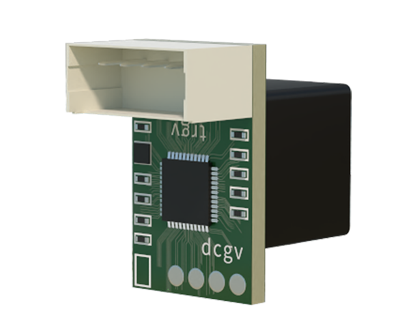
Omron Corporation, another Japanese multinational, offers a compelling range of 3D vision sensors under its FH Series. While encompassing various vision technologies, their laser-based 3D solutions are powerful tools for robot guidance and assembly verification. Omron's forte is the tight integration of sensing, control, and robotics, providing a unified automation platform. Their sensors are known for user-friendly programming interfaces, allowing quick deployment for tasks like bin picking, where robots need to identify and locate randomly placed parts in three-dimensional space.
For applications demanding the utmost in speed and resolution for scientific or metrology-grade inspection, Zygo Corporation (a division of Ametek) and Mitutoyo Corporation are often referenced. These companies produce highly specialized laser interferometers and scanning systems used in precision optics, aerospace, and advanced research labs. While their products may represent a higher investment tier, they set the benchmark for measurement certainty.

Beyond these established leaders, several innovative companies are making significant strides. Cognex Corporation, famous for 2D vision, has strengthened its 3D laser profiling offerings with products like the DS1000 series, leveraging its expertise in machine vision software. Panasonic Industry, with its HG-C series, provides cost-effective and compact laser displacement sensors suitable for a wide array of basic to intermediate 3D measurement tasks.
Choosing a manufacturer depends heavily on the specific application. Factors to consider include measurement range, speed (kHz rate), accuracy specifications (µm level), environmental robustness (IP rating), software capabilities, and the total cost of integration. Leading manufacturers typically offer comprehensive evaluation tools and technical support to help validate sensor suitability before purchase.
The future trajectory for 3D laser sensor manufacturers points towards greater intelligence, miniaturization, and the fusion of different sensing modalities. The integration of AI for data analysis directly at the sensor edge is becoming a key differentiator. As Industry 4.0 and smart factory initiatives accelerate, the role of these precise 3D measurement tools will only expand, solidifying the importance of the manufacturers that continue to push the boundaries of what is possible in non-contact metrology.