Introduction: Understanding Photoelectric Sensors in Industrial Settings
As an electrical engineer specializing in industrial automation, I often encounter concerns from both operators and facility managers about the potential hazards of photoelectric sensors. These devices are ubiquitous in modern manufacturing—used for object detection, counting, and positioning. Commonly, they emit infrared, visible red, or laser light. The question “Are photoelectric sensors harmful?” requires a nuanced answer based on their design, application, and safety standards. In this article, I will break down the technical aspects to provide a clear, professional assessment.
Emission Types and Their Safety Levels
Photoelectric sensors typically fall into three categories based on light source: LED-based (infrared or visible), laser-based, and fiber optic. For LED sensors, the light output is generally low-power and non-ionizing, posing no risk of thermal damage or tissue harm under normal use. According to IEC 60825-1, which governs laser product safety, most industrial LED sensors fall under Class 1, meaning they are safe under all reasonably foreseeable conditions. Laser sensors, however, can be Class 2 (visible,<1 mW) or Class 3R (<5 mW), which require caution. Even then, the risk is primarily to the eyes if directly stared at for extended periods. For example, a 1 mW laser sensor used in a packaging line can cause temporary dazzle but not permanent damage if the blink reflex (approx. 0.25 seconds) is functional. Engineers must verify the sensor’s classification label, often printed as “Class 1” or “Class 2,” to assess risk.
Eye Safety: The Primary Concern
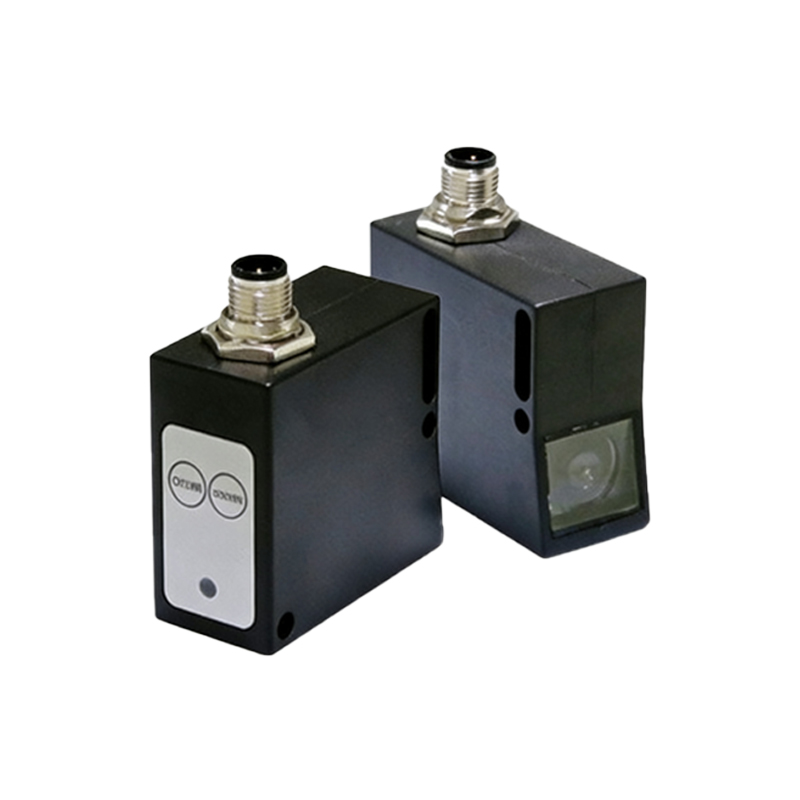
The most significant hazard from photoelectric sensors is optical radiation to the eyes. For infrared (IR) sensors, the light is invisible, which can be deceptive. While IR LEDs in sensors typically emit at 850 nm or 940 nm with power densities below 10 mW/cm²—well within the safety limits set by the American Conference of Governmental Industrial Hygienists (ACGIH)—prolonged exposure at close range (<10 cm) might cause corneal heating. In my field experience, I advise that operators never look directly into the emitter lens, especially with laser sensors. A practical measure is installing beam-blocking guards or using sensors with built-in safety shutoffs that activate if the beam is interrupted by a person. For instance, in a high-speed bottling plant, we retrofitted all laser sensors with auto-power-reduction circuits to reduce risk during maintenance.
Electromagnetic Interference and Electrical Hazards
Beyond optical concerns, photoelectric sensors can pose electrical risks. Most sensors operate at 10-30 VDC or 24 VAC, and while the current is limited (typically<100 mA), improper wiring or damaged cables can cause short circuits, arcs, or thermal burns. For example, a frayed cable in a dusty environment might create a spark that ignites combustible dust. Engineers must ensure sensors are IP67-rated for ingress protection and that wiring complies with NFPA 79 standards. Additionally, some sensors generate electromagnetic interference (EMI) at high switching frequencies (up to 10 kHz). This can disrupt nearby sensitive equipment like PLCs or RFID readers. In a recent project at an automotive assembly line, we had to add ferrite cores to sensor cables to suppress EMI, ensuring reliable operation without harming other systems.
Chemical and Environmental Factors
Photoelectric sensors are often exposed to harsh industrial environments, which can indirectly become hazardous. For instance, sensor housings may contain materials like polycarbonate or epoxy that degrade when exposed to chemicals such as solvents or coolants. If the seal fails, internal components could short, releasing toxic fumes (e.g., hydrogen chloride from burning PVC). To mitigate this, I specify sensors with stainless steel housings and chemical-resistant glass lenses for applications in chemical plants. Furthermore, sensors used in explosive atmospheres (e.g., grain silos) must be certified as intrinsically safe (ATEX or IECEx), meaning they limit energy to prevent ignition. Without such certification, a standard sensor could become a hazard.
Conclusion: Risk Management Through Standards and Best Practices
In conclusion, photoelectric sensors are not inherently harmful when designed, installed, and maintained according to industry standards like IEC 60825, ISO 13849, and UL 508. The key risks—eye damage from laser emitters, electrical shock from faulty wiring, and environmental ignition—are manageable through proper selection, shielding, and training. As an engineer, I recommend performing a risk assessment for each application (e.g., using the ISO 12100 methodology) and labeling sensors with their safety class. For example, a simple label “Class 1 LED Sensor – Safe for Direct Viewing” can prevent misunderstandings. Ultimately, the harm is not in the sensor itself but in its misuse. With diligent engineering practices, photoelectric sensors remain a safe and invaluable tool in automation.