Introduction to U-Shaped Photoelectric Sensors
U-shaped photoelectric sensors, also known as fork sensors, represent a specialized category within the photoelectric sensor family. Unlike traditional through-beam or reflective sensors, these devices integrate both the emitter and receiver in a single, compact housing with a U-shaped gap. The origin of their design focuses on precise detection within a fixed optical path, making them ideal for applications requiring high repeatability and immunity to environmental interference. In industrial automation, they excel in detecting objects such as labels, small parts, or edges in high-speed production lines, thanks to their stable light beam alignment and fast response times.
Key Technical Advantages in Industrial Settings
The primary advantage of u-shaped origin sensors is their intrinsic alignment. Since the emitter and receiver are fixed within the U-shaped body, there is no need for manual alignment or adjustment, reducing installation time and maintenance. They operate effectively in dusty, wet, or visually cluttered environments because the short, enclosed beam path minimizes light scattering and external light interference. Furthermore, these sensors offer high switching frequencies, often exceeding 10 kHz, which is critical for detecting fast-moving objects in packaging, printing, and semiconductor manufacturing. Their compact form factor also allows integration into tight spaces, such as conveyor belts or robotic grippers.
Common Applications: Object Detection and Counting
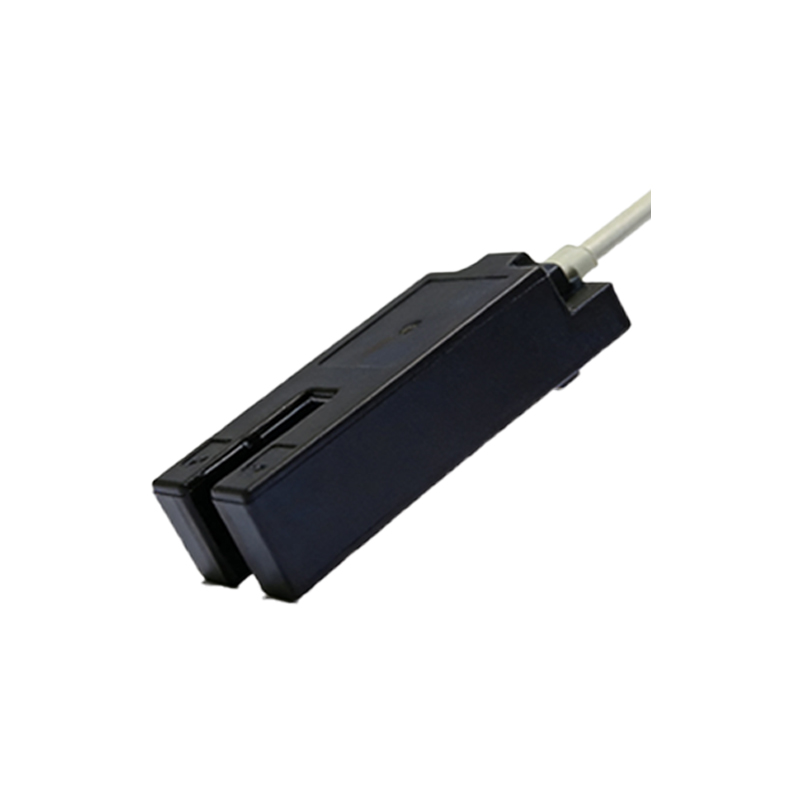
In material handling and logistics, u-shaped sensors are widely used for object detection and counting. For example, in a bottling line, a u-shaped sensor can be mounted at the conveyor entrance to detect each bottle passing through its gap. The sensor’s high repeatability ensures accurate counts even at speeds of several thousand units per minute. Similarly, in the pharmaceutical industry, these sensors detect small vials or blister packs, providing reliable feedback to PLCs for process control. The fixed optical path eliminates false triggers caused by vibrations or misalignment, which is common in traditional through-beam setups.
Precision Control in Web Handling and Edge Detection
Another critical application is in web handling and edge detection for continuous materials like paper, film, or textiles. U-shaped sensors with a narrow gap (e.g., 5 mm or 10 mm) can precisely detect the leading edge or splice of a web, triggering cutters or tension controllers. For instance, in a printing press, a sensor positioned at the unwind station detects the precise moment a new roll is spliced, ensuring seamless operation. This application demands a sensor with a fast response time and the ability to differentiate between material and air gaps, which u-shaped sensors inherently provide due to their focused beam. The absence of moving parts also enhances long-term reliability in high-speed environments.
Integration with Modern Control Systems
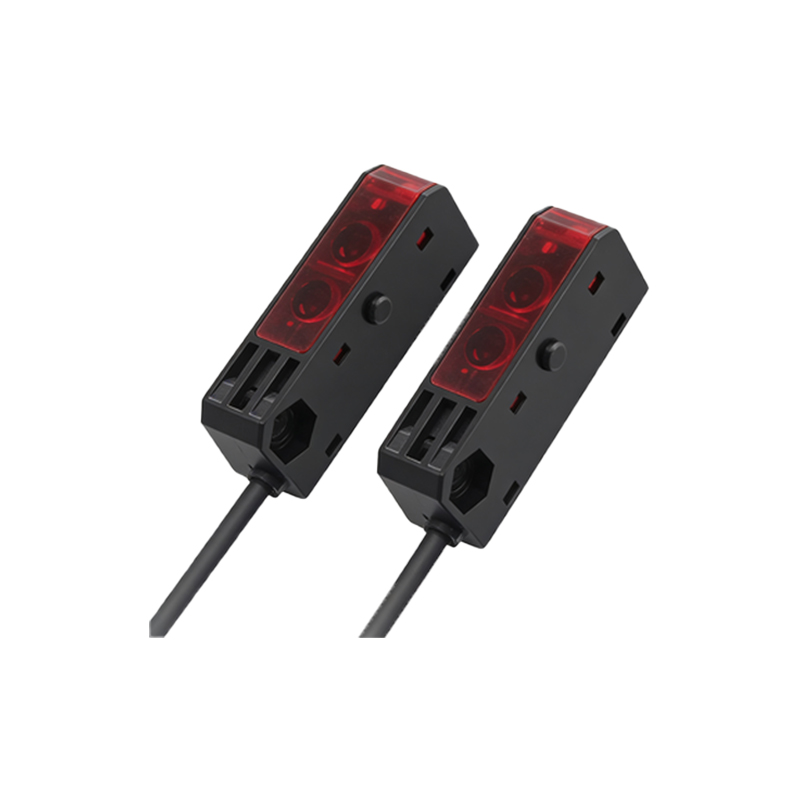
Modern u-shaped origin sensors are designed for seamless integration with industrial control systems. Many models feature digital output interfaces such as NPN or PNP, as well as IO-Link for advanced diagnostics and parameterization. This allows engineers to monitor sensor health, adjust sensitivity, and log detection events remotely via a PLC or SCADA system. For example, in a smart factory, a u-shaped sensor on a pick-and-place machine can communicate its status to a central system, enabling predictive maintenance. The robust IP67 rating of most models ensures durability in harsh industrial conditions, from coolant spray to high-temperature environments.
Case Study: Improving Efficiency in Labeling Machines
A practical case study involves a labeling machine for beverage bottles. The original design used a traditional reflective sensor, but frequent false triggers due to bottle wobble caused mislabeling and downtime. By replacing it with a u-shaped origin photoelectric sensor, the manufacturer achieved 99.9% detection accuracy. The sensor’s fixed alignment eliminated false readings, while its 10 kHz switching speed kept pace with the 500 bottles-per-minute line. Post-installation, throughput increased by 5%, and maintenance calls dropped by 70%. This demonstrates how u-shaped sensors can directly improve operational efficiency and reduce costs.
Conclusion and Best Practices for Selection
When selecting a u-shaped origin photoelectric sensor for your application, consider factors such as gap width (e.g., 5 mm to 50 mm), detection range, and environmental conditions. For precision tasks like edge detection, a smaller gap with a focused beam is recommended. For high-speed counting, prioritize sensors with a switching frequency above 2 kHz. Additionally, ensure the housing material (e.g., stainless steel or plastic) suits the operating environment. By leveraging the inherent stability and reliability of u-shaped sensors, engineers can enhance automation systems, reduce downtime, and achieve consistent product quality in demanding industrial settings.