Introduction to Diffuse Reflection Photoelectric Sensors
Diffuse reflection photoelectric sensors are widely used in industrial automation for object detection without requiring a separate reflector. Unlike through-beam or retro-reflective sensors, these sensors rely on the target object itself to reflect the emitted light back to the receiver. This design simplifies installation and reduces hardware costs, making them ideal for applications such as conveyor belt monitoring, packaging line sorting, and material handling in harsh environments.
Operating Principle of Diffuse Reflection Sensors
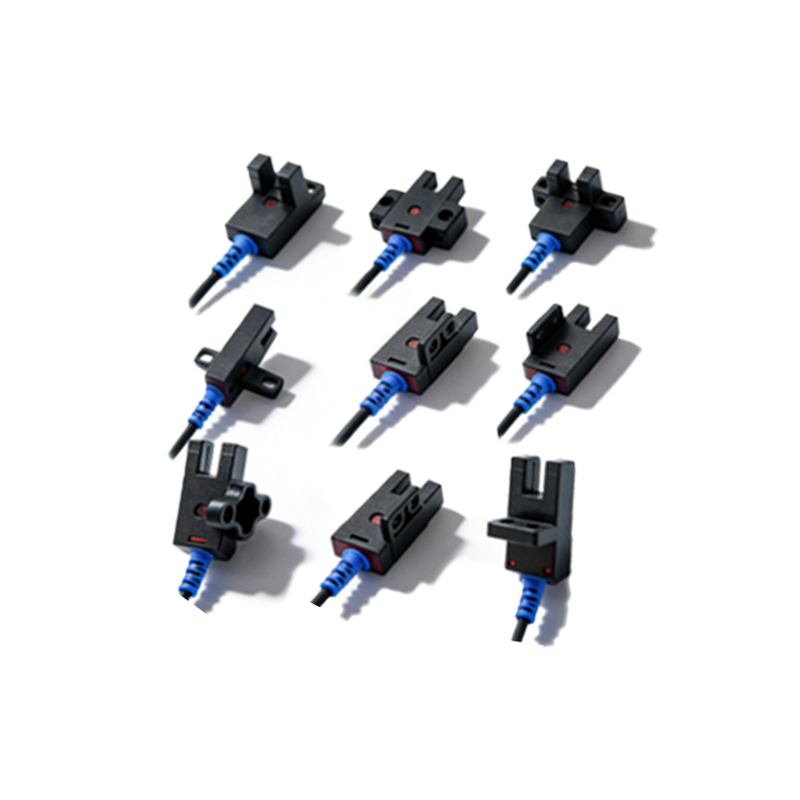
The core principle involves an integrated emitter and receiver housed in a single unit. The emitter typically uses a modulated infrared, visible red, or laser light source. When an object enters the sensing field, it scatters the light in multiple directions. A portion of this scattered light returns to the receiver. The sensor’s internal electronics detect the intensity or modulation of the reflected signal. When the reflected light exceeds a preset threshold, the sensor triggers an output, indicating the presence of the object. The detection range depends on the object’s reflectivity, color, and surface texture. For example, a white surface reflects more light than a black one, thus achieving a longer detection distance.
Key Factors Affecting Sensor Performance
Several factors influence the reliability of diffuse reflection sensors. First, target color and material: dark or matte surfaces absorb more light, reducing effective range. Second, ambient light interference: strong sunlight or artificial lighting can degrade performance, but modulated light and optical filters mitigate this. Third, background suppression: sensors with adjustable sensitivity or background suppression technology can ignore stationary surfaces behind the target. Engineers must also consider the sensing angle and beam divergence to ensure consistent detection across varying distances.
Advantages and Limitations in Industrial Settings
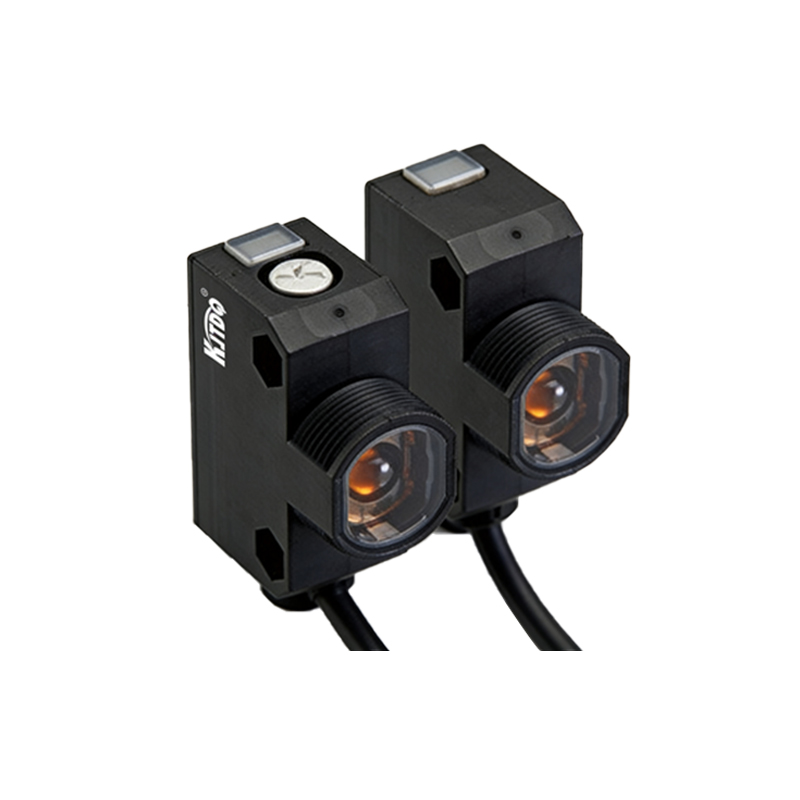
The main advantage is ease of installation due to a single-unit design. They are cost-effective and suitable for detecting irregular or non-reflective objects. However, their detection distance is shorter than through-beam sensors, typically ranging from 10 cm to 2 meters depending on the model. They are also sensitive to dusty or dirty environments, as contaminants can scatter or block the light beam. Regular cleaning and selection of robust housing (e.g., IP67 rated) are necessary for long-term reliability.
Practical Application Example
Consider a beverage bottling line where clear bottles must be detected on a conveyor. A diffuse reflection sensor with a polarized filter or background suppression is chosen to avoid false triggers from the shiny conveyor belt. The sensor is mounted perpendicular to the bottle path. When a bottle passes, the reflected light from its surface activates the sensor, sending a signal to the PLC to trigger a filling operation. Proper adjustment of the sensitivity ensures detection of both clear and colored bottles.