Laser sensor guidance represents a critical advancement in precision targeting and navigation across various industries. This technology utilizes laser beams to detect, track, and direct objects toward specific targets with exceptional accuracy. Unlike traditional methods that rely on radio waves or infrared signals, laser guidance offers higher resolution and reduced susceptibility to interference.
The core principle involves emitting a laser pulse toward a target area. Sensors then capture the reflected light, analyzing parameters such as time-of-flight, wavelength shifts, and intensity. This data is processed in real-time to calculate precise distance, speed, and positional coordinates. In military applications, laser-guided munitions can strike targets within centimeters of the designated aim point, minimizing collateral damage. For instance, a laser designator illuminates the target, and the projectile's seeker head locks onto the reflected laser energy, adjusting its trajectory mid-flight.
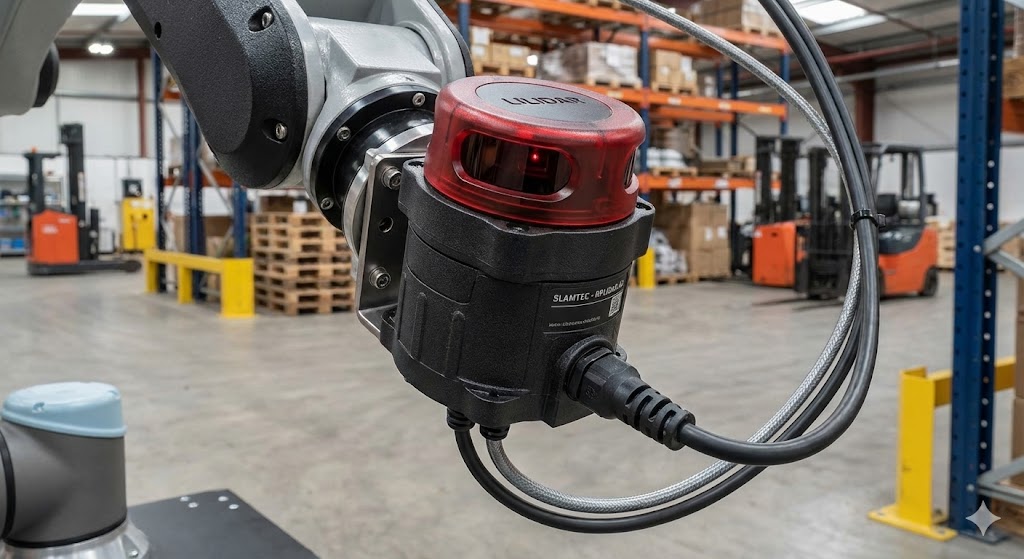
Beyond defense, laser sensor guidance is integral to autonomous vehicles. Lidar (Light Detection and Ranging) systems map environments in 3D by scanning with laser beams. Each laser pulse generates a data point, creating high-definition maps that enable self-driving cars to navigate complex urban settings, avoid obstacles, and adhere to traffic lanes. Industrial robotics similarly employs laser sensors for precise assembly, welding, and quality control tasks, where micron-level accuracy is paramount.
In aerospace, landing systems for aircraft and spacecraft incorporate laser altimeters and rangefinders. These sensors provide accurate altitude readings during descent, especially in low-visibility conditions. Additionally, laser guidance aids in docking maneuvers for satellites and space station modules, ensuring safe alignment without physical contact.
The technology's advantages include high update rates, low latency, and adaptability to dynamic environments. However, challenges persist, such as performance degradation in fog, rain, or smoke, as particulate matter scatters laser beams. Ongoing research focuses on multi-spectral lasers and hybrid systems combining laser with GPS or inertial navigation to mitigate these limitations.
Future developments point toward miniaturization and cost reduction, making laser guidance accessible for consumer electronics and small-scale drones. Quantum-enhanced lasers promise even greater precision by leveraging quantum entanglement for measurements beyond classical limits. As industries increasingly prioritize automation and precision, laser sensor guidance will continue to evolve, driving innovations in smart infrastructure, environmental monitoring, and beyond.
Ultimately, laser sensor guidance exemplifies the convergence of optics, computing, and engineering, transforming how machines perceive and interact with the world. Its continued refinement will unlock new capabilities, reinforcing its role as a cornerstone of modern technological progress.