Overview of Photoelectric Sensors in Subway Environments
Photoelectric sensors are critical components in modern subway systems, enabling precise detection of objects, vehicles, and personnel without physical contact. As an electrical engineer working in the rail transit industry, it is essential to understand the specific types of photoelectric sensors deployed in subway applications. These sensors must withstand harsh conditions such as dust, vibration, electromagnetic interference (EMI), and temperature fluctuations while maintaining high reliability. In this guide, we explore the key photoelectric sensor types used in subway infrastructure, focusing on their operational principles, features, and installation considerations.
Through-Beam Sensors for Train Detection and Safety
Through-beam photoelectric sensors consist of separate emitter and receiver units aligned across a detection path. They are widely used in subway stations for train arrival and departure detection, platform door control, and obstacle sensing. Their long sensing range (up to 30 meters or more) and high immunity to ambient light make them ideal for outdoor or tunnel environments. For instance, in automatic train operation (ATO) systems, through-beam sensors are installed at track edges to confirm train presence before signaling. Engineers must ensure proper alignment and dust protection to maintain consistent performance.
Retro-Reflective Sensors for Door and Gate Applications
Retro-reflective sensors combine emitter and receiver in a single housing, using a reflector to bounce the beam back. These sensors are commonly used for platform screen doors, ticket gate barriers, and emergency exit monitoring. They offer a compact footprint and moderate sensing range (typically up to 10 meters), suitable for indoor subway areas. Key considerations include selecting sensors with polarized filters to avoid false triggers from reflective surfaces like glass or metal panels. In high-traffic stations, multiple retro-reflective sensors are often networked to ensure redundancy.
Diffuse (Proximity) Sensors for Object and Passenger Detection
Diffuse photoelectric sensors detect objects by the light reflected directly off the target surface, without needing a separate reflector. They are deployed in subway applications such as intrusion detection in restricted zones, conveyor belt monitoring in maintenance facilities, and passenger counting near escalators. Sensing range is shorter (up to 2 meters) and highly dependent on target color and surface texture. Engineers should choose background suppression models to ignore distant objects, enhancing accuracy in crowded environments. For example, diffuse sensors with adjustable sensitivity are used in tunnel ventilation systems to detect personnel entry.
Fiber Optic Sensors for Confined Spaces and EMI-Prone Areas
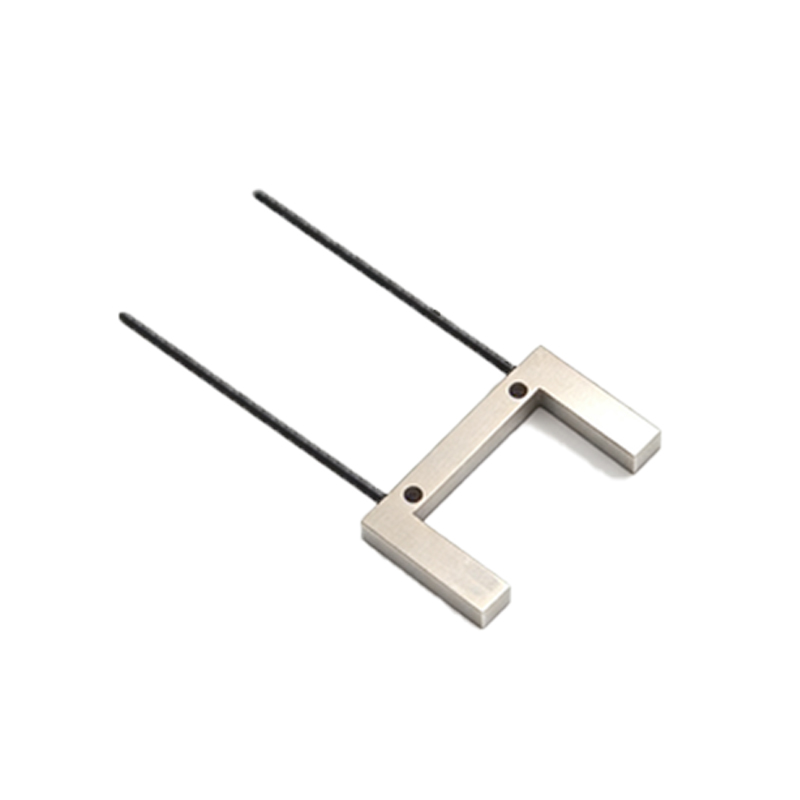
Fiber optic photoelectric sensors consist of a light source and receiver unit connected via optical fibers, allowing remote sensing in tight spaces. They are invaluable in subway electrical rooms, signal cabinets, and moving equipment like pantographs. Their immunity to EMI makes them superior for detecting components near high-voltage cables or traction power systems. Additionally, fiber optic sensors can operate in extreme temperatures (-40 to 70 degrees Celsius), making them suitable for underground tunnels with minimal cooling. Installation requires careful cable routing to avoid physical damage.
Color and Contrast Sensors for Quality Control and Labeling
Color and contrast sensors are specialized photoelectric devices that differentiate between colors or contrast levels. In subway station maintenance, they are used for sorting waste, verifying label presence on emergency equipment, or monitoring signal light colors. These sensors employ RGB or white light LEDs to analyze reflected spectrum. Engineers must calibrate them according to environmental lighting conditions, as subway platforms often have mixed lighting from fluorescent and natural sources. For instance, contrast sensors are installed in train washing systems to detect dirt patterns.
Laser-Based Sensors for High-Accuracy Positioning
Laser photoelectric sensors offer ultra-precise detection using collimated laser beams, ideal for train positioning in automatic coupling systems and rail alignment monitoring. They provide sensing ranges up to 100 meters with millimeter-level accuracy, essential for safety-critical applications like door alignment verification. However, laser sensors require strict eye-safety compliance (Class 1 or 2) and regular cleaning of lenses to prevent soot buildup from brake dust. In advanced subway networks, laser sensors are integrated with Lidar for 3D environment mapping.
Selection Criteria and Maintenance Best Practices
When selecting photoelectric sensors for subway systems, engineers should evaluate factors such as sensing range, output type (NPN/PNP, analog, IO-Link), housing material (stainless steel or reinforced plastic), and ingress protection rating (IP67 or higher). Regular maintenance includes checking alignment, cleaning optical surfaces, and testing response time. Failure to maintain sensors can lead to false signals, causing train delays or safety hazards. For critical applications, redundant sensor setups with voting logic are recommended to enhance reliability.