In today's world, air quality monitoring has become increasingly critical for health, safety, and environmental management. Among the various technologies available, laser dust sensors have emerged as a leading solution for detecting and measuring particulate matter (PM) in the air. These sensors are widely used in applications ranging from industrial workplaces and smart home devices to urban air quality stations and wearable gadgets. But what exactly are laser dust sensors, and how do they function? This article delves into the principles, components, and real-world significance of these advanced devices.
At its core, a laser dust sensor operates on the principle of light scattering. The sensor contains a laser diode that emits a focused beam of light into a detection chamber. As airborne particles—such as dust, smoke, pollen, or other aerosols—pass through this chamber, they intersect the laser beam. When light hits a particle, it scatters in various directions. A photodetector, positioned at a specific angle (often 90 degrees to minimize background noise), captures this scattered light. The intensity of the scattered light is proportional to the size and concentration of the particles. By analyzing this signal with integrated algorithms, the sensor can determine the particle count and size distribution, typically categorized as PM1.0, PM2.5, and PM10.
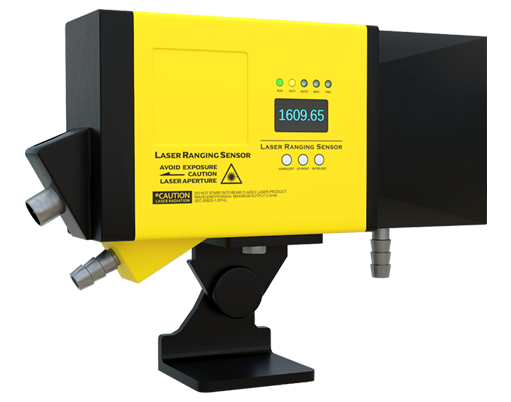
The design of a laser dust sensor involves several key components. The laser diode, usually a low-power infrared or red laser, provides a stable and coherent light source. The detection chamber is engineered to ensure a consistent airflow, often aided by a small fan or pump, so that particles flow uniformly through the sensing zone. Optical elements, such as lenses and mirrors, may be used to focus the laser and direct scattered light to the photodetector. The photodetector converts light signals into electrical ones, which are then processed by a microcontroller. Advanced sensors incorporate temperature and humidity compensation to maintain accuracy under varying environmental conditions. Calibration against reference instruments is crucial for reliable performance, as factors like particle composition and refractive index can influence readings.
One of the standout advantages of laser dust sensors is their high sensitivity and real-time response. Unlike traditional gravimetric methods that require lab analysis, these sensors provide instantaneous data, enabling proactive air quality management. They are capable of detecting ultrafine particles down to 0.1 microns, which are particularly harmful to human health as they can penetrate deep into the lungs and bloodstream. Moreover, modern laser dust sensors are compact, energy-efficient, and cost-effective, making them suitable for integration into consumer electronics like air purifiers, HVAC systems, and mobile devices.

However, laser dust sensors are not without limitations. They can be affected by high humidity, which may cause condensation and false readings, or by very high particle concentrations that saturate the detection chamber. Certain particle types with low light-scattering properties might be underreported. Regular maintenance, such as cleaning the chamber to prevent dust accumulation, is necessary for long-term accuracy. Despite these challenges, ongoing advancements in sensor design and data processing are continually improving reliability.
The applications of laser dust sensors are vast and growing. In industrial settings, they monitor workplace air to ensure compliance with occupational safety standards, detecting hazardous dust from processes like woodworking or metal grinding. In smart cities, networks of these sensors provide granular, real-time air quality maps, helping authorities issue health advisories and track pollution sources. At home, they empower individuals to monitor indoor air and control purification systems automatically. Research institutions use them for environmental studies, while healthcare devices incorporate them to alert users to poor air conditions.
Looking ahead, the integration of laser dust sensors with the Internet of Things (IoT) and artificial intelligence is set to enhance their utility further. Connected sensors can feed data into cloud platforms for large-scale analysis, predictive modeling, and automated responses. Innovations in miniaturization and power management may lead to even broader adoption in personal wearables. As public awareness of air pollution's health impacts rises, the demand for accurate, accessible monitoring tools will only increase.

In summary, laser dust sensors represent a sophisticated fusion of optics, electronics, and data science. By harnessing light-scattering technology, they offer a practical means to quantify invisible airborne threats. Whether for protecting health, optimizing industrial processes, or safeguarding the environment, these sensors play an indispensable role in our increasingly data-driven world. Understanding their operation and proper use is key to leveraging their full potential in the quest for cleaner air.