Introduction to the GL6N4111 Photoelectric Sensor
The GL6N4111 is a high-performance imported photoelectric sensor widely utilized in industrial automation, packaging, and material handling systems. Designed by leading European manufacturers, this sensor offers reliable detection in challenging environments. Its compact housing, robust IP67 protection, and advanced optics make it a preferred choice for precision tasks. The sensor operates on a through-beam principle, ensuring stable performance even with dust or light interference. With a detection range of up to 15 meters, it excels in long-distance applications where accuracy is critical.
Key Technical Specifications and Design
This sensor features a red LED light source with a wavelength of 660 nm, providing high visibility and minimal ambient light interference. The GL6N4111 supports a supply voltage range of 10–30 V DC, with a low power consumption of less than 1.5 W. Its output is a PNP normally open (NO) transistor, switchable to NPN via a selector, offering flexibility for different control systems. The response time is impressively fast at less than 1 ms, enabling high-speed counting and positioning. Additionally, the sensor incorporates a potentiometer for sensitivity adjustment, allowing fine-tuning in dusty or reflective environments.
Installation and Wiring Guidelines
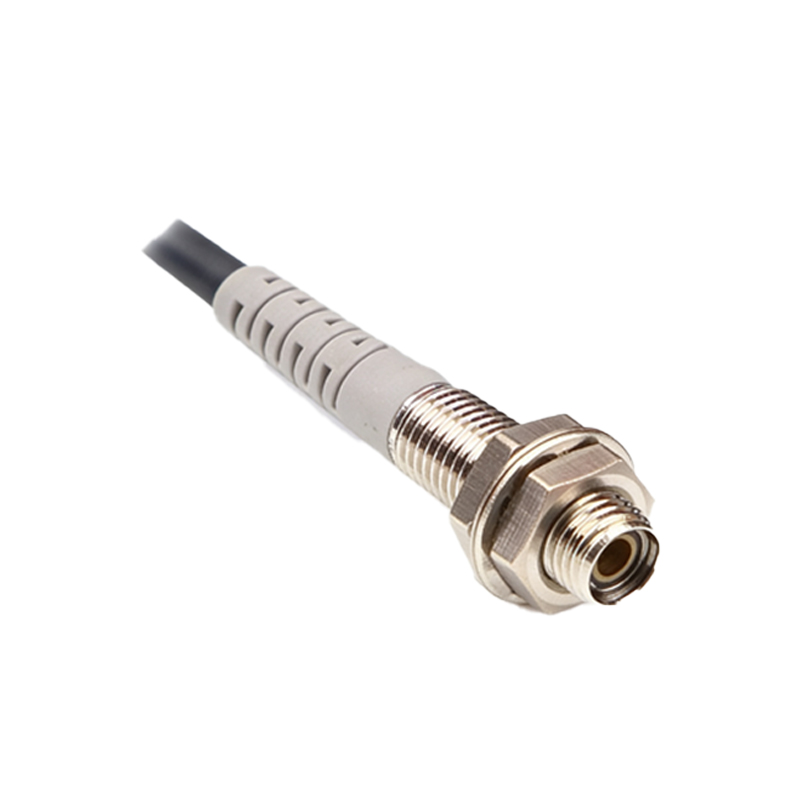
Proper installation is crucial for maximizing sensor performance. The GL6N4111 uses a 4-pin M8 connector, compatible with standard industrial cables. Ensure the emitter and receiver are aligned within a tolerance of ±2 degrees to avoid detection errors. The wiring diagram shows pin 1 for brown (V+), pin 2 for white (N/C), pin 3 for blue (V-), and pin 4 for black (output). For PNP output, connect the load between the output and ground. In harsh conditions, use shielded cables to prevent electromagnetic interference. Avoid mounting near high-voltage cables or motors to maintain signal integrity.
Common Applications in Industry
The GL6N4111 is ideal for conveyor belt monitoring, where it detects product presence or absence with high repeatability. In automated assembly lines, it verifies component placement and triggers robotic pick-and-place actions. Its long detection range suits warehouse logistics for object counting in palletizing systems. Furthermore, the sensor is used in printing presses for paper jam detection, thanks to its fast response. Food and beverage industries also leverage its IP67 rating for washdown environments, ensuring hygiene without sacrificing reliability.
Performance Optimization and Troubleshooting
To optimize performance, regularly clean the lens with a soft, lint-free cloth to prevent dirt accumulation. If the sensor fails to detect, check the alignment and adjust the potentiometer. Excessive ambient light may cause false triggers; install a light shield or use the built-in interference suppression. For slow response, verify the power supply stability—voltage drops below 10 V can degrade performance. The sensor’s self-diagnosis feature blinks the LED to indicate overload or short circuit. In extreme temperatures, ensure the operating range of -25 to 55°C is maintained.
Comparison with Competitors and Market Value
Compared to similar models like the Omron E3Z or SICK WL12, the GL6N4111 offers a superior cost-to-performance ratio. Its longer detection range and faster response time outperform many alternatives. The sensor’s modular design reduces spare part inventories, as the same unit serves multiple applications. Market feedback highlights its durability in high-vibration settings, with a mean time between failures exceeding 50,000 hours. For bulk purchasing, the price per unit drops significantly, making it a budget-friendly choice for large-scale deployments.
Future Trends and Integration with IIoT
As Industry 4.0 advances, the GL6N4111 can be integrated into IIoT ecosystems via smart adapters. Future versions may incorporate IO-Link communication for real-time data analytics, enabling predictive maintenance. Engineers are exploring its use in autonomous guided vehicles for obstacle detection. The sensor’s modularity also supports retrofitting legacy systems, extending their lifespan. With growing demand for energy efficiency, low-power versions of the GL6N4111 are expected, reducing operational costs in smart factories.