Introduction to IFM Photoelectric Ranging Technology
In the field of industrial automation, precise distance measurement is critical for ensuring operational efficiency and safety. IFM’s photoelectric sensors, particularly their ranging models, utilize advanced time-of-flight (ToF) technology to deliver accurate, non-contact distance measurements. These sensors emit modulated infrared light pulses and measure the time taken for the reflection to return, calculating the distance with high repeatability. Unlike traditional laser or inductive sensors, IFM’s O1D and O5D series offer robust performance in harsh environments, including dusty, humid, or high-vibration settings. This makes them ideal for applications such as object positioning, level monitoring, and collision avoidance in automated guided vehicles (AGVs) and conveyor systems. The sensors support a wide sensing range, from 50 mm to 10 meters, with an accuracy of ±5 mm under varying light conditions. Their compact design and IP67/IP69K rating ensure seamless integration into existing production lines without compromising durability.
Key Features and Technical Specifications
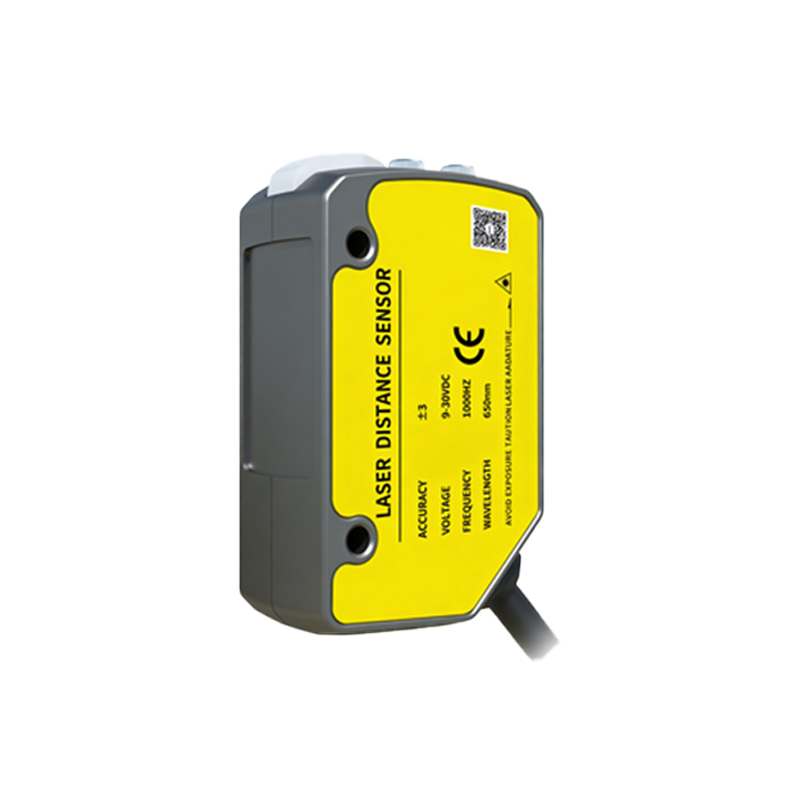
IFM’s ranging photoelectric sensors are engineered for high-speed, long-range applications. For instance, the O1D105 model offers a sensing range up to 10 meters with a response time of less than 1 ms. It operates on a 10-30 VDC power supply and provides analog output (0-10 V or 4-20 mA) as well as switching outputs, allowing easy compatibility with PLC systems. The sensor’s IO-Link interface enables real-time parameter adjustment, including measuring range, output characteristics, and hysteresis, via a centralized control system. Additionally, the built-in background suppression function eliminates interference from reflective surfaces, ensuring reliable detection even with black or shiny objects. The housing is made of stainless steel and sealed with double O-rings, preventing ingress of cutting fluids and coolants. With a laser class 1 rating, it poses no eye hazard, making it safe for use in occupied spaces. These features collectively reduce maintenance downtime and improve process accuracy in industries like automotive, packaging, and logistics.
Application Case Studies in Industrial Automation
One typical application is in automated palletizing systems, where IFM sensors measure the exact height of stacked boxes to optimize robot gripper positioning. In a German automotive plant, the O5D100 sensors are used to monitor the fill level of adhesive tanks within a tolerance of ±1 mm, preventing overflows and material waste. Another example is in high-bay warehouses, where distance sensors guide AGVs to within 5 cm of target racks, reducing collision risks. The sensors’ high immunity to ambient light (up to 100,000 lux) ensures stable operation near bright welding arcs. Furthermore, in food processing, the IP69K-rated sensors withstand high-pressure cleaning cycles, ensuring hygienic production. These real-world cases demonstrate how IFM’s ranging sensors enhance throughput and reduce manual inspection costs. For engineers, selecting the right sensor involves considering factors like target material, color, and environmental light, but IFM’s configuration tools simplify this process through pre-loaded setup profiles.
Installation and Calibration Best Practices
Proper installation is key to maximizing sensor performance. For the O1D series, mount the sensor perpendicular to the target surface to minimize angular errors. Use a stable mounting bracket to avoid mechanical drift, and ensure the sensor’s lens is clean of contaminants. Calibration can be performed via the IO-Link software or with the teach button: first, set the sensor to “distance” mode, then position a reference target at the desired distance and confirm the output. For long-range measurements (above 5 meters), use a reflective target (e.g., white cardboard) to boost signal strength. Avoid mounting near high-frequency interference sources like motors or inverters. The sensor’s LED indicators provide real-time feedback: green for normal operation, red for errors. In multi-sensor arrays, stagger their angles to prevent cross-talk. Following these guidelines ensures a reliable ranging system with a typical service life exceeding 50,000 hours. For troubleshooting, consult IFM’s online diagnostic tool, which logs temperature and measurement drift data.
Future Trends and Integration with Industry 4.0
As factories move toward digitalization, IFM’s photoelectric ranging sensors are evolving with smart features. The latest models integrate edge computing capabilities, allowing local data filtering to reduce network load. They also support OPC UA communication for seamless integration with MES and SCADA systems. Predictive maintenance is enabled by analyzing measurement drift patterns over time, alerting operators to potential lens contamination or component wear. Moreover, the sensors’ compact form factor allows embedding into collaborative robots (cobots) for adaptive speed control based on human proximity. IFM is also developing multi-spectral sensors that combine ToF with color detection, enabling simultaneous distance and color recognition for quality inspection. These advancements align with the Industry 4.0 requirement for real-time data collection and self-optimization. Engineers can expect lower total cost of ownership through reduced manual calibration and extended hardware longevity. Adopting these sensors today positions a factory for future automation challenges.