Introduction to Optical Encoder Discs
Optical encoder discs, also known as code wheels, are fundamental components in precision motion control systems. These discs are typically made of glass, metal, or plastic, and feature a pattern of alternating transparent and opaque segments. As the disc rotates, an optical sensor reads these patterns to convert mechanical motion into electrical signals, enabling accurate position, speed, and direction feedback.
Principle of Operation
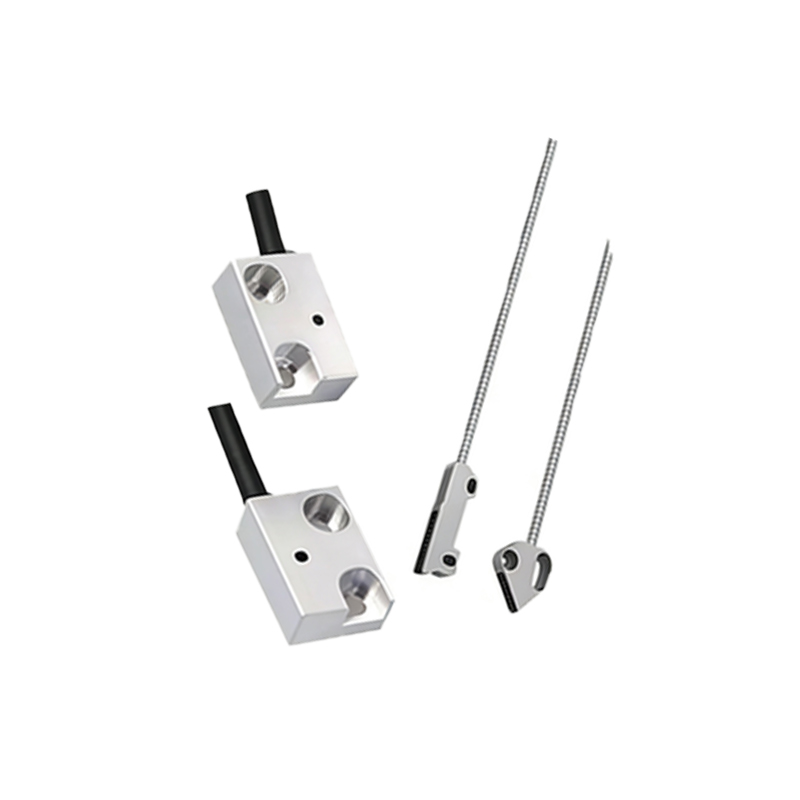
An optical encoder system consists of a light source (usually an LED), a rotating disc with coded patterns, and photodetectors. When the disc rotates, the light beam is interrupted by the opaque segments and passes through the transparent ones. The photodetectors generate digital pulses corresponding to this pattern. By counting these pulses, the system determines angular displacement. Incremental encoders use a track with equally spaced slots to measure relative position, while absolute encoders employ unique binary patterns to provide absolute position information even after power loss.
Key Design Considerations
The resolution of an optical encoder disc is determined by the number of slots or lines per revolution (PPR). High-resolution discs, with thousands of lines, are critical for applications requiring sub-micron accuracy, such as CNC machines and robotic joints. Material selection is equally important. Glass discs offer high accuracy and thermal stability but are fragile; metal discs provide durability but lower resolution; plastic discs are cost-effective for less demanding environments. Additionally, environmental factors like dust, vibration, and temperature must be addressed, often through sealed housings or differential signal transmission.
Applications in Industrial Automation
Optical encoder discs are widely used in servo motors, conveyor systems, and printing presses. In servo motor control, they provide real-time feedback for closed-loop speed and torque regulation. In packaging machinery, they ensure precise timing for cut-and-seal operations. For example, a high-resolution encoder in a pick-and-place robot can achieve repeatability within 0.01 mm, crucial for electronic assembly lines. Their ability to operate at high speeds, sometimes exceeding 10,000 RPM, makes them indispensable for modern automation.
Common Challenges and Solutions
One major challenge is contamination from oil or dust, which can block the optical path. Solutions include using photoelectric sensors with automatic gain control or implementing redundant sensor arrays. Another issue is signal jitter caused by disc eccentricity or vibration. Advanced algorithms, such as interpolation techniques, can mitigate this by averaging multiple readings. For harsh environments, magnetic encoders may replace optical ones, but optical discs remain preferred for their superior precision.
Future Trends in Optical Encoder Technology
Emerging trends include miniaturization for compact devices, such as in medical robotics, and integration with IoT for predictive maintenance. Capacitive encoder discs, which combine optical and electrical principles, are gaining traction for their immunity to contamination. Additionally, the use of fiber-optic transmission allows operation in explosive atmospheres. As Industry 4.0 demands higher accuracy and connectivity, optical encoder discs will continue to evolve, supporting resolutions up to 1 million PPR in next-generation systems.
Conclusion
Optical encoder discs are the backbone of precision motion control, bridging the gap between mechanical motion and digital intelligence. Their design balances resolution, durability, and cost, tailored to specific industrial needs. With ongoing advancements in materials and signal processing, these components will remain vital for achieving efficiency and accuracy in automated systems.