Introduction to Photoelectric Sensors
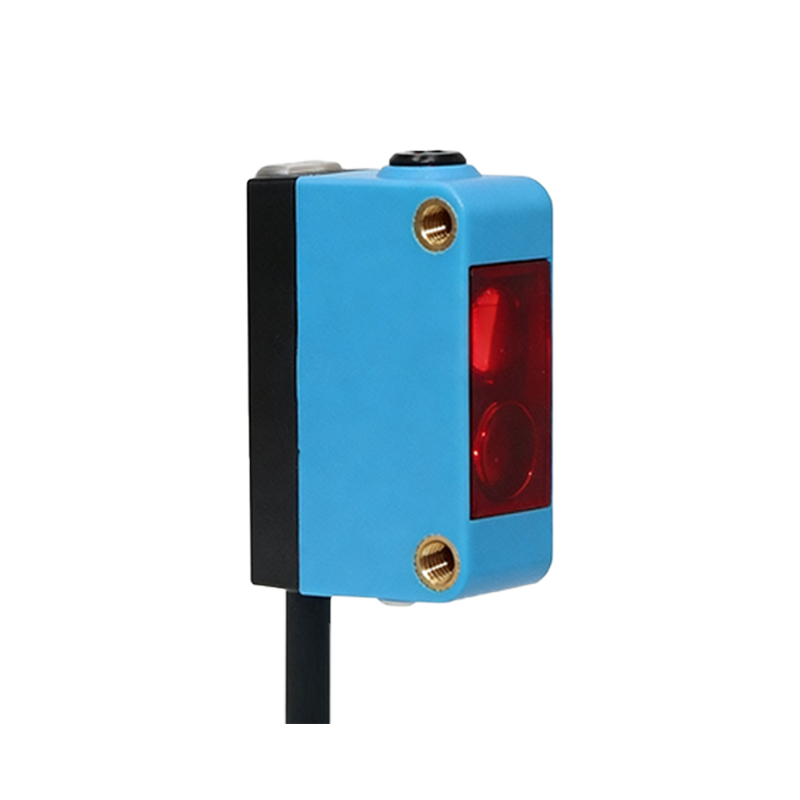
Photoelectric sensors are critical components in industrial automation, converting light signals into electrical signals to detect the presence, absence, or distance of objects. These sensors utilize a light emitter and a receiver, often employing visible red or infrared light, to operate in various environments, from clean rooms to harsh manufacturing floors. Their ability to function without physical contact makes them indispensable in modern electrical engineering applications.
Core Working Principles
The fundamental operation involves a transmitter that emits a beam of light, and a receiver that detects changes in the light intensity or interruption. There are three primary modes: through-beam, retro-reflective, and diffuse. In through-beam mode, the emitter and receiver are separate, providing long-range detection and high reliability. Retro-reflective sensors use a reflector to bounce the beam back, simplifying installation. Diffuse sensors rely on the object itself to reflect the light, making them ideal for short-range applications. These principles enable precise detection of various materials, including transparent, opaque, and reflective objects.
Key Role in Automation Systems
Photoelectric sensors play a vital role in automating production lines, packaging machinery, and material handling systems. They ensure accurate object positioning, count items on conveyor belts, and detect level changes in containers. In assembly lines, they verify the presence of components, preventing errors and reducing waste. Their non-contact nature minimizes wear and tear, enhancing system reliability and lifespan. For example, in a bottling plant, these sensors trigger actions like filling, capping, and labeling, maintaining high throughput and consistency.
Status Among Industrial Sensors
Compared to other sensors like inductive, capacitive, or ultrasonic types, photoelectric sensors offer unique advantages. They can detect a wider variety of materials, including paper, plastic, glass, and metals, without needing physical contact. Their fast response times, often in microseconds, make them suitable for high-speed applications. Additionally, modern versions feature advanced optics and signal processing, allowing them to operate in dusty, wet, or low-contrast environments. This versatility has established them as a cornerstone in Industry 4.0 initiatives, where smart factories rely on reliable, data-rich sensing.
Advantages and Limitations
Key advantages include long detection ranges (up to several meters), high precision, and immunity to magnetic fields. They are easy to install and adjust, with many models offering background suppression for stable detection of dark or shiny objects. However, limitations exist: performance can degrade in heavy fog, smoke, or direct sunlight, and they may require regular cleaning to maintain optical clarity. Engineers must consider these factors when designing systems, often pairing them with other sensor types for redundancy.
Future Trends and Applications
The evolution of photoelectric sensors continues with the integration of IO-Link communication, enabling real-time diagnostics and remote configuration. Miniaturization allows embedding into compact robotic end-effectors, while smart sensors with built-in microprocessors can perform complex filtering and data analysis. Emerging applications include autonomous vehicles for obstacle detection and agricultural automation for crop sorting. As industries push toward higher efficiency and flexibility, the role of photoelectric sensors will only expand, solidifying their status as fundamental tools in electrical engineering.
Conclusion
In summary, photoelectric sensors are indispensable in modern industry, offering reliable, non-contact detection for diverse materials and conditions. Their role in automation enhances productivity, quality, and safety, while their status as a mature yet evolving technology ensures ongoing relevance. Electrical engineers must continue to leverage their capabilities to design robust, future-proof systems.