Introduction to Photoelectric Sensors in Harsh Environments
In the realm of industrial automation, photoelectric sensors are critical components for detecting object presence, distance, and material properties. However, traditional sensors often fail in environments exposed to moisture, dust, or electromagnetic interference (EMI). This article provides an in-depth analysis of waterproof and anti-interference photoelectric sensors, designed to maintain reliable performance under extreme conditions. These sensors are engineered with advanced sealing technologies and robust shielding to withstand water ingress (e.g., IP67, IP68, or IP69K ratings) and resist EMI from motors, inverters, or high-frequency equipment. Their application spans across manufacturing, food processing, and outdoor installations.
Key Design Features for Waterproof Performance
Waterproof photoelectric sensors utilize specialized housing materials, such as stainless steel or high-grade plastics, paired with O-ring seals and potting compounds to prevent water penetration. The ingress protection rating, commonly IP67 or higher, ensures submersion resistance up to 1 meter for 30 minutes. For extreme washdown environments, IP69K-rated sensors can withstand high-pressure, high-temperature water jets. These sensors often incorporate double-sealed optics and hydrophobic coatings on lenses to prevent fogging or droplet accumulation, ensuring consistent detection even in steam or condensation-rich areas. The design also minimizes moisture-related false triggers, critical for food and beverage production lines.
Anti-Interference Mechanisms for Stable Operation
To combat electromagnetic interference, these sensors integrate multiple countermeasures. First, metallic shielding around the sensor core and cable acts as a Faraday cage, blocking external radio frequency (RF) and electromagnetic fields. Second, advanced filtering circuits within the microprocessor suppress high-frequency noise from nearby machinery. Third, some models employ spread-spectrum modulation technology, which spreads the emitted light signal over a wider frequency band, reducing susceptibility to interference from ambient light sources like LED arrays or welding arcs. Additionally, response time is optimized to avoid false pulses, with typical values ranging from 0.5 to 5 milliseconds.
Application Scenarios and Performance Advantages
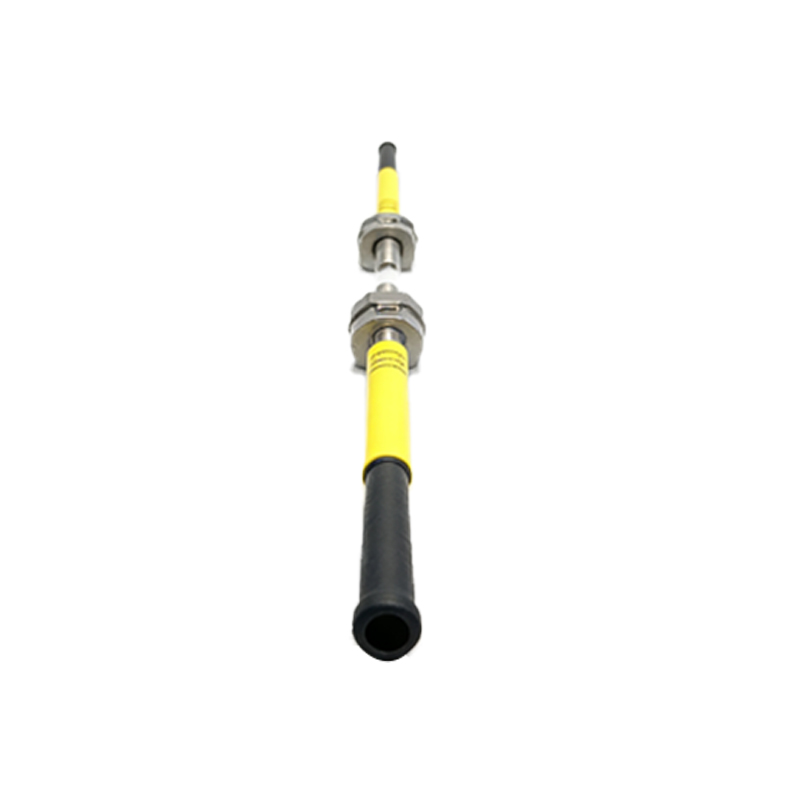
Waterproof anti-interference photoelectric sensors excel in sectors where reliability is paramount. In automotive assembly, they detect parts in paint booths where wet conditions and static discharge are common. In wastewater treatment plants, they monitor fluid levels without corrosion issues. The anti-interference capability ensures stable operation near variable frequency drives (VFDs) or large power cables. Compared to standard sensors, these units offer extended lifecycle (up to 10 years in moderate conditions), lower maintenance costs due to reduced false alarms, and compatibility with industrial communication protocols like IO-Link for diagnostic data. Field tests show a 95% reduction in EMI-related failures versus non-shielded models.
Selection Criteria and Installation Best Practices
Choosing the right sensor requires evaluating the environment: for constant submersion, opt for IP68; for high-pressure washdown, IP69K. Verify the EMI tolerance range (e.g., 10 V/m at 80 MHz to 1 GHz for industrial standards). Installation should avoid routing sensor cables parallel to power cables; use shielded twisted-pair wiring and ground the sensor housing properly. Ensure the sensing distance matches the application (e.g., through-beam types for long ranges up to 30 meters, diffuse types for short distances). Regular inspection of seals and lens integrity prevents performance degradation. Calibration tools are available for fine-tuning background suppression in reflective environments.
Future Trends and Innovation Directions
The next generation of these sensors will integrate IoT capabilities with real-time monitoring of seal integrity and interference levels. Advancements in materials science may introduce self-healing polymers for lens repair. Machine learning algorithms could adaptively filter interference patterns, enhancing accuracy in dynamic industrial settings. Energy harvesting technologies, such as vibration-based power generation, could enable wireless sensor nodes in hard-to-reach locations. These innovations promise to further reduce downtime and operational costs, while expanding applications into smart factories and renewable energy sectors.