In the realm of modern technology, laser sensors have become indispensable tools across numerous industries, from manufacturing and healthcare to autonomous vehicles and consumer electronics. These devices operate by emitting focused light beams—laser radiation—to detect, measure, or scan objects with high precision. However, the term "radiation" often evokes concern, leading to questions about the safety and nature of the emissions from laser sensors. This article delves into the fundamentals of laser sensor radiation, its classifications, safety considerations, and diverse applications, providing a clear perspective on this advanced technology.
Laser radiation is a form of electromagnetic radiation, specifically coherent, monochromatic light amplified through stimulated emission. Unlike the ionizing radiation from X-rays or nuclear sources, laser radiation in typical sensors is non-ionizing, meaning it lacks the energy to remove electrons from atoms or molecules, thereby posing a different risk profile. Laser sensors utilize this radiation in various ways, such as time-of-flight measurements, triangulation, or interferometry, to gather data about distance, speed, or surface characteristics. The key parameters defining laser radiation include wavelength (e.g., visible, infrared, or ultraviolet), power output, pulse duration, and beam divergence, all of which influence both performance and safety.
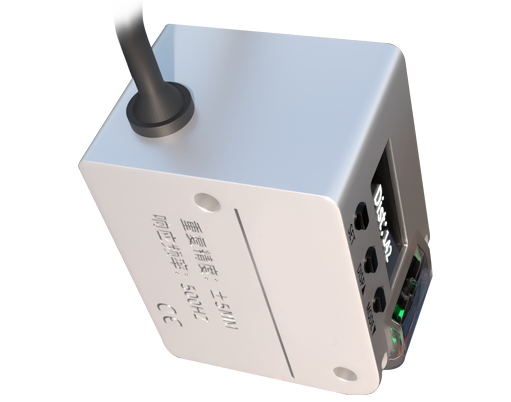
Safety is a paramount concern when dealing with laser sensors. To standardize risks, lasers are classified into categories based on their potential to cause harm, primarily to eyes and skin. Class 1 lasers are considered safe under normal operating conditions, often found in consumer devices like barcode scanners. Class 2 lasers, common in some industrial sensors, emit visible light and are low-risk due to natural aversion responses like blinking. Classes 3 and 4 include higher-power lasers used in specialized sensors for cutting or medical applications, requiring strict controls such as protective eyewear and enclosed systems. Regulatory bodies like the International Electrotechnical Commission (IEC) and the U.S. Food and Drug Administration (FDA) set guidelines to ensure safe usage, emphasizing proper labeling, training, and engineering controls to minimize exposure.
In practical terms, laser sensor radiation enables a wide array of applications. In industrial automation, sensors with infrared laser radiation monitor assembly lines, detect defects, or guide robotic arms with micron-level accuracy. Automotive LiDAR systems use pulsed laser radiation to create 3D maps for self-driving cars, operating safely within regulated limits. Environmental monitoring employs laser sensors to measure atmospheric pollutants via radiation absorption techniques, while healthcare devices, such as laser-based blood glucose monitors, leverage specific wavelengths for non-invasive diagnostics. Each application balances radiation output with safety protocols to achieve reliable results without compromising well-being.
Despite the benefits, misconceptions about laser sensor radiation persist. Some assume all laser emissions are hazardous, but most consumer and industrial sensors fall into lower-risk classes, designed with built-in safeguards like automatic shut-offs or diffused beams. It's crucial to distinguish between intentional exposure in controlled settings and accidental misuse. For instance, pointing a high-power laser sensor directly into eyes can cause injury, but normal operation within specifications poses minimal risk. Education on laser safety standards, including the use of protective equipment and regular maintenance, helps mitigate concerns and promotes responsible adoption.
Looking ahead, advancements in laser technology continue to refine sensor capabilities while enhancing safety. Innovations like low-power, high-efficiency lasers and smart sensors with adaptive radiation control are expanding applications in wearable tech and IoT devices. Researchers are also exploring new wavelengths and modulation techniques to improve accuracy and reduce energy consumption. As laser sensors become more integrated into daily life, ongoing dialogue between engineers, regulators, and users will ensure that radiation remains a tool for progress, not a source of harm.
In summary, laser sensor radiation is a sophisticated yet manageable aspect of contemporary engineering. By understanding its principles, adhering to safety classifications, and leveraging its precision, industries can harness the full potential of laser sensors. Whether in a factory, a laboratory, or on the road, these devices exemplify how controlled radiation drives innovation, underscoring the importance of informed usage and continuous improvement in safety practices.