In industrial automation and electronic control systems, proximity switch sensors are fundamental components. Understanding their English terminology is crucial for engineers, technicians, and procurement specialists working in international environments or with global equipment manuals. This guide provides a clear, non-AI generated explanation of key terms and concepts.
A proximity switch sensor, often simply called a proximity sensor, is a non-contact device that detects the presence or absence of an object within its sensing range without physical contact. The core principle involves generating an electromagnetic field or beam and detecting changes caused by a target object.
The primary types are defined by their sensing technology:
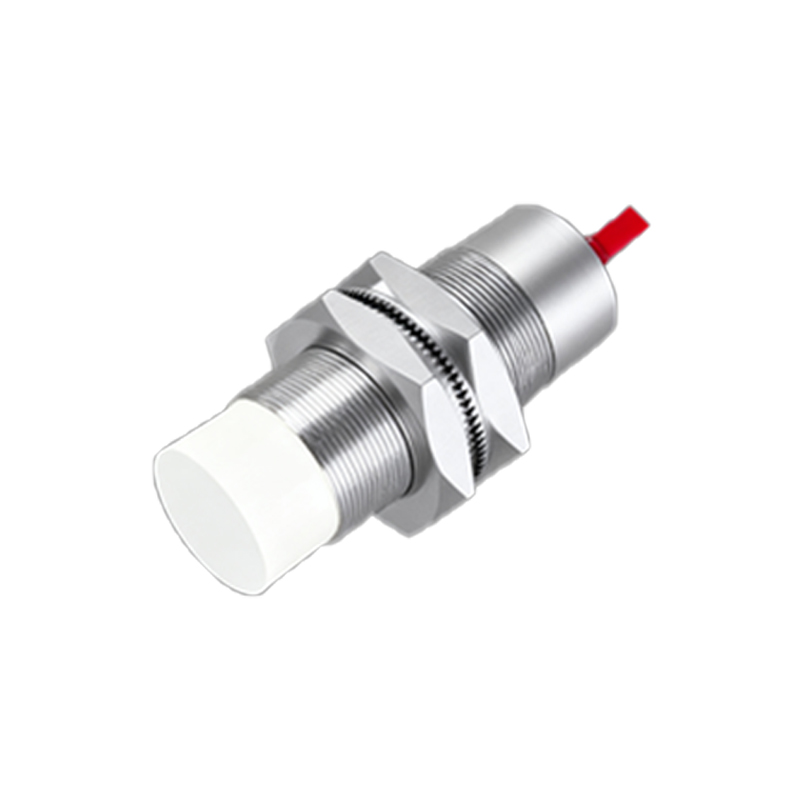
Inductive Proximity Sensors: These detect metallic objects, typically ferrous metals like steel and iron. They operate by generating an oscillating electromagnetic field. When a metal object enters this field, it induces eddy currents, causing a change in the oscillation amplitude, which triggers the sensor's switch.
Capacitive Proximity Sensors: These can detect both metallic and non-metallic materials, including liquids, plastics, wood, and granules. They work by measuring changes in capacitance. The sensor forms one plate of a capacitor, the target object acts as the other plate, and the air gap is the dielectric. The presence of the object alters this capacitance, triggering the output.
Ultrasonic Proximity Sensors: These use sound waves beyond human hearing. They emit ultrasonic pulses and measure the time taken for the echo to return. The presence of an object within a set distance alters this echo timing.
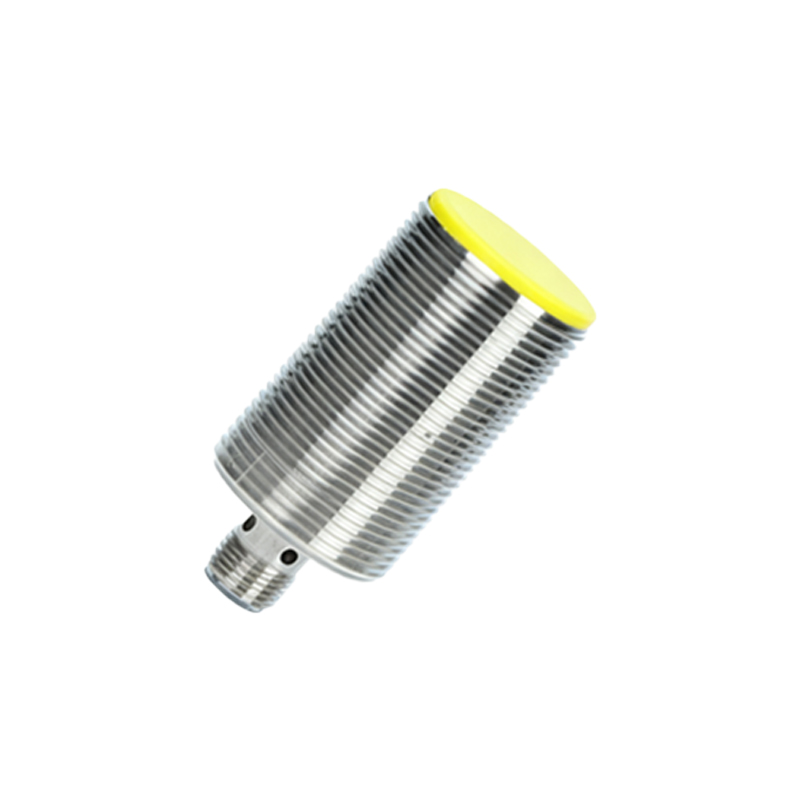
Photoelectric Sensors: While sometimes categorized separately, they function as proximity devices. They use a light emitter (usually LED or laser) and a receiver. The presence of an object interrupts (through-beam) or reflects (retro-reflective, diffuse) the light beam, triggering the output.
Key operational parameters and specifications are described with precise terms:
Sensing Distance (Nominal Range): The rated operating distance at which a standard target will reliably trigger the sensor. It is often denoted as Sn.
Hysteresis: The difference between the switch-on point (when the target approaches) and the switch-off point (when the target moves away). This prevents output chatter when a target is at the exact sensing boundary.
Output Type: This defines the electrical switching mechanism.
PNP (Sourcing): The output switch connects the load to positive voltage.
NPN (Sinking): The output switch connects the load to ground/negative.
Analog Output: Provides a continuous signal (e.g., 4-20mA, 0-10V) proportional to the distance to the target.
IO-Link: A digital point-to-point communication for advanced diagnostics and parameter setting.
Normally Open (NO) / Normally Closed (NC): Refers to the state of the output contacts when no target is present. NO contacts are open (off), NC contacts are closed (on).
Shielded (Flush-mountable) vs. Unshielded (Non-flush): Shielded sensors can be mounted flush with metal without affecting their sensing field. Unshielded sensors have a longer range but require a non-metallic surround.
Repeat Accuracy: The consistency with which the sensor detects a target at the same point.
Switching Frequency: The maximum number of on/off cycles the sensor can perform per second.
IP Rating (Ingress Protection): A standard classification for dust and water resistance (e.g., IP67).
Common application phrases include "object detection," "position sensing," "end-of-travel limit switching," "counting parts on a conveyor," and "liquid level control." When troubleshooting, one might refer to "false triggering," "failure to detect," "output signal instability," or "LED indicator status."
For effective communication in datasheets and manuals, phrases like "ensure proper alignment," "maintain adequate clearance from adjacent metal," "check supply voltage polarity," and "verify load compatibility" are standard. Understanding this terminology enables precise selection, installation, and maintenance of these critical automation components, ensuring system reliability and efficient global collaboration.