Introduction to the VF End in Photoelectric Sensors
The VF end, often referred to as the voltage-free contact output, is a critical component in photoelectric sensors used in industrial automation. Unlike standard transistor outputs (NPN/PNP), the VF end provides a dry contact, meaning it operates without an internal voltage source. This makes it ideal for interfacing with various control systems, such as PLCs and relays, especially in environments requiring isolation. As an engineer, you must understand its electrical characteristics, wiring, and application scenarios to ensure reliable sensor performance. The VF end typically handles low-current switching (e.g., 10-30 mA) and requires careful consideration of load compatibility.
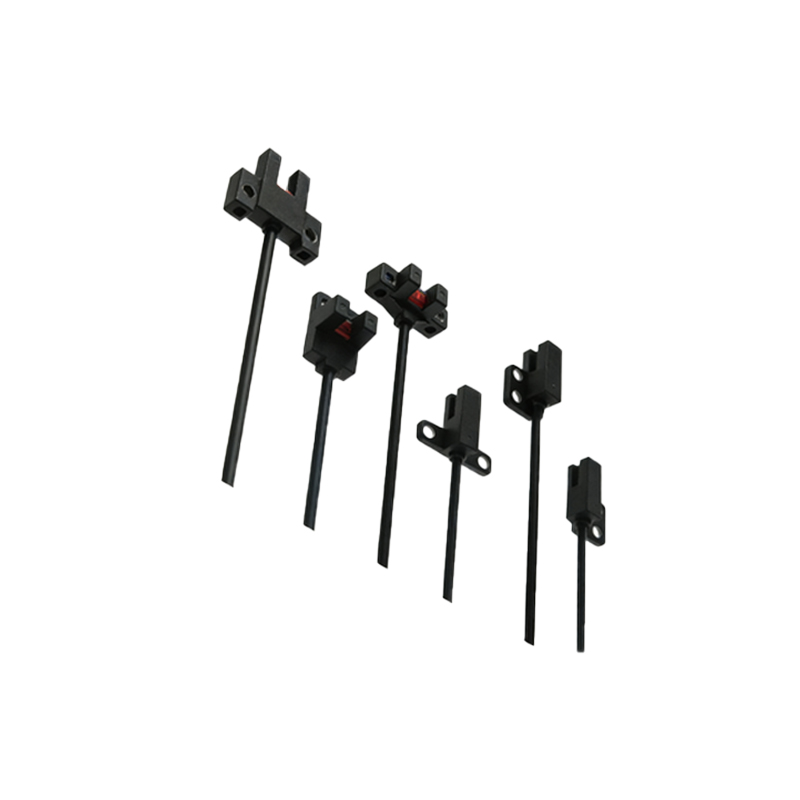
Electrical Characteristics of the VF End
The VF end functions as a mechanical relay or solid-state switch, offering galvanic isolation between the sensor and the load. Key parameters include maximum switching voltage (e.g., 30 V DC or 250 V AC), maximum switching current (e.g., 100 mA), and response time (e.g., 1-10 ms). Unlike transistor outputs, the VF end can switch both AC and DC loads, but it is not suitable for high-frequency applications due to mechanical wear in relay types. Solid-state VF ends, however, provide faster switching and longer life. Always consult the datasheet for specific ratings to avoid overloading.
Wiring and Connection Best Practices
When wiring the VF end, treat it as a passive switch. Common configurations include two-wire (normally open or normally closed) and three-wire (common, NO, NC) setups. For two-wire VF ends, connect one wire to the load and the other to the supply voltage (e.g., 24 V DC). Ensure the load current falls within the sensor's specified range; excessive current can damage the internal switch. Use shielded cables in noisy environments to prevent false triggers. Additionally, add a flyback diode across inductive loads (e.g., relays) to suppress voltage spikes.
Common Applications in Industrial Automation
The VF end excels in applications requiring isolation or mixing of different voltage systems. For example, it is widely used in conveyor systems to interface with motor controllers, where the sensor's VF output switches a relay that controls a high-power motor. In safety circuits, VF ends provide reliable dry contacts for interlocking systems. Another typical use is in retrofitting older PLCs with limited input types, where the VF output acts as a simple switch. Its versatility makes it a preferred choice for engineers dealing with mixed-voltage control panels.
Troubleshooting VF End Issues
Common problems with VF ends include contact welding (due to overcurrent), slow response (due to mechanical wear), and false triggering (due to noise). To diagnose, use a multimeter to check continuity and voltage drop across the VF output when activated. Ensure the load current is within spec; if welding occurs, upgrade to a solid-state VF end. For noise issues, add a capacitor (e.g., 0.1 μF) across the VF terminals or use a ferrite bead on the cable. Always verify the power supply voltage matches the sensor's requirement (e.g., 10-30 V DC).
Selecting the Right VF End for Your Project
Match the VF end specifications to your load requirements. For high-frequency switching (e.g., >10 Hz), choose a solid-state VF end instead of a relay type. For AC loads, ensure the sensor is rated for AC switching. Consider environmental factors such as temperature range (e.g., -25 to 70°C) and humidity. Brands like Banner, SICK, and Omron offer reliable VF end sensors. Always test the VF end with your specific controller to verify compatibility, particularly regarding residual voltage and leakage current.
Conclusion: Maximizing VF End Performance
Mastering the VF end of photoelectric sensors enhances system reliability and flexibility. By understanding its isolated switching capability, engineers can design robust automation solutions. Regular maintenance, such as checking for contact wear and cleaning optical lenses, prolongs sensor life. For advanced integration, consider using VF ends with smart sensors that provide diagnostic feedback. As the industry moves toward Industry 4.0, the VF end remains a vital interface for bridging legacy and modern control systems.