Introduction: Understanding PM2.5 Sensor Principles
As an electrical engineer specializing in environmental monitoring systems, I often encounter the question: Is a PM2.5 sensor a photoelectric sensor? The short answer is: not necessarily, but many common designs do rely on photoelectric principles. PM2.5 sensors, also known as particulate matter sensors, measure airborne particles with diameters less than 2.5 micrometers. Their operating mechanism can vary, with two primary methodologies: light scattering (photoelectric) and beta attenuation. Photoelectric sensors, in the strictest electrical engineering sense, detect changes in light intensity caused by the presence of objects or particles. In the case of PM2.5 sensors, laser-based or LED-based light scattering is a photoelectric effect, where a light source illuminates particles, and a photodetector captures the scattered light. This article will clarify the relationship, focusing on technical nuances for industry professionals.
Photoelectric Sensor Basics in the Electrical Context
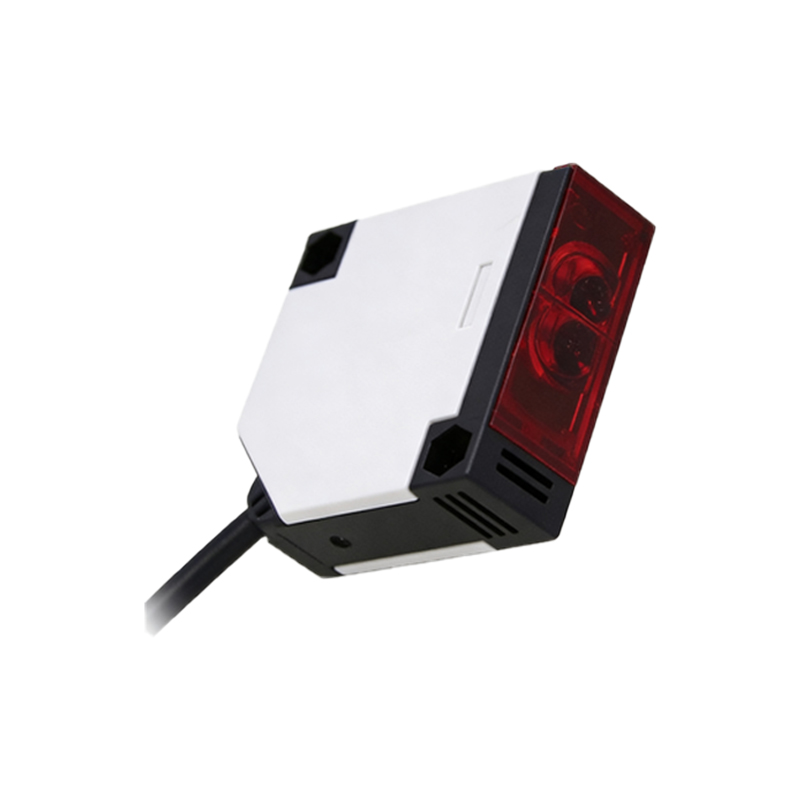
In electrical engineering, a photoelectric sensor typically refers to a device that converts light energy into an electrical signal. Common types include through-beam, retro-reflective, and diffuse sensors. These are widely used for object detection, counting, and positioning in industrial automation. The core component is a photosensitive element, such as a photodiode or phototransistor, which responds to changes in incident light. For PM2.5 sensors, the principle is analogous: a laser diode emits a collimated beam, and when particles pass through it, they scatter light onto a photodiode. The intensity of the scattered light correlates with particle concentration. Thus, from a functional perspective, a laser-based PM2.5 sensor is indeed a specialized type of photoelectric sensor, optimized for sub-micron particle detection rather than macroscopic object presence.
PM2.5 Sensor Technologies: Photoelectric vs. Non-Photoelectric
It is critical to distinguish between different PM2.5 sensing technologies. The most common consumer-grade and industrial PM2.5 sensors, such as those from Plantower, Honeywell, or Sensirion, use laser light scattering, which is inherently photoelectric. These devices contain a laser diode and a photodetector array, often with a lens system to focus scattered light. They are classified as optical particle counters. In contrast, beta attenuation monitors (BAMs) use a radioactive source (e.g., Carbon-14) to measure mass concentration, relying on ionization and particle absorption, not light. Gravimetric methods use filter weighing, entirely mechanical. Therefore, while many PM2.5 sensors are photoelectric, the category also includes non-photoelectric devices. For engineers, specifying the sensor type is crucial: if a project requires real-time, low-power particle detection, a photoelectric PM2.5 sensor is the standard choice.
Technical Implementation of Photoelectric PM2.5 Sensors

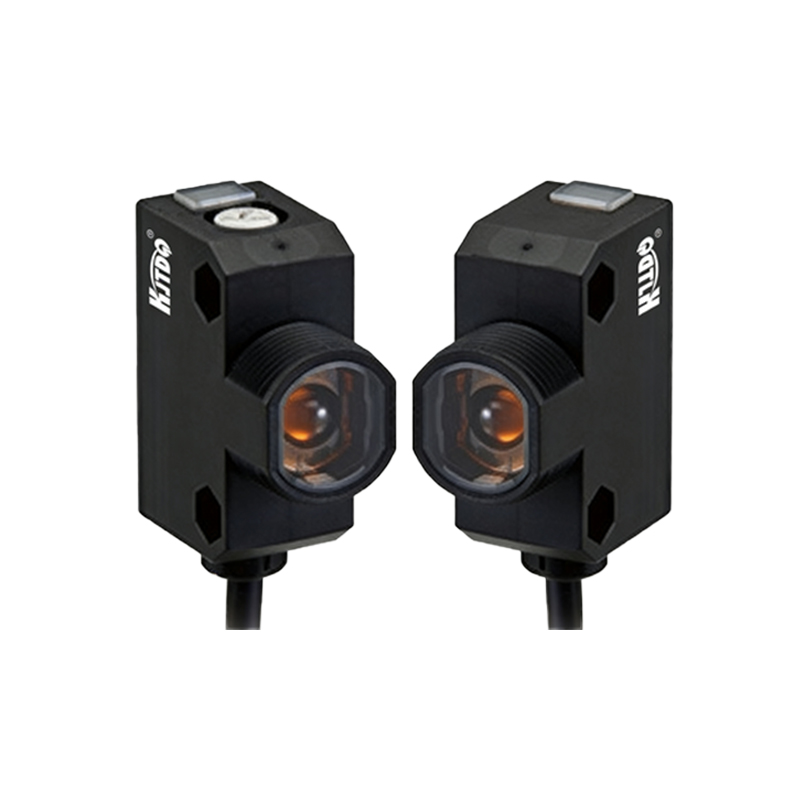
For those designing or integrating PM2.5 sensors, the photoelectric variant typically features a pulsed laser diode (e.g., 650 nm wavelength), a photodiode with a transimpedance amplifier, and a digital signal processor (DSP) for noise filtering. The output is often a digital signal (UART, I2C) providing particle counts per unit volume (e.g., ug/m³). Calibration is essential because the relationship between scattered light and particle mass is not linear; it depends on particle size, refractive index, and shape. Engineers must consider factors like humidity interference (which can cause particle swelling) and sensor drift due to dust accumulation on optics. Despite these challenges, photoelectric PM2.5 sensors offer high sensitivity (down to 0.3 µm) and fast response times, making them ideal for air quality monitoring in HVAC, cleanrooms, and industrial exhaust systems.
Conclusion: Categorization and Practical Guidance
In summary, a PM2.5 sensor can be categorized as a photoelectric sensor when it employs light scattering technology, which is the dominant method in modern low-cost sensors. However, engineers must verify the specific sensing principle: if the device uses laser or LED light and a photodetector, it is photoelectric; if it uses beta radiation or gravimetric methods, it is not. For most electrical engineering applications, the photoelectric type is preferred for its real-time data, compact size, and low power consumption. When selecting a PM2.5 sensor, review the datasheet for optical design, particle size range, and calibration data. Understanding this classification helps in system integration, troubleshooting, and achieving compliance with standards like ISO 8573 for cleanrooms or EPA regulations for ambient air monitoring.