In the rapidly evolving landscape of sensing technology, two prominent solutions have emerged as frontrunners for enabling machines to perceive and interact with their environment: Lidar (Light Detection and Ranging) and ToF (Time-of-Flight) sensors. While both technologies share the fundamental principle of using light to measure distance, their underlying mechanisms, capabilities, and ideal applications differ significantly. Understanding these distinctions is crucial for engineers, developers, and decision-makers selecting the right tool for tasks ranging from autonomous navigation to gesture recognition.
Lidar sensors operate by emitting rapid pulses of laser light across a field of view. A highly sensitive receiver then detects the light reflected back from objects in the environment. By precisely calculating the time delay between the emission and detection of each pulse—the "time of flight"—the sensor can construct a detailed, three-dimensional point cloud map of the surroundings. Modern Lidar systems often use rotating or solid-state scanning mechanisms to cover wide areas with high angular resolution. This results in exceptionally accurate depth information, capable of discerning fine details at long ranges, often exceeding 200 meters for automotive-grade systems. The primary strength of Lidar lies in its high precision, long range, and ability to perform reliably in various lighting conditions, as it uses its own active light source.
On the other hand, ToF sensors represent a more compact and cost-effective approach to depth sensing. A typical ToF camera module works by illuminating the entire scene with a modulated light source, usually infrared. The sensor measures the phase shift between the emitted and reflected light for each pixel in its array. This phase shift directly correlates to the distance the light has traveled. Consequently, a ToF sensor generates a complete depth map or depth image in a single capture, providing distance values for every pixel simultaneously. This makes ToF technology exceptionally fast and suitable for real-time applications. However, its effective range is typically shorter than Lidar, often limited to a few meters to tens of meters, and its accuracy can be influenced by ambient light and the reflectivity of objects.
The choice between Lidar and ToF is largely dictated by the application's specific requirements. Lidar is the undisputed champion in domains demanding high precision over long distances. This makes it the cornerstone of most autonomous vehicle (AV) development, where creating a precise 3D model of the road, vehicles, pedestrians, and obstacles is non-negotiable for safety. It is also extensively used in topographic surveying, forestry, archaeology, and infrastructure inspection. The detailed point clouds are ideal for simultaneous localization and mapping (SLAM) in robotics.
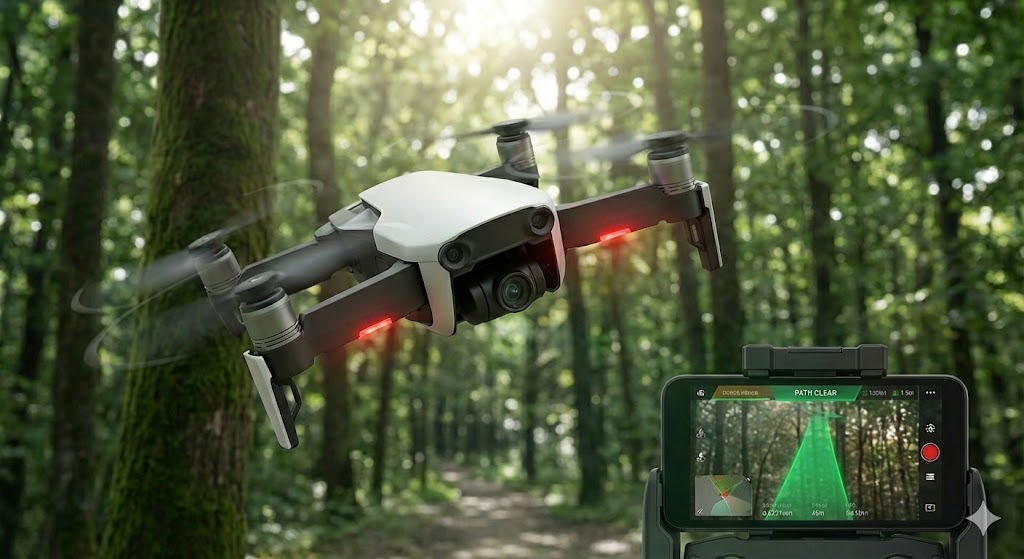
Conversely, ToF sensors excel in applications where cost, size, power consumption, and frame rate are critical constraints. They have found massive adoption in consumer electronics. The face unlock feature in many smartphones, for instance, often relies on a ToF sensor to create a 3D map of the user's face. In the realm of robotics and drones, ToF sensors are used for obstacle avoidance, object recognition, and gesture control at close range. They are also pivotal in industrial automation for bin picking, volume measurement, and presence detection on assembly lines. The gaming industry leveraged ToF-like technology (structured light) in earlier motion-sensing devices.
A key differentiator is environmental robustness. Lidar, particularly those using 905nm or 1550nm lasers, generally performs better in direct sunlight due to its narrow-band filtering and high-power pulses. ToF sensors can struggle with interference from bright ambient light, which can saturate the sensor or introduce noise, though advanced filtering techniques are mitigating this issue. Furthermore, multi-return Lidar can penetrate light foliage and see through rain or fog to some degree, providing multiple data points per laser pulse.
From a system integration perspective, Lidar units are traditionally more complex, larger, and more expensive, though solid-state Lidar is driving costs down and sizes smaller. ToF modules are inherently more compact and can be easily integrated into consumer devices, offering a compelling price-to-performance ratio for short-range tasks.
Looking forward, the lines between these technologies may blur. Solid-state Lidar, which has no moving parts, shares some manufacturing commonalities with ToF sensor arrays. Some advanced systems are beginning to fuse data from both Lidar and ToF, along with cameras and radar, to create redundant and comprehensive perception systems. This sensor fusion approach leverages the long-range accuracy of Lidar and the high-speed, dense depth data of ToF for a complete situational awareness picture.
In conclusion, neither Lidar nor ToF is universally superior. Lidar remains the gold standard for long-range, high-accuracy 3D mapping where cost is a secondary concern. ToF technology dominates the market for compact, real-time, short-to-medium-range depth sensing in cost-sensitive, high-volume applications. The ongoing innovation in both fields promises higher performance, lower costs, and new hybrid solutions, further expanding the horizons of what machines can perceive and achieve.