Laser displacement sensors are non-contact measurement devices that have become indispensable in modern industrial automation and quality control. By projecting a laser beam onto a target surface and analyzing the reflected light, these sensors can determine the distance to the object with remarkable speed and precision. The core technology typically involves one of two primary principles: triangulation or time-of-flight.
The triangulation method is favored for high-accuracy, short-to-medium-range applications. A laser diode emits a focused beam that strikes the target. The reflected light is then focused onto a position-sensitive detector, such as a CCD or CMOS array. The position of the light spot on this detector shifts proportionally to the distance of the target. By calculating this angular shift, the sensor's onboard processor determines the exact displacement. This principle allows for resolutions down to the sub-micron level, making it ideal for tasks like measuring wafer thickness, inspecting component profiles, or monitoring vibration in delicate machinery.

For longer ranges, often exceeding several meters, time-of-flight (ToF) sensors are commonly employed. These devices measure the time it takes for a laser pulse to travel to the target and back. Given the constant speed of light, the distance is calculated directly from this time interval. While generally offering slightly lower resolution than triangulation-based sensors, modern ToF sensors provide excellent performance for applications like vehicle detection, bulk material level monitoring, and large-scale robotic guidance.
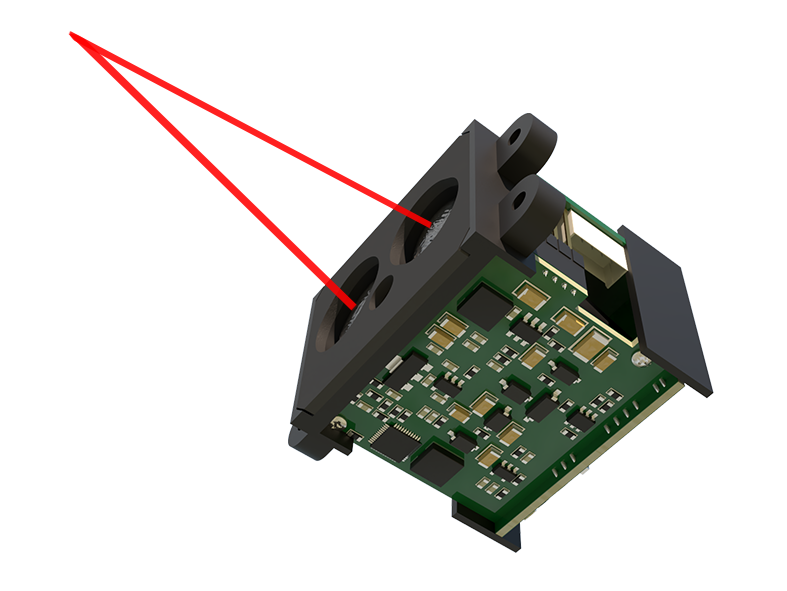
The advantages of laser displacement sensors are numerous. Their non-contact nature eliminates mechanical wear and allows measurement of soft, hot, or delicate objects that could be damaged by a physical probe. They offer extremely high sampling rates, often in the kilohertz range, enabling real-time process control on fast-moving production lines. Furthermore, they are largely immune to the target material's color or ambient light conditions, especially when using a modulated laser signal and specialized optical filters.
In practical industrial settings, the applications are vast. In automotive manufacturing, they ensure precise gap and flush measurements between body panels. In electronics, they verify the coplanarity of BGA solder balls or the thickness of coated layers. In the pharmaceutical industry, they control the fill level in vials and blister packs. They are also crucial for robotic positioning, where they provide feedback for accurate pick-and-place operations or weld seam tracking.
Selecting the right laser displacement sensor requires careful consideration of several key parameters. The measuring range defines the minimum and maximum distances over which the sensor can operate accurately. Resolution indicates the smallest detectable change in distance. Linearity error specifies the maximum deviation from a perfect straight-line response across the measuring range. The spot size of the laser is critical when measuring small features or uneven surfaces. Environmental factors like temperature stability, ingress protection (IP) rating for dust and moisture, and resistance to vibrations must also align with the operating conditions.
When integrating these sensors, attention must be paid to the target surface. Highly reflective or transparent materials can pose challenges, often requiring special sensor models with diffuse reflection technology or supplementary accessories like retro-reflective tape. The installation angle relative to the target is also crucial, as steep angles can lead to signal loss or erroneous readings.
As technology advances, laser displacement sensors continue to evolve. Innovations include blue laser models, which offer a smaller spot size and better performance on organic materials like rubber or transparent plastics compared to traditional red lasers. Confocal chromatic sensors provide even higher precision for multi-layer and transparent object measurement. The integration of sophisticated software for data analysis, profiling, and direct communication with PLCs and SCADA systems further enhances their utility.
From ensuring the quality of microscopic components to guiding massive autonomous vehicles, laser displacement sensors provide the critical eyes for machines. Their ability to deliver fast, accurate, and reliable distance data makes them a cornerstone of intelligent manufacturing, driving efficiency, consistency, and innovation across countless industries. Understanding their operating principles and selection criteria is the first step toward leveraging their full potential in any measurement or control application.