In industrial and commercial environments where machinery and conveyor systems operate, safety mechanisms are not just accessories—they are essential components that protect personnel, prevent accidents, and ensure operational continuity. Among these critical safety devices, the two-way pull cord switch, also known as an emergency stop switch or pull wire switch, stands out for its simplicity, reliability, and immediate response capability. This device serves as a vital link between human intervention and machine control, allowing for the rapid shutdown of equipment from multiple points along its length.
The fundamental principle behind a two-way pull cord switch is straightforward. It is installed along the length of a conveyor belt, processing line, or other extended machinery. A steel wire rope, the "pull cord," runs parallel to the equipment and is connected to the switch mechanism at both ends. In the event of an emergency—such as a worker becoming entangled, a material spill, or a visible malfunction—any person at any point along the line can pull this cord. This action mechanically actuates the switch, which is wired into the machine's control circuit. The immediate result is the cessation of power to the drive motor, bringing the entire system to a halt. The "two-way" designation is crucial; it means the cord can be pulled from either direction along its run to trigger the stop function, providing flexibility and ensuring no blind spots where the emergency stop cannot be activated.
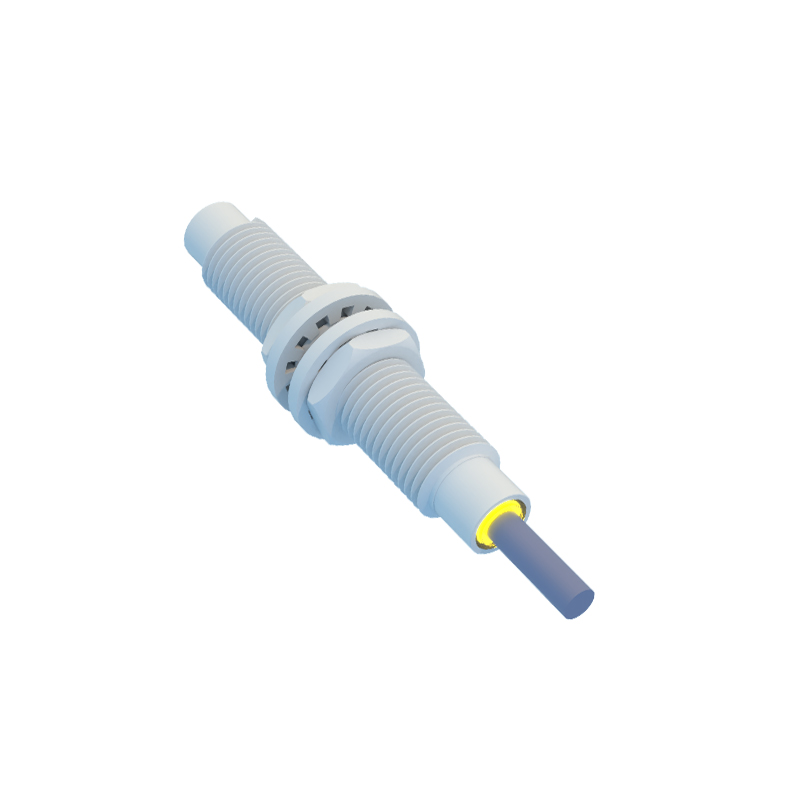
The internal construction typically involves a robust, sealed housing containing a snap-action switch mechanism. Pulling the cord rotates a shaft or cam, which changes the state of the switch contacts from normally closed (NC) to open, breaking the control circuit. High-quality models feature a manual reset function. After the emergency has been addressed, the switch must be physically reset by an operator, often by rotating a knob or lever on the housing. This prevents automatic restart and ensures a conscious decision to resume operations, a key safety protocol. These switches are built to withstand harsh conditions, including dust, moisture, vibration, and extreme temperatures, commonly featuring IP65 or higher ingress protection ratings.
The applications for two-way pull cord switches are extensive. They are mandatory safety fixtures in industries such as mining, where they are used on longwall shearers and conveyor belts; in bulk material handling at ports, power plants, and cement factories; on packaging and assembly lines; and in airport baggage handling systems. Their role transcends mere regulatory compliance. By providing a simple, fail-safe method for workers to stop equipment, they empower personnel, foster a safety-conscious culture, and can significantly reduce the severity of accidents. Proper installation is paramount. The pull cord should be installed at a consistent, accessible height—typically recommended within 0.6 to 1.1 meters from the walking surface—and must have adequate tension to prevent sagging while allowing for easy actuation. Regular testing and maintenance are non-negotiable. Procedures often mandate a weekly functional test where the cord is pulled to verify it stops the equipment and that the reset function works correctly.
When selecting a two-way pull cord switch, several factors must be considered. The mechanical durability, the electrical rating of the contacts (sufficient for the control circuit voltage and current), the type of enclosure, and the required safety certification (like ATEX for hazardous areas or SIL for functional safety) are all critical. Modern variants may include additional features such as status indication lights, dual independent contact sets for redundant circuits, or integrated monitoring that can send a signal to a PLC or SCADA system to log the location and time of the stop event for operational analysis.
In conclusion, the two-way pull cord switch embodies a critical engineering philosophy: the most effective safety systems are often the simplest and most intuitive. It translates a simple physical action into an immediate and decisive control response, placing the power to ensure safety directly in the hands of those closest to the machinery. Its ubiquitous presence along industrial conveyors is a silent testament to its indispensable role in protecting lives and assets, making it a cornerstone of modern industrial safety practice.