In the rapidly evolving landscape of industrial automation and smart systems, the demand for sensing technology that delivers unwavering accuracy under diverse and often harsh conditions has never been greater. At the forefront of this technological push are ultra-stable proximity sensors, a class of devices engineered to provide consistent, reliable detection of objects without physical contact. Their significance extends far beyond simple presence detection, forming the critical sensory foundation for precision machinery, automated assembly lines, robotics, and safety systems.
The core principle of a proximity sensor involves emitting an electromagnetic field or a beam of radiation, such as infrared light, and detecting changes in the field or return signal when an object enters its sensing range. However, the term "ultra-stable" elevates this basic function to a new level of performance. Stability, in this context, refers to the sensor's ability to maintain its specified sensing distance, switching point, and output signal with minimal deviation over time, despite fluctuations in environmental factors like temperature, voltage supply, electromagnetic interference (EMI), or the presence of contaminants like dust, oil, or coolant mist.
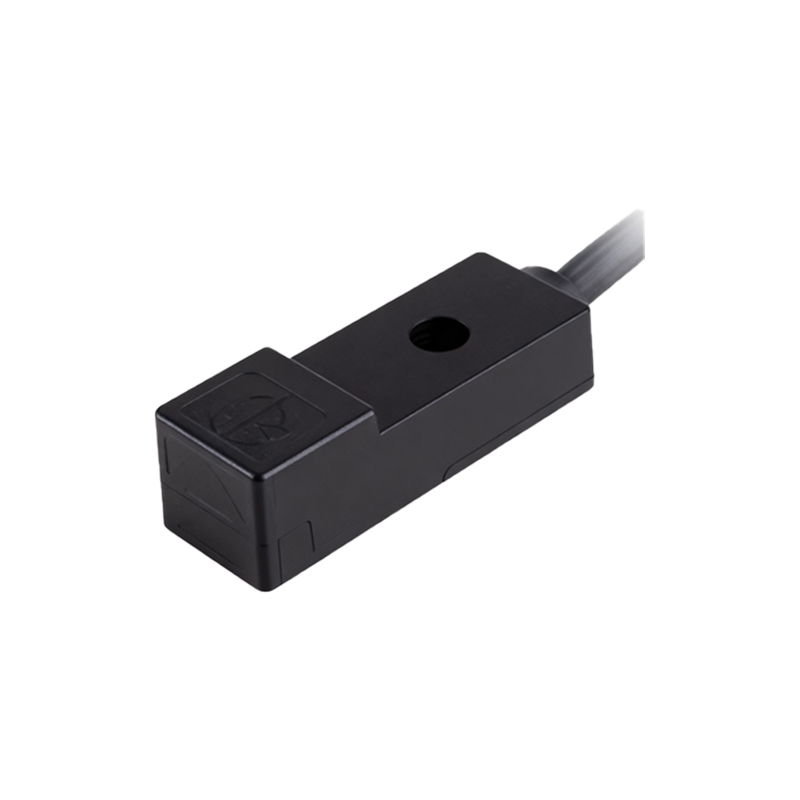
Several key technologies enable this exceptional stability. Inductive proximity sensors, ideal for detecting metallic objects, achieve stability through advanced coil design and oscillation circuit engineering. High-quality ferrite cores and temperature-compensated circuits ensure that the sensing distance remains constant even as ambient temperature swings. Similarly, capacitive proximity sensors, capable of detecting both metallic and non-metallic materials, utilize sophisticated guard ring electrodes and shielding techniques to eliminate the influence of stray capacitance from the sensor's housing or mounting bracket, focusing sensitivity precisely on the target area.

For applications requiring longer ranges or detection of any solid object, ultrasonic and photoelectric sensors represent the pinnacle of stable performance. Modern ultrasonic sensors incorporate temperature compensation algorithms to account for the speed of sound variations, ensuring precise distance measurement. Stable photoelectric sensors, especially diffuse-reflective and through-beam types, employ modulated LED light and advanced optical filters to reject ambient light interference, from bright factory lighting to complete darkness, guaranteeing a reliable signal.
The pursuit of ultra-stability is fundamentally driven by the critical needs of modern industry. In automotive manufacturing, a robot arm equipped with stable sensors must consistently and precisely locate a car door panel for welding, where a variance of even a millimeter could lead to defects. In pharmaceutical packaging, sensors must reliably count pills on a high-speed conveyor belt without false triggers caused by vibration or dust. In food and beverage processing, sensors must perform flawlessly despite constant washdowns with high-pressure, high-temperature cleaning agents, requiring not just stability but also exceptional sealing (often IP69K rated).
The benefits of deploying ultra-stable proximity sensors are manifold. First and foremost is enhanced process reliability, which directly translates to reduced downtime, fewer production errors, and lower scrap rates. This reliability fosters increased overall equipment effectiveness (OEE). Secondly, stability reduces the need for frequent recalibration or adjustment, lowering long-term maintenance costs and labor requirements. Furthermore, stable sensors contribute to improved safety in collaborative robot (cobot) applications and machinery guarding, where fail-safe detection is non-negotiable.
When selecting an ultra-stable proximity sensor for a specific application, engineers must consider several parameters beyond the basic sensing range. Key specifications include repeatability (the consistency of the switching point), temperature drift (the change in sensing distance per degree Celsius), hysteresis (the difference between the switch-on and switch-off points, which provides noise immunity), and the rated operational voltage range. Housing material, such as stainless steel or PBT plastic, is chosen based on chemical resistance and mechanical robustness.
Looking ahead, the integration of smart features with inherent hardware stability is a clear trend. Sensors with IO-Link communication can not only provide a stable switching signal but also transmit diagnostic data like temperature readings, operating hours, and signal strength to a control system. This enables predictive maintenance, where potential issues can be addressed before they cause instability or failure, pushing the concept of reliability into the realm of intelligence.
In conclusion, ultra-stable proximity sensors are not merely components; they are enablers of precision, efficiency, and safety in automated systems. Their value lies in their silent, consistent operation—the assurance that they will perform today, tomorrow, and for years to come under demanding conditions. As industries continue to strive for higher quality, greater throughput, and smarter operations, the role of these robust and reliable sensing devices will only become more central, forming the dependable eyes and touch of the automated world.