Have you ever felt that sudden, inexplicable awareness that someone is near, even before you see or hear them? In our increasingly connected world, this sensation is often facilitated not by a sixth sense, but by the quiet, persistent work of sensors. The experience of a sensor detecting someone approaching is a fascinating intersection of technology, privacy, and human intuition.
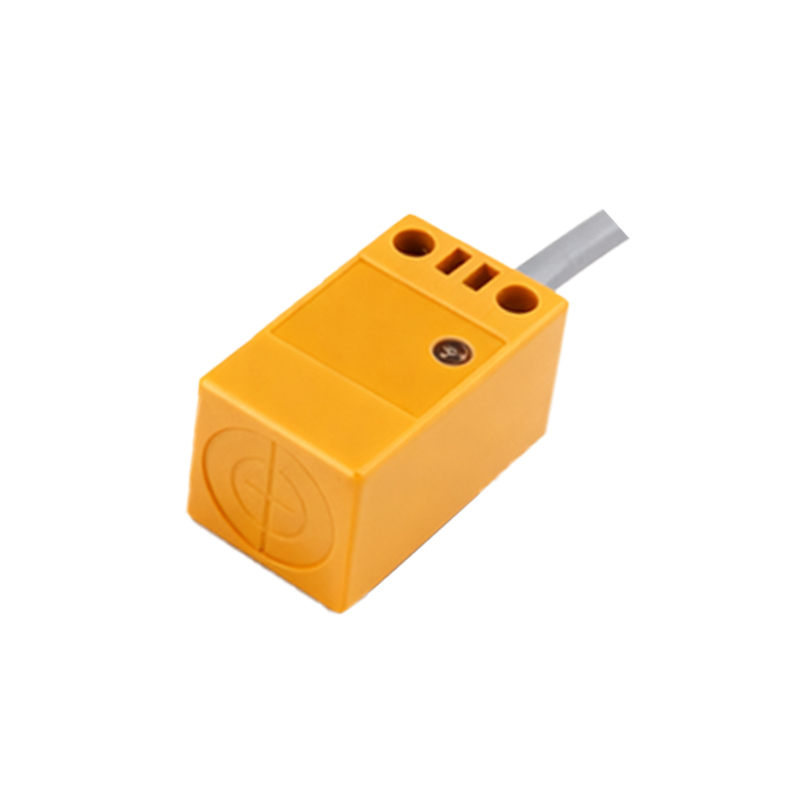
The core technology behind this detection is remarkably diverse. Passive Infrared (PIR) sensors are among the most common. They don't emit any energy but instead sense the heat radiation emitted by the human body. When a warm body moves across the sensor's field of view, it detects the change in infrared radiation and triggers a signal. This is the principle behind many security lights and automatic doors. Another prevalent technology is the ultrasonic sensor. It works by emitting high-frequency sound waves and listening for their echo. An approaching person alters the echo pattern, signaling presence. More advanced systems employ microwave sensors, which emit microwave pulses and measure the reflection off moving objects, or even camera-based systems with video analytics that can identify human shapes and motion.
The moment of detection is a silent digital event, but its consequences are tangible. A smart porch light flickers on, casting a welcoming or warning glow. A smartphone screen might illuminate, anticipating your glance. In a retail setting, a sensor might prompt a digital display to change its content. For individuals with mobility or visual impairments, these sensors can be crucial, providing auditory or tactile alerts about nearby people, enhancing spatial awareness and safety. The application extends to smart homes, where your environment subtly adjusts—perhaps turning on a hallway light as you walk from the bedroom at night.
However, this seamless interaction brings profound questions to the forefront, primarily about privacy and data. When a sensor detects your approach, what happens to that data? Is it a simple on/off trigger that is instantly forgotten, or is it logged, timestamped, and potentially analyzed? In a private home, the user controls this flow. But in public or semi-public spaces—office buildings, shopping malls, city streets—the pervasive detection of approach can feel like constant, passive surveillance. The knowledge that one's mere presence is being registered, even without facial recognition, can create a subtle sense of unease. It challenges our traditional notions of anonymity in a crowd.
Beyond the practical and ethical dimensions lies a psychological one. There's a curious duality to being detected. On one hand, it can feel intrusive, as if your personal bubble has been digitally punctured without consent. On the other hand, it can feel immensely convenient and even protective. The light that turns on automatically can dispel fear of a dark path. The door that unlocks as you approach with arms full of groceries is a helper, not a spy. This dichotomy hinges entirely on context, consent, and control. Who owns the sensor? What is its stated purpose? Transparency is key to transforming a potentially creepy experience into a helpful one.
Looking forward, the technology is becoming more sophisticated and less obtrusive. Sensor fusion, combining data from PIR, ultrasonic, and other sources like ambient light detectors, reduces false alarms and increases accuracy. The goal is to create environments that are responsive and context-aware, anticipating needs without explicit commands. The ideal scenario is a graceful, almost invisible interaction where technology assists without demanding attention or stoking anxiety.
Ultimately, the experience of a sensor detecting someone's approach is a micro-interaction that encapsulates our modern relationship with technology. It is a reminder that our physical movements are becoming a new type of data point. Navigating this reality requires a balanced focus on innovation that genuinely enhances daily life, coupled with robust frameworks that protect individual autonomy and privacy. The hum of detection is the background noise of a smarter world, and its tune must be composed with both capability and conscience.