In the rapidly evolving landscape of industrial automation and smart electronics, high frequency proximity sensors represent a critical component for non-contact detection and measurement. While technical specifications provide essential data, visual documentation—specifically, high frequency proximity sensor images—offers a unique and powerful perspective into their design, application, and operational context. These images are more than just photographs; they are diagnostic tools, educational resources, and selection aids for engineers and system integrators worldwide.
A high frequency proximity sensor operates by emitting an electromagnetic field from its oscillator circuit. When a metallic target enters this field, it induces eddy currents, causing a change in the sensor's oscillation amplitude. This change is detected, triggering an output signal. The "high frequency" aspect refers to the oscillation frequency, typically in the range of several hundred kHz to several MHz. This high frequency allows for the detection of all metals, including non-ferrous ones like aluminum and copper, with high sensitivity and fast response times. Images of these sensors often highlight their compact, cylindrical, or rectangular housings, typically made from nickel-plated brass or stainless steel, designed to withstand harsh industrial environments. Close-up shots reveal the active sensing face, which is flush-mounted or non-flush, a key detail visible in imagery that dictates installation requirements.
Examining detailed images reveals critical design features. Many high frequency inductive proximity sensors are shielded. In images, a shielded sensor will have its sensing field concentrated in front of the face, allowing for flush mounting in metal without false triggering. An unshielded version, identifiable by its extended sensing range in diagrams, cannot be mounted flush with metal. High-resolution photographs or cross-sectional diagrams are invaluable for distinguishing between these types. Furthermore, images showcase connection types—whether 2-wire, 3-wire (PNP or NPN), or with pre-wired cables or quick-disconnect connectors. The LED status indicator, a small but vital component, is clearly visible in operational images, showing power-on and target detection states.
The true value of these images becomes apparent in application contexts. A well-composed photograph might show a high frequency sensor precisely mounted on a robotic arm, detecting the presence of aluminum parts on a conveyor belt. Another might illustrate its use in machine tools for monitoring tool position or in packaging machinery for counting metallic items. These application images help potential users visualize integration into their own systems. Thermal images can be particularly insightful, demonstrating the sensor's stable temperature profile during continuous operation, a testament to its reliability. Oscilloscope trace images, though more technical, visually depict the clean, fast switching of the output signal in response to a target, illustrating the "high-speed" performance claim graphically.
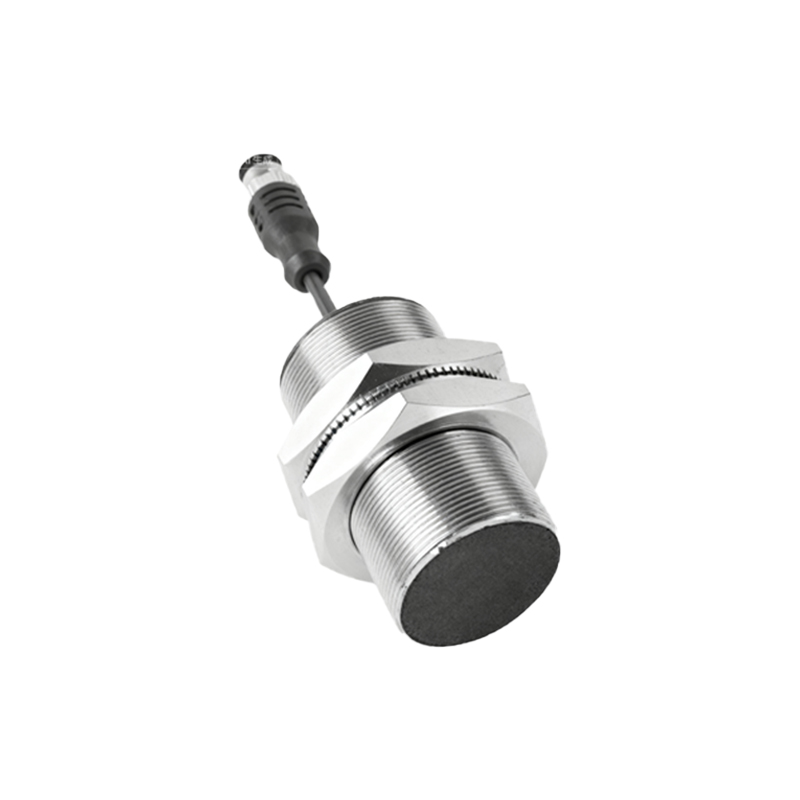
For selection and troubleshooting, comparative imagery is essential. Side-by-side photos comparing M8, M12, M18, and M30 housing sizes provide an immediate sense of scale. Images contrasting the sensing distances for different target materials (e.g., steel vs. aluminum) through graphical overlays make specification sheets more understandable. In failure analysis, macro photographs can reveal physical damage to the sensing face or cable ingress, while a schematic image of output signal distortion can point to electrical interference issues—a potential challenge in high-frequency designs that proper shielding mitigates.
In the digital realm, high-quality images of high frequency proximity sensors are crucial for online catalogs, technical blogs, and e-learning platforms. They enhance user engagement, reduce selection errors, and serve as a universal language bridging technical documentation across global markets. Engineers often rely on these visuals to verify physical dimensions, mounting styles, and environmental ratings (like IP67 protection visible in sealed housing designs) before procurement.
Ultimately, high frequency proximity sensor images form a vital visual corpus that complements datasheets. They demystify advanced technology, showcase robustness in real-world settings, and provide immediate, intuitive understanding. From the clean lines of its housing to the dynamic context of its operation, each image tells a part of the story of precision, reliability, and the invisible electromagnetic field that makes modern automation possible. As sensor technology advances toward miniaturization and higher frequencies, the role of precise, informative imagery will only grow in importance for communication and implementation in Industry 4.0 applications.