In the world of automation and smart technology, proximity sensors play a crucial yet often unseen role. These devices detect the presence or absence of an object within a specific range without any physical contact. This non-contact detection capability makes them indispensable in countless industrial, commercial, and consumer applications, offering reliability, longevity, and precision that mechanical switches cannot match.
At their core, proximity sensors work by emitting a field or beam of electromagnetic radiation or by using changes in a local field. The sensor then monitors for any changes in the return signal or field strength. When an object enters this predefined detection zone, it causes a detectable alteration. This change is processed by the sensor's electronics, which subsequently triggers an output signal—typically to turn a circuit on or off. This fundamental principle allows for the detection of a wide variety of materials, from metals to plastics and even liquids, depending on the sensor type.
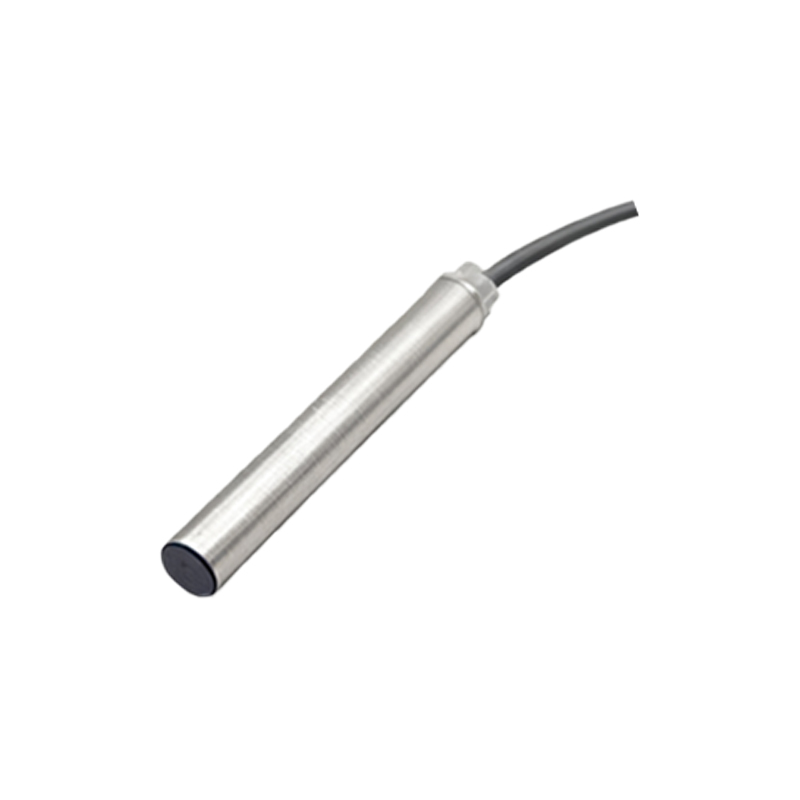
Several main types of proximity sensors dominate the market, each with distinct operating principles and ideal use cases. Inductive proximity sensors are among the most common. They generate an oscillating electromagnetic field. When a metallic object enters this field, it induces eddy currents within the metal, causing a change in the oscillation amplitude. This change is detected, signaling the object's presence. These sensors are robust, excellent for harsh industrial environments, and only detect metals, making them immune to dust, oil, or other non-metallic contaminants.
Capacitive proximity sensors, on the other hand, can detect both metallic and non-metallic materials, including liquids, powders, and plastics. They function by generating an electrostatic field. Any object that enters this field alters the capacitance of the sensor's circuit. This change in capacitance is measured, triggering the output. This makes them perfect for applications like level detection in tanks, material handling, or detecting non-metallic objects on a conveyor belt.
Photoelectric sensors use light to detect objects. They consist of a light emitter (usually an LED) and a receiver. When the emitted light beam is interrupted or reflected by an object, the receiver detects this change. These sensors come in three main configurations: through-beam (separate emitter and receiver), retro-reflective (uses a reflector), and diffuse (reflects light off the object itself). They offer long detection ranges and can sense virtually any material, but their performance can be affected by environmental factors like dust, fog, or ambient light.
Ultrasonic sensors operate similarly to sonar. They emit high-frequency sound waves and measure the time it takes for the echo to return after bouncing off an object. By calculating this time-of-flight, they can determine both the presence and distance of an object. They are highly effective for detecting objects of any material, shape, or color, and are commonly used for distance measurement, level sensing, and in challenging environments where other sensors might fail.
The applications for proximity sensors are vast and continually expanding. In manufacturing and assembly lines, they are used for precise object counting, position verification, and end-of-travel detection for robotic arms. In the automotive industry, they are integral to anti-collision systems, parking assistance, and automated production robots. Consumer electronics heavily rely on them; for instance, smartphones use them to disable the touchscreen during a call when held near the ear, and laptops use them to detect when the lid is closed. They are also fundamental in security systems, automatic doors, and vending machines.
Selecting the right proximity sensor requires careful consideration of several factors. The material of the target object is paramount—inductive for metals, capacitive for a wider range. The required sensing distance, environmental conditions (temperature, humidity, contaminants), response speed, and output type (digital or analog) are all critical decision points. Proper installation is equally important to avoid false triggers from surrounding metal (for inductive sensors) or from background objects (for ultrasonic and photoelectric types).
As technology advances, proximity sensors are becoming smarter, smaller, and more integrated. The rise of the Industrial Internet of Things (IIoT) sees sensors equipped with digital communication protocols like IO-Link, providing not just a simple on/off signal but also diagnostic data, parameter settings, and process values. This enables predictive maintenance, reducing downtime and increasing overall system efficiency. Furthermore, advancements in materials and miniaturization are pushing these sensors into new frontiers, from medical devices to intricate robotics.
In conclusion, proximity sensors are the silent workhorses of modern automation. Their ability to provide reliable, non-contact detection forms the backbone of efficiency, safety, and intelligence in systems all around us. Understanding their different types, principles, and applications is key to leveraging their full potential in designing smarter and more responsive technological solutions.