In industrial automation, manufacturing, and security systems, the ability to detect objects or persons from a significant distance is a critical requirement. Long range proximity sensors fulfill this need by providing reliable, non-contact detection over extended ranges, far beyond the capabilities of standard inductive or capacitive sensors. These advanced sensing devices operate on various physical principles, each suited to specific applications and environmental conditions.
The core technology behind long range sensing often involves photoelectric or ultrasonic principles. Photoelectric sensors, particularly through-beam and retro-reflective types, are renowned for their long-range capabilities. Through-beam sensors, consisting of separate emitter and receiver units, can reliably detect objects at distances exceeding 100 meters under ideal conditions. The emitter projects a beam of light—often infrared, laser, or modulated LED—towards the receiver. An object interrupting this beam triggers the detection signal. This method offers high accuracy and immunity to environmental factors like color or surface texture, making it ideal for outdoor applications such as vehicle detection on access roads or monitoring conveyor belts in large warehouses.
Retro-reflective sensors combine the emitter and receiver in a single housing, using a dedicated reflector to bounce the light beam back. Effective ranges can extend to several tens of meters. These sensors are simpler to install and align than through-beam pairs but can be fooled by highly reflective objects that mimic the reflector. To counter this, many models use polarized light filters. Diffuse or proximity-mode photoelectric sensors, which rely on light reflected directly from the target, typically have shorter ranges but are included in long-range discussions for specialized models using laser diodes, which can achieve ranges of several meters to even 10+ meters on highly reflective surfaces.
Ultrasonic sensors represent another major category for long-range non-contact detection. They operate by emitting high-frequency sound pulses and measuring the time for the echo to return. With ranges often spanning from a few centimeters up to 10-15 meters, and some specialized models reaching beyond 20 meters, they excel in environments with dust, fog, or varying light conditions where photoelectric sensors might struggle. They are commonly used for bulk level sensing in silos, distance measurement, and presence detection in harsh industrial settings. However, their performance can be affected by temperature gradients, wind, and extremely soft or angled surfaces that absorb sound.
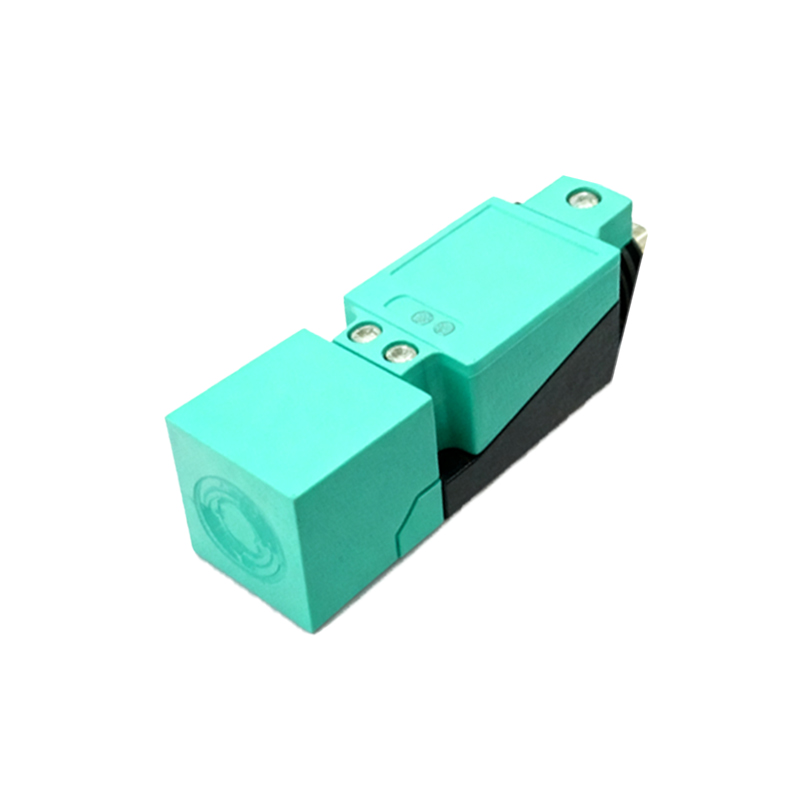
Emerging technologies like LiDAR (Light Detection and Ranging) and time-of-flight (ToF) cameras are pushing the boundaries of what constitutes "long-range." LiDAR systems, using pulsed laser light, can create precise 3D maps and detect objects at ranges from tens to hundreds of meters, finding applications in autonomous vehicles, surveying, and large-scale perimeter security. Radar-based sensors, which use radio waves, are also employed for very long-range detection, especially in outdoor traffic management and aviation.
Selecting the appropriate long-range proximity sensor requires careful consideration of several factors. The required sensing range and the size of the target are paramount. The environmental conditions—including ambient light, dust, moisture, temperature extremes, and potential obstructions—dictate whether a photoelectric, ultrasonic, or other technology is most robust. The required response time, output type (digital switch, analog signal, network data), and installation constraints (power availability, alignment access) are also critical. For instance, a through-beam photoelectric sensor is excellent for counting boxes on a high-speed conveyor over a 20-meter span, while an ultrasonic sensor would be better suited for monitoring the fill level of a gravel pile in a dusty quarry.
Applications are vast and diverse. In material handling and logistics, they monitor long conveyor systems, control crane positioning, and manage automated storage and retrieval systems (AS/RS). In the automotive industry, they guide autonomous mobile robots (AMRs) in large assembly plants. For security and access control, they form invisible detection curtains around perimeters, monitor fence lines, and control gate operations. In agriculture, they assist in automated guidance of large machinery. In smart city infrastructure, they manage traffic flow by detecting vehicles at intersections or in parking guidance systems.
The integration of these sensors with Industrial Internet of Things (IIoT) platforms and industrial networks like IO-Link is a significant trend. This connectivity enables not just simple detection but also the collection of diagnostic data—such as signal strength, internal temperature, or lens contamination warnings—facilitating predictive maintenance and smarter system management. This transforms the sensor from a simple switch into a intelligent node in a networked system.
In conclusion, long range proximity sensors are indispensable tools for modern automation, providing the "eyes" for systems that need to monitor large areas or detect objects from afar. The choice between photoelectric, ultrasonic, LiDAR, or radar technologies depends on a precise evaluation of the application's range, environmental, and performance requirements. As technology advances, these sensors continue to offer greater ranges, higher precision, and smarter features, enabling more efficient, safe, and automated