In industrial automation and machinery design, proximity sensors play a crucial role in detecting the presence or absence of objects without physical contact. However, standard sensors sometimes fall short when specific installation challenges arise. This is where proximity sensor extension nuts, also known as spacer nuts or stand-off nuts, become invaluable components. These simple yet effective hardware pieces are designed to increase the sensing distance of an inductive or capacitive proximity sensor by physically moving the sensor face away from its mounting surface.
The primary function of an extension nut is to provide a fixed, threaded spacer between the sensor's body and the mounting bracket or housing. They are typically manufactured from the same material as the sensor housing, often nickel-plated brass or stainless steel, to ensure durability and corrosion resistance in harsh industrial environments. By adding length to the sensor's threaded barrel, the nut positions the active sensing face further into the area where detection is required. This is particularly useful when a sensor needs to be recessed for protection, when mounting surfaces are thick, or when the target object's path is not directly adjacent to the machine frame.
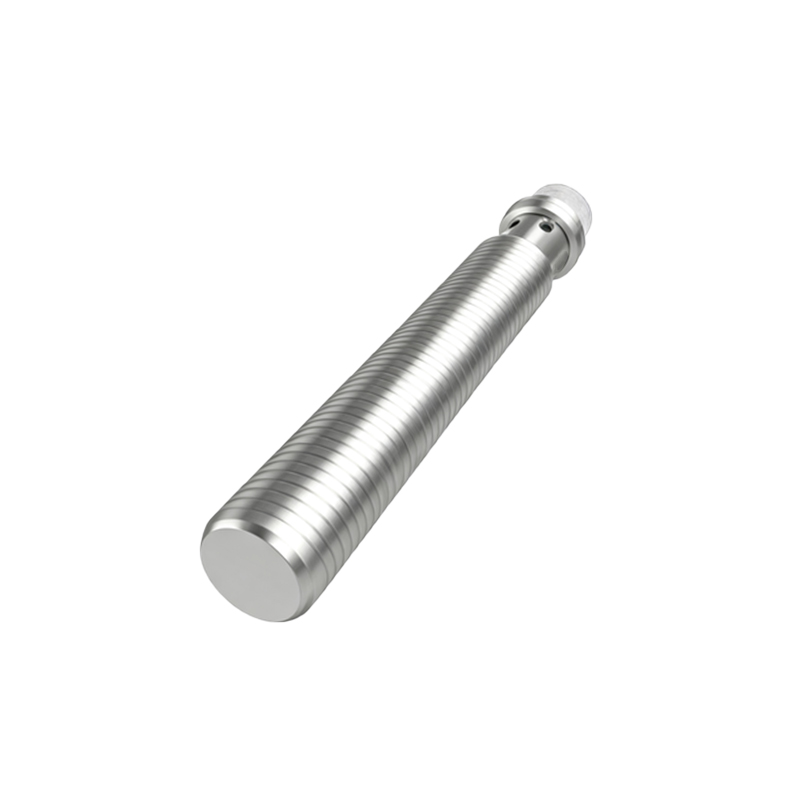
Installation is straightforward. First, the standard locking nut is removed from the sensor's threaded section. The extension nut is then screwed onto the sensor threads, followed by the re-application of the original locking nut on the outside. The entire assembly is then inserted through the mounting hole and secured. This process adds a predictable and stable offset. It is critical to consult the sensor's technical datasheet, as the use of an extension nut alters the sensor's nominal sensing distance. The effective sensing range (Sn) is reduced because the electromagnetic field or capacitive field originates from within the sensor body. Manufacturers often provide derating curves or specific calculations to determine the new usable range.
The benefits of using these accessories are significant. They enhance design flexibility, allowing engineers to standardize on a shorter sensor model and adapt it to various mounting scenarios with different nut lengths, thus reducing inventory complexity. They offer a cost-effective solution compared to purchasing specialized long-body sensors. Furthermore, they provide mechanical protection by allowing sensitive sensor faces to be set back from potential impact points, such as passing fixtures or accidental tool contact. In washdown or dusty environments, recessing the sensor can prevent buildup on the sensing face that might cause false triggers.
Selection criteria for an extension nut must be precise. The thread size and pitch must perfectly match the sensor's mounting thread (common sizes include M8, M12, M18, and M30). The length of the extension is the key variable, available in standardized increments like 10mm, 20mm, or 40mm. The material should be compatible with the operating environment to avoid galvanic corrosion. Perhaps most importantly, the user must verify that the reduced effective sensing range still meets the application requirements with an adequate safety margin. Testing the installed setup with the actual target material is always recommended.
In practical applications, extension nuts are ubiquitous. On conveyor systems, they allow sensors to peek past guardrails to detect small components. In robotic cells, they enable sensors to be mounted on thick aluminum framing while still detecting end-effector positions. Within automated packaging machinery, they help position sensors accurately to detect foil lids or plastic flaps without interference from the machine structure. Their simplicity belies their importance in creating reliable, maintainable, and adaptable sensing solutions.
In conclusion, proximity sensor extension nuts are a testament to elegant engineering simplicity. They solve spatial and mechanical constraints without requiring electronic recalibration or complex system redesigns. By understanding their function, proper selection guidelines, and impact on sensor performance, maintenance technicians and design engineers can effectively leverage these components to optimize machine layout, improve sensor longevity, and ensure robust object detection across countless industrial applications.