In the world of industrial automation, robotics, and smart devices, proximity sensors are the silent workhorses that enable machines to "see" and interact with their environment without physical contact. These devices detect the presence or absence of an object within a specific range, triggering a response in a control system. Their applications are vast, from counting items on a conveyor belt and ensuring machine safety to enabling touchless faucets and smartphone screen blanking. Understanding the different types is crucial for selecting the right sensor for a given task. The choice depends on factors like the target material, required detection range, environmental conditions, and cost.
One of the most prevalent and versatile types is the Inductive Proximity Sensor. This sensor operates on the principle of electromagnetic induction. It generates an oscillating electromagnetic field from its sensing face. When a metallic object (ferrous or non-ferrous) enters this field, it induces eddy currents within the object, which dampens the oscillation of the sensor's internal circuit. This change is detected and converted into a solid-state output signal. Inductive sensors are exceptionally robust, resistant to dust, oil, and moisture, making them ideal for harsh industrial environments like metal machining, automotive assembly, and material handling. They are, however, limited to detecting metals and typically have shorter sensing ranges compared to other types.
For detecting non-metallic objects, Capacitive Proximity Sensors are the go-to solution. They function similarly to a capacitor. The sensor's active surface acts as one plate of a capacitor, and the target object acts as the other, with the air gap as the dielectric. As an object approaches, it alters the capacitance of the circuit. This change is measured, and once it exceeds a threshold, the sensor switches its output. Capacitive sensors can detect a wide variety of materials, including liquids, plastics, glass, wood, and granular substances. This makes them perfect for applications like liquid level detection, paper or plastic bottle counting, and monitoring fill levels in hoppers. They can also "see through" certain non-metallic containers, but they can be more susceptible to environmental factors like humidity.
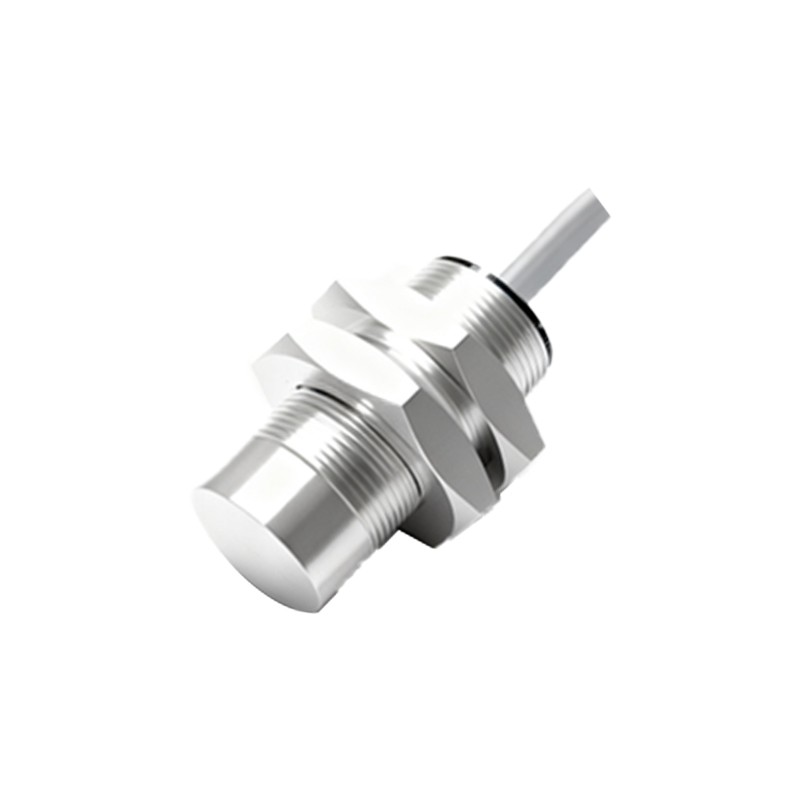
When a longer sensing range is needed, especially for clear or opaque objects, Ultrasonic Proximity Sensors excel. These sensors emit high-frequency sound waves (ultrasonic pulses) and then listen for the echo reflected from a target object. By measuring the time interval between the emitted pulse and the received echo, the sensor can calculate the distance to the object with high accuracy. Ultrasonic sensors are largely material-independent and can reliably detect solids, liquids, and even transparent objects like glass, which often confuses optical sensors. Common uses include pallet detection in warehouses, distance measurement in robotics, and liquid level sensing in tanks. Their performance can be affected by temperature variations, air turbulence, and soft, sound-absorbing materials.
Photoelectric Sensors represent a broad category that uses light beams for detection. They consist of a light emitter (usually an LED) and a receiver. They are further divided into three main sub-types based on their operating mode. The Through-beam (or opposed) type has separate, facing emitter and receiver units. Detection occurs when the object breaks the light beam. This mode offers the longest range and highest reliability. The Retro-reflective type houses the emitter and receiver in the same housing, using a reflector to bounce the beam back. An object is detected when it interrupts this reflected beam. The Diffuse (or proximity) type also has co-located emitter and receiver, but it detects light reflected directly off the target object itself. Photoelectric sensors are extremely fast and can detect tiny objects, but their performance can be hindered by environmental contaminants like dust, fog, or ambient light interference.
A specialized and highly precise type is the Magnetic Proximity Sensor (often called a reed switch or Hall-effect sensor). These sensors detect the presence of a magnetic field, typically from a permanent magnet attached to the moving target. Reed switches use two ferromagnetic reeds sealed in a glass tube; a nearby magnet causes the reeds to attract and make contact, closing a circuit. Hall-effect sensors produce a voltage output proportional to the strength of the magnetic field. They are used in applications requiring very precise position detection, such as in cylinder position sensing, door/window security alarms, and speed sensing in automotive systems. Their operation is unaffected by non-magnetic materials and most environmental conditions.
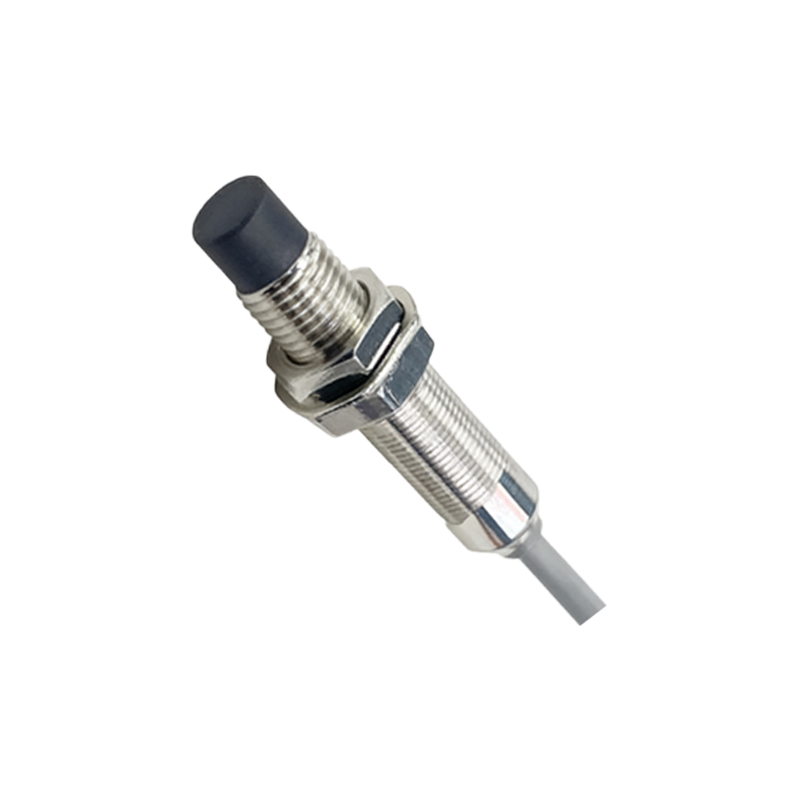
In conclusion, no single proximity sensor type is superior in all scenarios. Inductive sensors are kings for metal detection in tough settings. Capacitive sensors handle diverse materials, including liquids. Ultrasonic sensors provide reliable, long-range distance measurement. Photoelectric sensors offer speed and versatility for clear and opaque objects. Magnetic sensors deliver precision for positional feedback with magnets. A thorough analysis of the target material, required range