Distance sensing switches, often referred to as proximity sensors, are ubiquitous yet often unseen components that automate and enhance countless modern systems. Unlike a physical button or a manual switch, these devices detect the presence or absence of an object within a specified range without any physical contact. This non-contact operation is their defining characteristic, leading to high reliability, long operational life, and the ability to function in harsh environments where dirt, moisture, or repetitive mechanical action would degrade a traditional switch.
The core principle behind these switches is the emission of a field or beam and the analysis of its return signal. The technology employed determines the sensing method, range, and ideal application. The most common types include inductive, capacitive, and ultrasonic sensors.
Inductive proximity switches are the workhorses of industrial automation. They generate an electromagnetic field and detect the eddy current losses caused when a metallic object enters this field. Consequently, they are ideal for detecting metals—especially ferrous metals like steel and iron—at short ranges, typically from a few millimeters up to about 60 millimeters. You will find them on assembly lines counting products, verifying the position of machine parts, or as safety interlocks on guarding systems.
Capacitive sensors operate on a different principle. They can detect both metallic and non-metallic materials, including liquids, plastics, wood, and glass. They function by generating an electrostatic field and sensing the change in capacitance when any object with a different dielectric constant enters the field. This makes them perfect for applications like liquid level detection in tanks, monitoring the fill level of granular materials in hoppers, or detecting the presence of a plastic bottle on a conveyor belt. Their sensing range is similar to inductive models but can be influenced by the material's properties.
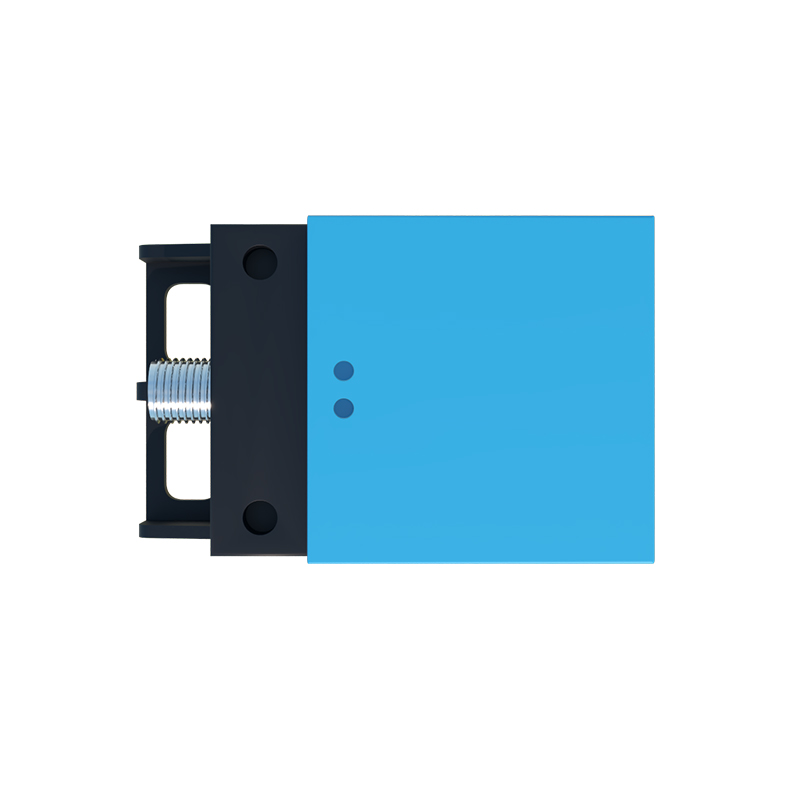
For longer ranges and more precise distance measurement, ultrasonic sensors are frequently used. These switches emit high-frequency sound waves (inaudible to humans) and calculate distance by measuring the time it takes for the echo to return. They are excellent for detecting objects up to several meters away, regardless of color, transparency, or material (though soft materials may absorb sound). Common uses include parking assist systems in vehicles, bulk level sensing in silos, and collision avoidance on automated guided vehicles (AGVs).
The advantages of integrating distance sensing switches are manifold. First and foremost is durability. With no moving parts to wear out from physical contact, they offer exceptional longevity. They enable high-speed operation, as the detection and switching happen almost instantaneously, far faster than a mechanical actuator could. Their sealed designs allow them to perform reliably in conditions filled with dust, oil, or spray, where traditional switches would fail. Furthermore, they facilitate the automation of complex processes, improving consistency, efficiency, and safety.
The applications span nearly every industry. In manufacturing, they are indispensable for object positioning, part counting, and robotic guidance. In the automotive sector, they enable features like automatic door opening, hands-free trunk release, and parking sensors. Consumer electronics utilize miniature versions in smartphones to disable the touchscreen during a call when held to the ear. In building automation, they control lighting in offices by sensing occupancy, conserving energy. Even in agriculture, they monitor grain levels in storage facilities.
When selecting a distance sensing switch, several key parameters must be considered. The sensing range, often specified as a nominal range at which a standard target is detected, is crucial. The repeatability, or the consistency of detection at the same point, is vital for precision applications. The output type is another critical choice; switches may provide a simple digital on/off signal (PNP or NPN for PLCs), an analog voltage or current proportional to distance, or a serial data output. Environmental factors like temperature extremes, potential chemical exposure, and required ingress protection (IP) ratings must also align with the operating conditions.
In summary, distance sensing switches are fundamental enabling technologies for automation and smart systems. By providing a reliable, non-contact method of object detection, they form the invisible sensory layer that allows machines to interact intelligently with their physical environment. From the factory floor to the family car, their role in enhancing efficiency, safety, and convenience continues to grow as technology advances.