Speed measurement is a fundamental requirement in countless industrial and automation processes. While various methods exist, using proximity sensors for this purpose offers a reliable, non-contact, and often cost-effective solution. Unlike optical encoders or tachometers, proximity sensors excel in harsh environments where dirt, oil, or vibration might interfere with other technologies.
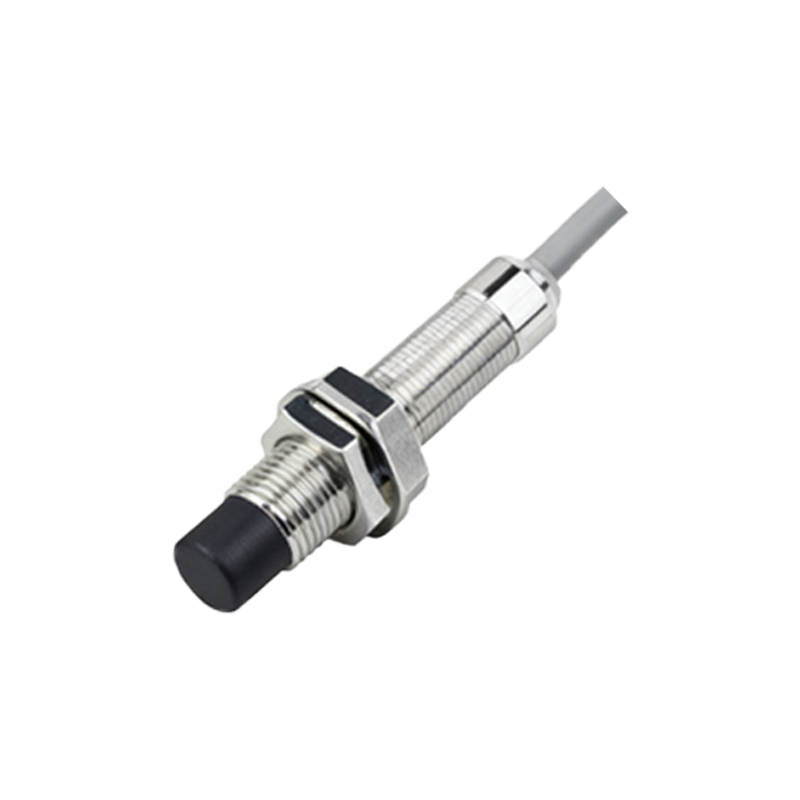
The core principle behind speed measurement with a proximity sensor involves detecting the passage of discrete objects or features on a rotating or moving component. A common setup involves mounting a sensor, such as an inductive or capacitive type, near a gear, a sprocket with teeth, or a shaft with dedicated targets like bolts or notches. Each time a tooth or target passes the sensor's sensing face, it generates a discrete electrical pulse in the sensor's output. By counting the number of pulses over a precisely known time interval, the rotational or linear speed can be calculated.
For instance, if a gear with 10 teeth is rotating, and the sensor counts 100 pulses in one second, the calculation is straightforward: the gear has completed 100 pulses / 10 teeth per revolution = 10 revolutions in that second. Therefore, the rotational speed is 10 revolutions per second, or 600 RPM. For linear speed, if targets are spaced at a known distance apart on a conveyor, the pulse count directly correlates to the distance traveled over time.
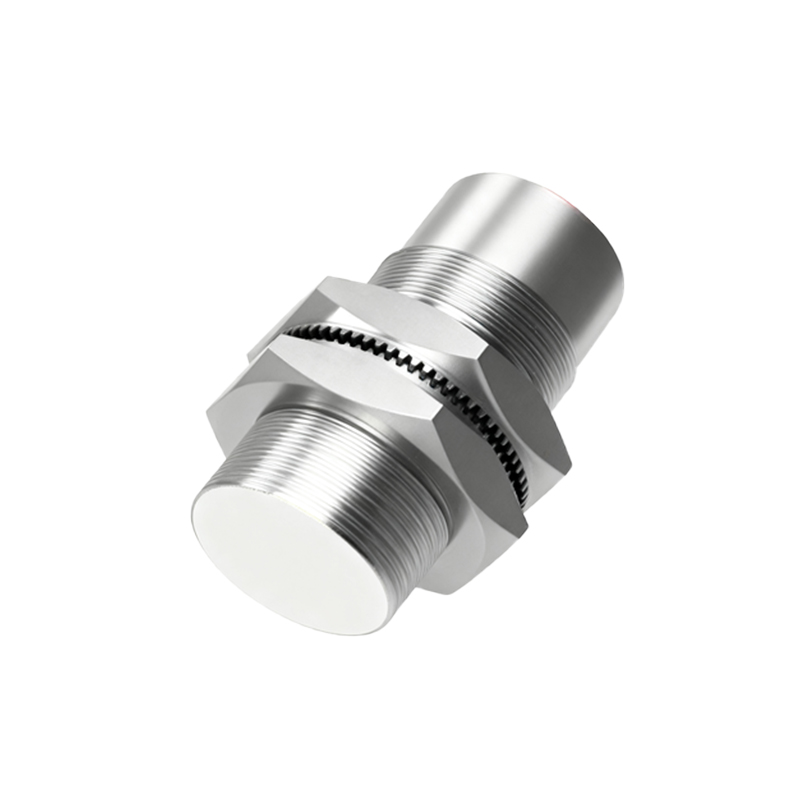
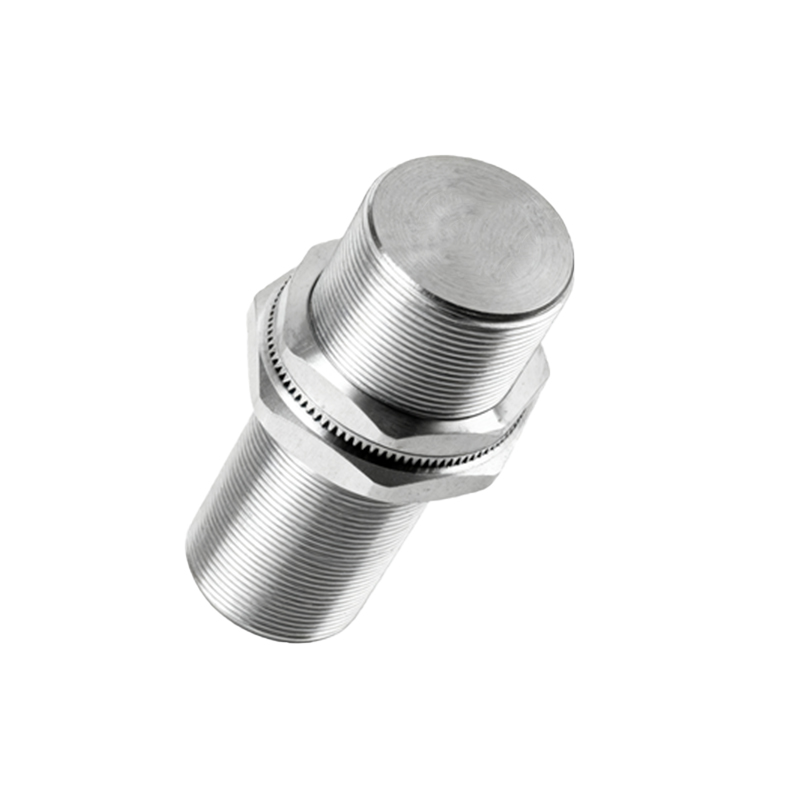
The choice of proximity sensor is critical. Inductive sensors are ideal for detecting metallic targets, such as gear teeth or metal flags, and are highly robust. Capacitive sensors can detect both metallic and non-metallic materials, useful for applications involving plastics or other substances. The sensor's switching frequency, or its ability to respond to rapid successive targets, must be higher than the maximum expected pulse frequency from the moving object to ensure no pulses are missed. A sensor with a 1 kHz switching frequency can reliably detect up to 1000 targets per second.
Key advantages of this method include durability, as there is no physical contact and thus no wear; resistance to environmental contaminants; and simple installation. However, accuracy depends heavily on the consistency of the target geometry and spacing. Any variation in tooth size or target placement will introduce error. The resolution of the measurement is determined by the number of targets per revolution; more targets provide finer resolution and more accurate speed detection, especially at lower speeds.
Practical applications are widespread. In automotive manufacturing, inductive sensors monitor the speed of assembly line conveyors or the RPM of robotic arms. In packaging machinery, they control the speed of film feed rollers. On wind turbines, they monitor blade rotation speed for safety and control. Even in consumer printers, proximity sensors help regulate paper feed motor speed.
For optimal results, careful installation is paramount. The sensor must be positioned at the correct sensing distance from the target, as specified in its datasheet. The alignment should be precise to ensure consistent detection. The target material and size must be compatible with the sensor's specifications. Shielding may be necessary in electrically noisy environments to prevent false pulses. Furthermore, the pulse signal is typically fed into a programmable logic controller (PLC), frequency counter, or dedicated tachometer module, which performs the actual calculation and provides a usable speed value for system monitoring or control loops.
In summary, proximity sensor-based speed measurement is a versatile and robust technique. Its success hinges on understanding the relationship between pulse frequency and physical speed, selecting a sensor with appropriate specifications for the target and environment, and ensuring meticulous installation and signal processing. When implemented correctly, it provides a maintenance-free and highly reliable solution for continuous speed monitoring across diverse industries.