In the realm of modern technology, where seamless interaction between devices and their environment is paramount, proximity sensors have emerged as a fundamental component. Specifically, in communication systems, these sensors play a critical role in enabling intuitive, efficient, and often hands-free operation. This article delves into the principles, types, and applications of proximity sensors within communication contexts, highlighting their significance beyond simple detection.
At its core, a proximity sensor is a device that detects the presence or absence of an object within a certain range without any physical contact. It does this by emitting an electromagnetic field or a beam of radiation (like infrared light) and then looking for changes in the field or return signal. The key advantage is non-contact operation, which leads to high reliability, long operational life, and no mechanical wear.
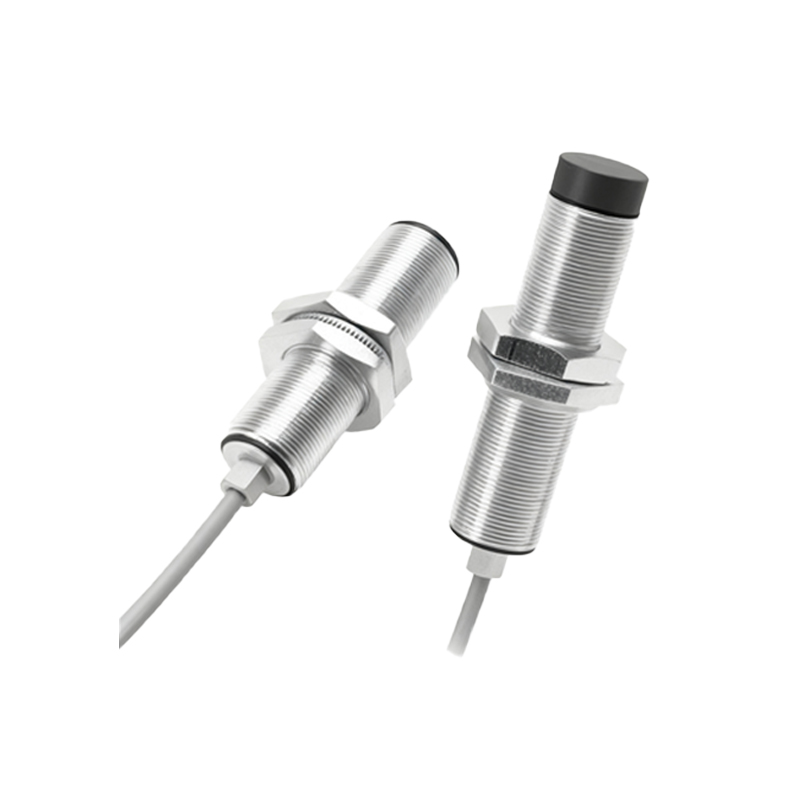
Several types of proximity sensors are commonly employed, each with distinct mechanisms suitable for different communication scenarios. Inductive sensors are widely used for detecting metallic objects. They generate an oscillating electromagnetic field. When a metal object enters this field, it induces eddy currents within the metal, which in turn dampens the sensor's own oscillation, triggering a detection signal. These are robust and ideal for industrial communication panels or detecting when a metal smartphone case is closed.
Capacitive sensors, on the other hand, can detect both metallic and non-metallic objects like liquids, plastics, or even a human hand. They work by measuring changes in capacitance. The sensor and the target act as two plates of a capacitor. As the target approaches, the capacitance increases, and once it crosses a threshold, the sensor activates. This principle is ubiquitous in touch-sensitive screens and touchless faucets, forming a basic communication interface between user and machine.
Optical proximity sensors, often using infrared (IR) light, are another major category. An IR LED emits light, which reflects off a nearby object and is captured by a photodetector. The intensity of the reflected light indicates proximity. A classic application is in smartphones: during a call, when the device is brought close to the ear, the sensor detects this and turns off the display to prevent accidental touch input—a simple yet vital communication between the user's action and the device's function.
Ultrasonic sensors measure proximity by emitting high-frequency sound waves and calculating the time taken for the echo to return. They are excellent for longer ranges and can operate effectively in challenging environments with dust or vapor. In automated communication kiosks or interactive displays, they can sense a person's approach from a distance to activate the system.
The integration of these sensors into communication systems is transformative. In consumer electronics, they enable features like automatic screen wake-up when a user picks up a tablet, or gesture control in smart speakers, creating a more natural dialogue with technology. In automotive communication systems, proximity sensors are crucial for keyless entry, hands-free trunk opening, and driver alertness monitoring by detecting hand position on the wheel.
Industrial and public communication systems benefit greatly. Interactive information booths use proximity sensing to detect user presence, conserving energy and attracting attention. In secure communication facilities, sensors can monitor access zones. Furthermore, in the burgeoning Internet of Things (IoT), proximity sensors act as nodes that communicate contextual information—such as a person entering a room—to trigger other smart devices, facilitating a network of silent, efficient communication.
Designing with proximity sensors for communication requires careful consideration. Factors like sensing range, response time, environmental immunity (to light, noise, or temperature), and power consumption are critical. For instance, a sensor in a wearable communication device must be extremely low-power, while one on a factory floor must be immune to electrical noise.
Looking ahead, the evolution of proximity sensing is geared towards greater miniaturization, intelligence, and integration. Sensors are becoming more sophisticated, capable of not just detecting presence but also discerning shape, motion patterns, or even vital signs in some advanced health-communication devices. The fusion of proximity data with artificial intelligence algorithms will lead to even more anticipatory and context-aware communication systems.
In conclusion, proximity sensors are the unsung heroes in the landscape of modern communication. By providing a simple, reliable means for devices to perceive their immediate surroundings, they form a foundational layer for interactive, efficient, and intelligent systems. From silencing a smartphone during a call to enabling complex industrial automation, these sensors facilitate a critical, non-verbal dialogue between technology and the world, making our interactions smoother and more intuitive.