Magnetic proximity sensors are fundamental components in modern industrial automation and countless electronic devices. Unlike other sensor types that may rely on light, sound, or physical contact, these sensors detect the presence or absence of a magnetic field, typically generated by a permanent magnet. Their operation is based on the principle of magnetic field influence on internal sensing elements, offering a robust, non-contact solution for position detection, speed monitoring, and object counting.
The core technology behind most magnetic proximity sensors involves a reed switch or a solid-state Hall-effect element. A reed switch consists of two ferromagnetic, flexible metal reeds sealed within a glass tube filled with inert gas. When an external magnetic field of sufficient strength is applied, the reeds magnetize, attract each other, and make contact, closing the electrical circuit. Once the magnet moves away, the reeds' spring force separates them, breaking the circuit. Reed switches are known for their simplicity, low cost, and ability to switch relatively high loads with minimal power consumption. However, they are mechanical devices with moving parts, which can limit their operational life and switching speed compared to solid-state alternatives.
Hall-effect sensors represent the solid-state evolution. They utilize a semiconductor chip that generates a voltage difference (the Hall voltage) perpendicular to both the electric current flowing through it and an applied magnetic field. This voltage is tiny and requires integrated signal conditioning circuitry to amplify it and convert it into a clean digital on/off signal or a proportional analog output. Solid-state Hall sensors offer exceptional reliability, high switching frequencies, and immunity to environmental contaminants like dust, oil, or moisture. They are also capable of detecting the strength and polarity of a magnetic field, enabling more advanced applications.
The choice between these technologies depends heavily on the application requirements. Reed switches are often favored in low-frequency, cost-sensitive applications where physical size is less critical, such as in door and window security alarms, or as level sensors in float gauges. Hall-effect sensors dominate in demanding industrial environments and automotive systems. You will find them detecting gear tooth speed, crankshaft position, seat belt buckle status, and brake pedal position. Their durability is crucial in these high-vibration, high-cycle scenarios.
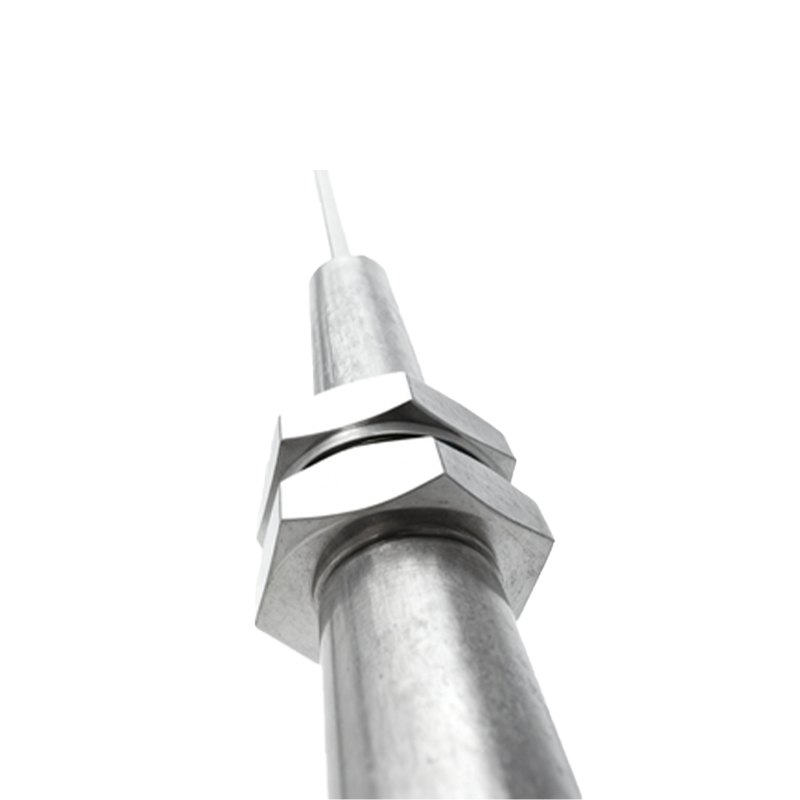
Beyond the basic switch, magnetic proximity sensors are characterized by several key parameters. Sensing distance, or the maximum range at which they can reliably detect a magnet, is critical and depends on the magnet's strength and size. Repeat accuracy defines how consistently the sensor switches at the same point. Switching frequency indicates how many on/off cycles per second the sensor can handle, a vital spec for high-speed counting. Environmental ratings, particularly Ingress Protection (IP) codes for dust and water resistance, and temperature ranges, determine where the sensor can be installed. Industrial sensors often boast IP67 or higher ratings, allowing them to function in washdown areas or outdoors.
Installation and setup require attention to detail. The sensor must be mounted securely to prevent vibration from altering its position relative to the target magnet. The orientation of the magnet's poles is crucial, especially for Hall-effect sensors which may be sensitive to the magnetic field's polarity. Shielding from stray magnetic fields from motors or transformers is sometimes necessary to prevent false triggering. Most sensors have a built-in LED indicator to show the switching state, greatly aiding in commissioning and troubleshooting.
When selecting a magnetic proximity sensor, engineers must answer a series of questions. What is the required sensing distance? What is the operating environment (temperature, contaminants, potential for physical impact)? Is the application for simple presence detection or does it require speed measurement or directional sensing? What output type is needed: a two-wire AC/DC switch, a three-wire NPN or PNP transistor output, or an analog voltage/current signal? What are the electrical load requirements? Answering these ensures a reliable and long-lasting installation.
The future of magnetic sensing continues to evolve. 3D Hall-effect sensors can map magnetic fields in three dimensions, enabling precise angular position sensing for joysticks or rotary knobs. Integrated microcontrollers are adding smart features like diagnostics, programmability, and IO-Link communication, turning simple sensors into intelligent nodes on the digital factory floor. These advancements promise even greater precision, functionality, and connectivity, solidifying the role of magnetic proximity sensors as indispensable tools in an automated world.