The global landscape for laser sensor technology is characterized by rapid innovation, intense competition, and diverse application-driven development. While the core principles of laser sensing—using focused light to measure distance, displacement, velocity, and profile—remain constant, the implementation, miniaturization, and integration of these systems have seen transformative advances, particularly in North America, Europe, and parts of Asia.
In the United States, the ecosystem is heavily influenced by defense, aerospace, and advanced manufacturing sectors. Companies like Banner Engineering, Keyence (through its American operations), and a host of specialized firms are pushing the boundaries in LiDAR (Light Detection and Ranging) for autonomous vehicles, a field where American companies like Velodyne and newer players like Luminar are significant contributors. Research at institutions like MIT, Stanford, and government labs focuses on solid-state LiDAR, photonic integrated circuits, and quantum-enhanced sensing, aiming for higher resolution, lower cost, and greater reliability. The trend is towards chip-scale sensors and the fusion of laser data with other sensing modalities like radar and cameras for robust perception systems.
Europe maintains a strong position, particularly in high-precision industrial and scientific applications. German and Swiss companies, such as Sick AG, Leuze electronic, and Baumer, are renowned for their rugged, precise laser sensors used in factory automation, logistics, and metrology. The European approach often emphasizes extreme accuracy, long-term stability, and seamless integration into Industry 4.0 frameworks. Furthermore, European research initiatives, often funded by the EU, are pioneering applications in environmental monitoring (e.g., atmospheric LIDAR for pollution tracking) and biomedical sensing. The development of frequency comb lasers, originating from European labs, has revolutionized precision measurement, finding uses in everything from greenhouse gas detection to optical clocks.
Japan and South Korea exhibit strengths in miniaturization, consumer electronics integration, and high-volume manufacturing. Japanese firms like Omron and Keyence (headquartered in Japan) dominate in compact, highly reliable sensors for electronics assembly and robotic guidance. South Korean giants, while major consumers of laser sensors for display and semiconductor manufacturing, are also investing in core component technology. The regional focus is on making sensors smaller, more energy-efficient, and cost-effective for mass deployment in smartphones, home appliances, and next-generation displays.

Globally, several key technological trends are defining the current status. First, the shift from mechanical scanning LiDAR to solid-state (MEMS, Optical Phased Array, Flash) solutions is accelerating, driven by demands for automotive durability and lower costs. Second, the rise of 3D laser profiling for robotics bin-picking, quality inspection, and reverse engineering is creating new markets. Sensors now capture millions of points per second with sub-millimeter accuracy. Third, there is a significant push towards "smart sensors" with embedded edge computing. These devices don't just output raw distance data; they can perform onboard analysis—like detecting specific object features or making pass/fail decisions—reducing latency and data load on central systems.
The supply chain for core components, such as laser diodes, detectors, and specialized optics, remains a critical factor. While design and assembly are global, advanced semiconductor laser production is concentrated with a few key players in the US, Germany, and Japan. Recent geopolitical and trade dynamics have spurred efforts in various regions to develop more resilient and localized supply chains for these critical components.
In terms of challenges, despite the progress, issues persist. For high-performance LiDAR in autonomous applications, achieving the desired performance, reliability, and cost target simultaneously remains a hurdle. In industrial settings, dealing with highly reflective surfaces, transparent objects, or harsh environments (dust, steam, vibration) continues to drive R&D. Furthermore, standardization of data interfaces and safety protocols, especially for Class 1 eye-safe lasers, is an ongoing international effort.
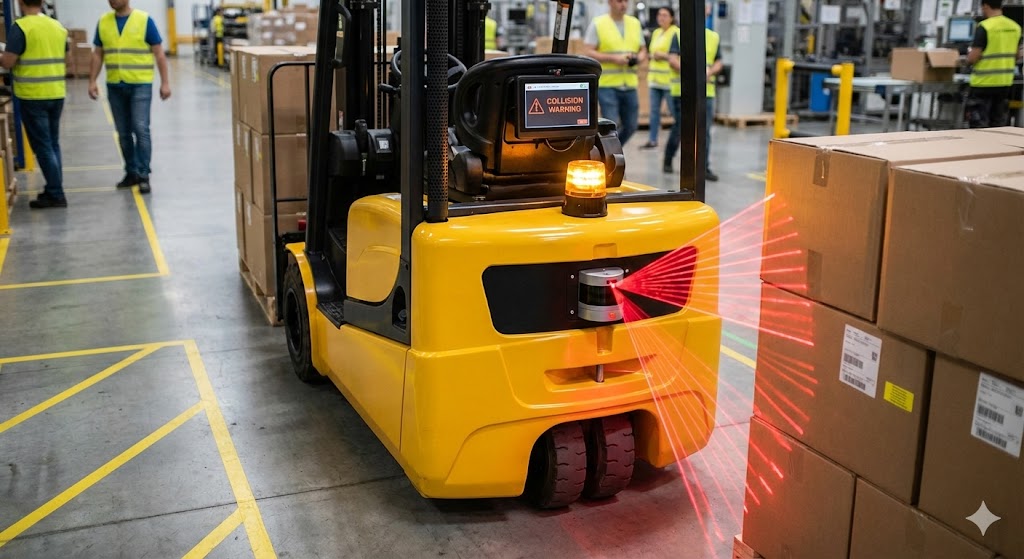
Looking ahead, the foreign landscape for laser sensors is poised for continued growth, fueled by megatrends like automation, electrification, digital twins, and augmented reality. The convergence of advanced photonics, artificial intelligence for sensor data interpretation, and novel materials will likely yield the next generation of laser sensing systems—smaller, smarter, more pervasive, and capable of sensing parameters beyond simple geometry, such as material composition or stress. The competition is fierce, but it is this very environment that is catalyzing the remarkable pace of innovation observed today across the developed technological nations.