In the world of industrial automation, robotics, and precision engineering, accurately measuring the distance or position of an object without physical contact is a fundamental requirement. This is where displacement proximity sensors come into play. These sophisticated devices detect the presence, absence, or position of a target object within a defined sensing range, providing critical data for control and monitoring systems. Unlike simple on/off proximity switches, displacement proximity sensors offer continuous, analog output that corresponds linearly to the distance of the target, enabling precise measurement.
The core principle behind most non-contact displacement sensing is based on electromagnetic fields or light. Inductive proximity sensors are a dominant type for metallic targets. They operate by generating an oscillating electromagnetic field from a coil. When a conductive metal object enters this field, eddy currents are induced on the object's surface. These currents draw energy from the sensor's oscillator, causing a change in its amplitude. This change is detected and converted into a proportional analog signal, typically voltage (0-10V) or current (4-20mA), which corresponds to the distance of the target. Inductive sensors are robust, resistant to environmental contaminants like oil and dust, and are ideal for measuring the position of machine parts, valve stems, or metal plates.
For non-metallic targets, including plastics, liquids, glass, and even biological materials, capacitive proximity sensors are the go-to solution. They function by generating an electrostatic field between two electrodes. Any object entering this field alters the capacitance of the system. This change in capacitance is measured and translated into a distance-proportional output signal. Capacitive sensors can detect virtually any material and are often used in level sensing for liquids and granular materials, as well as in applications involving thin films or transparent objects.
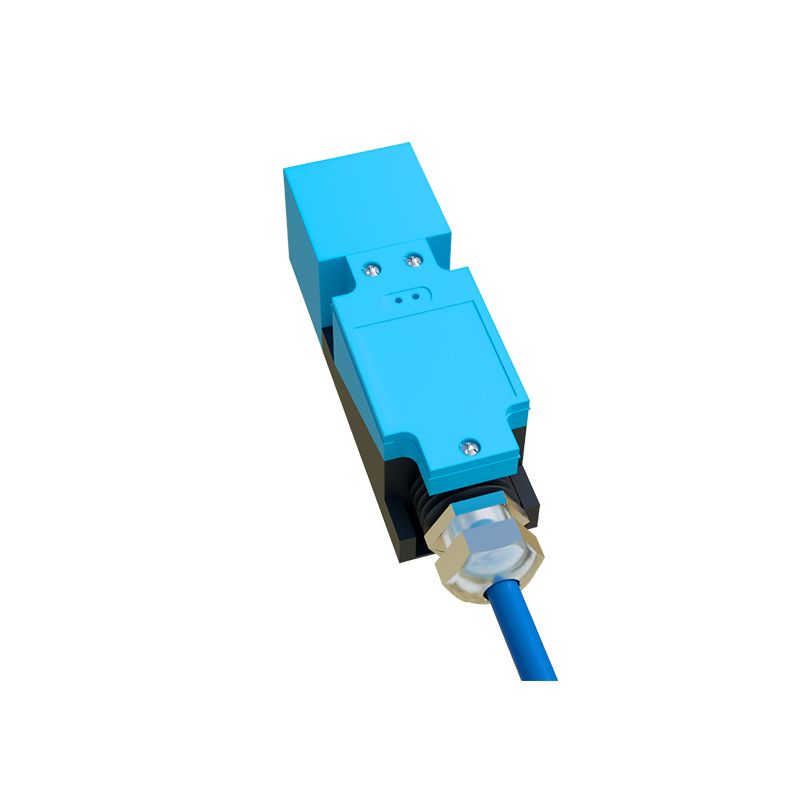
Another highly precise category is the eddy-current displacement sensor. While based on similar electromagnetic principles as inductive sensors, eddy-current sensors are designed for extremely high-resolution and high-frequency measurements. They use a high-frequency alternating current in a sensing coil to generate a magnetic field. The interaction with a conductive target creates eddy currents, and the sensor measures the impedance change in the coil with exceptional accuracy. These sensors are indispensable in applications like vibration monitoring of rotating shafts, runout measurement, and precision thickness gauging in the semiconductor and aerospace industries.
Optical displacement sensors represent a different technological approach, using light to measure distance. Laser triangulation sensors project a focused laser spot onto the target surface. The reflected light is focused onto a position-sensitive detector (like a CCD or PSD). As the target distance changes, the position of the reflected spot on the detector shifts. This shift is analyzed to calculate the exact distance with micron-level resolution. Confocal chromatic sensors use white light, and different wavelengths are focused at different distances. The color of the reflected light is analyzed to determine distance, offering excellent performance on reflective, transparent, or multi-layered surfaces. Optical sensors are perfect for measuring small, delicate, or hot objects where contact is impossible.
Ultrasonic displacement sensors use sound waves. They emit high-frequency ultrasonic pulses and measure the time it takes for the echo to return from the target object. The time-of-flight is directly proportional to the distance. These sensors are excellent for long-range detection, can work in dirty environments, and are unaffected by color or material transparency. Common applications include bulk material level sensing, distance measurement in logistics, and parking assistance systems.
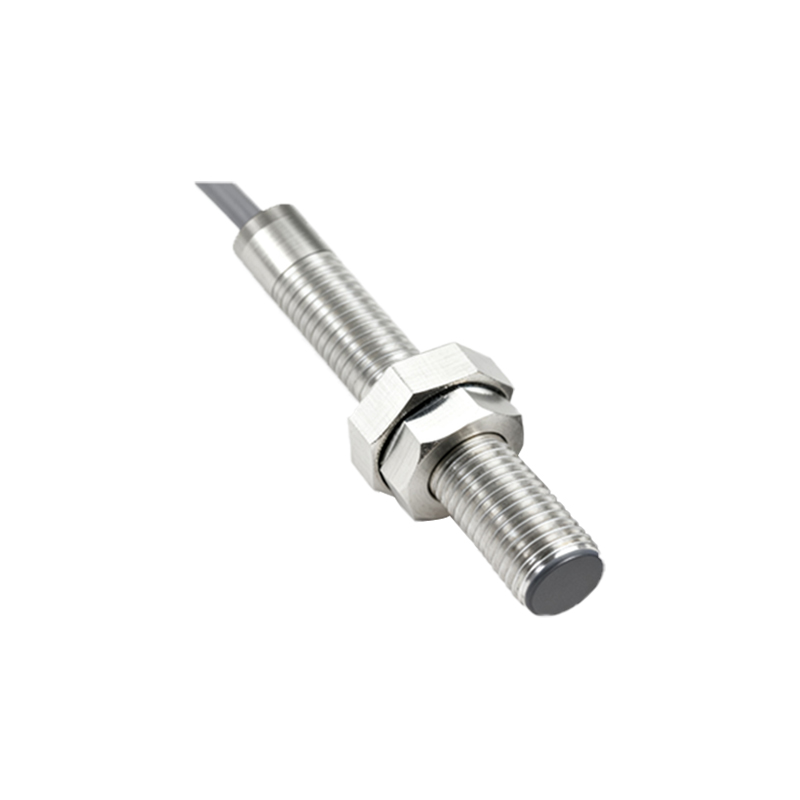
Selecting the right displacement proximity sensor depends on several key factors: the target material, the required measuring range and resolution, environmental conditions (temperature, pressure, contaminants), response speed, and output signal requirements. For instance, a high-speed production line inspecting tiny electronic components would likely use a laser triangulation sensor, while monitoring the position of a large steel piston in a hydraulic cylinder would call for a robust inductive sensor.
The applications are vast and critical. In manufacturing, they ensure robotic arms position components with micron-level accuracy. In automotive assembly, they verify door and panel gaps. In the pharmaceutical industry, they control the fill level in vials. On wind turbines, eddy-current sensors monitor blade and shaft deflection. The ability to provide reliable, real-time displacement data without contact minimizes wear, allows for high-speed operation, and enables automation in environments hostile to human operators or mechanical probes.
In conclusion, displacement proximity sensors are the unseen eyes of modern automation. By leveraging electromagnetic, capacitive, optical, or ultrasonic technologies, they deliver the precise, non-contact measurement data that drives efficiency, quality, and safety across countless industries. Their continued evolution promises even greater precision, miniaturization, and integration into the smart factories of the future.