In the realm of industrial automation and precision engineering, the demand for accurate, non-contact measurement solutions has never been greater. Laser micro-displacement sensors, often referred to as laser displacement sensors or laser micrometers, have emerged as a cornerstone technology for applications requiring sub-micron resolution and high-speed data acquisition. These devices operate on the principle of triangulation or time-of-flight measurement, projecting a focused laser beam onto a target surface and analyzing the reflected light to determine distance or displacement with exceptional accuracy.
The core working principle of most laser micro-displacement sensors is optical triangulation. A laser diode emits a coherent beam of light that is focused onto the target. The reflected light is then captured by a receiving lens and projected onto a position-sensitive detector, such as a CCD or CMOS array. Any change in the distance to the target causes a shift in the position of the light spot on the detector. By precisely calculating this shift, the sensor's processor can determine the displacement with resolutions often reaching 0.1 micrometers or better. This method is highly effective for measuring distances on a wide variety of surfaces, including metals, plastics, ceramics, and even liquids, provided the surface has sufficient reflectivity.
Key advantages of laser micro-displacement sensors include their non-contact nature, which eliminates mechanical wear and prevents damage to delicate surfaces. They offer high measurement speed, capable of sampling rates in the kilohertz range, making them ideal for dynamic processes and high-speed production lines. Furthermore, their compact size and robust designs allow for easy integration into complex machinery and harsh industrial environments. Common industrial applications are extensive. In semiconductor manufacturing, these sensors are used for wafer thickness measurement, chip warpage inspection, and bonding gap control. In automotive assembly, they ensure precise gap and flush measurement between body panels. In precision machining, they monitor tool wear and part dimensions in real-time. They are also vital in electronics for measuring component coplanarity and in medical device manufacturing for verifying critical tolerances.
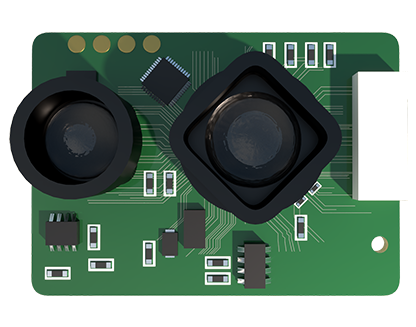
When selecting a laser micro-displacement sensor, several technical parameters must be considered. Measurement range defines the minimum and maximum distances over which the sensor can operate accurately. Spot size determines the minimum feature that can be measured and affects lateral resolution. Linearity error indicates the deviation from a perfect straight-line response across the measurement range. Repeatability is the sensor's ability to produce the same reading under identical conditions, a critical factor for quality control. Environmental factors like ambient light, temperature fluctuations, and target surface characteristics (color, texture, material) can significantly impact performance. Modern sensors incorporate advanced algorithms and filters to compensate for these variables, ensuring stable and reliable readings.
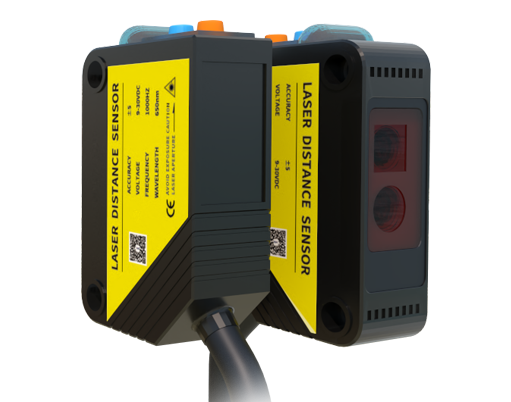
Recent technological advancements are pushing the boundaries of what these sensors can achieve. The development of blue-violet lasers offers advantages for measuring organic materials like rubber or dark surfaces that traditionally absorb the common red laser wavelength. Confocal chromatic sensors, a specialized type, use white light and spectral analysis to achieve even higher precision on transparent or multi-layered objects. Integration with Industry 4.0 frameworks is another major trend, where sensors are equipped with Ethernet, EtherCAT, or IO-Link interfaces for seamless data communication, enabling predictive maintenance and real-time process optimization through cloud analytics.
Despite their robustness, achieving optimal performance requires careful installation and calibration. The sensor must be mounted securely to minimize vibration. The laser beam should be perpendicular to the target surface to avoid cosine error. For highly reflective or transparent materials, specific sensor models with adjustable sensitivity or specialized optics are necessary. Regular calibration against certified reference standards is essential to maintain long-term accuracy.
In conclusion, laser micro-displacement sensors are indispensable tools in the modern industrial landscape. Their unparalleled precision, speed, and versatility empower engineers to control manufacturing processes with a level of detail that was previously unattainable. As materials become more advanced and tolerances tighter, the evolution of this technology will continue to be a key driver of innovation and quality across countless sectors, from aerospace to consumer electronics, ensuring products are built better, faster, and with greater consistency.