Proximity sensors are indispensable components in modern automation, robotics, and consumer electronics. Their primary function is to detect the presence or absence of an object within a specified range without physical contact. The effectiveness of any application heavily relies on selecting the appropriate detection method. This guide delves into the core operating principles, advantages, and typical applications of the most prevalent proximity sensor detection technologies.
Inductive Proximity Sensors
Inductive sensors are the workhorses for detecting metallic objects. Their operation is based on electromagnetic induction. The sensor generates an oscillating electromagnetic field from its coil. When a conductive metal target enters this field, eddy currents are induced on the target's surface. This causes a change in the oscillation amplitude within the sensor's coil, which is then processed by the internal circuitry to trigger a switching signal. A key characteristic is that the detection distance is influenced by the target's material; ferrous metals like iron and steel can be detected from a greater distance than non-ferrous metals like aluminum or copper. These sensors are highly robust, resistant to environmental factors like dust, oil, and moisture, and are ideal for harsh industrial environments. Common applications include position sensing of metal parts on conveyor belts, limit switching in machine tools, and detecting the presence of metallic objects in assembly lines.
Capacitive Proximity Sensors
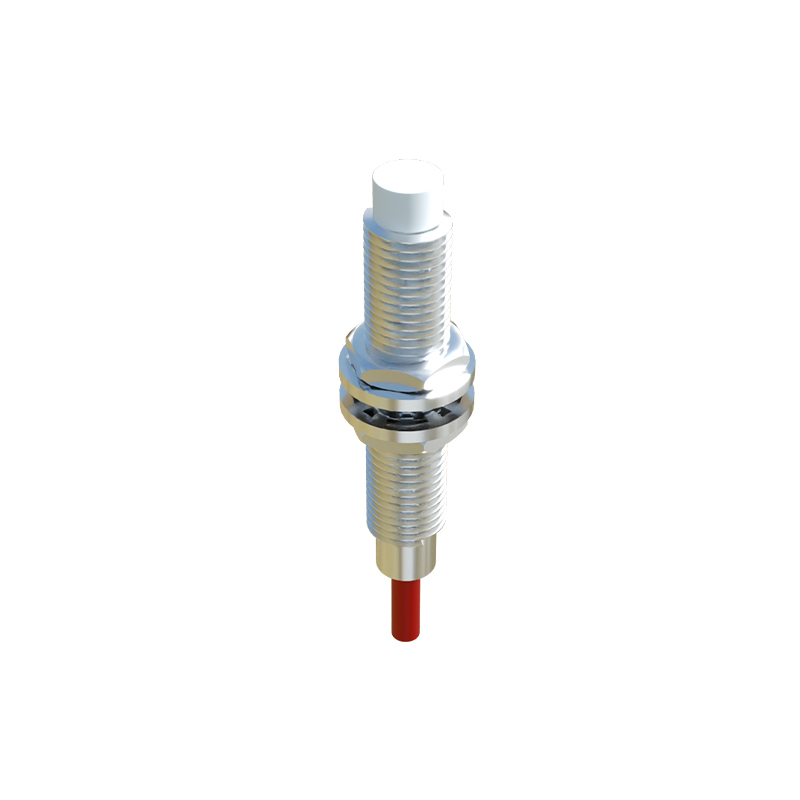
Capacitive sensors offer a much broader detection capability. They can detect virtually any material—metals, plastics, glass, wood, liquids, and even granular substances. The principle involves changes in capacitance. The sensor face and the target act as two plates of a capacitor. The sensor generates an electrostatic field. When any material with a different dielectric constant than air enters this field, it alters the capacitance of the system. The sensor's circuit detects this change and switches its output state. The sensitivity can often be adjusted, allowing the sensor to ignore certain materials (like a container wall) and detect the material inside (like a liquid level). This makes them perfect for level detection of liquids, powders, or granules in tanks, presence detection of non-metallic objects (e.g., glass bottles, wood panels), and touch-sensitive interfaces.
Ultrasonic Proximity Sensors
Ultrasonic sensors utilize sound waves beyond the human hearing range (typically above 20 kHz). They operate on the time-of-flight principle. The sensor emits a burst of ultrasonic pulses and then listens for the echo. An internal timer measures the time interval between the emitted pulse and the received echo. Since the speed of sound in air is known, the distance to the target can be calculated with high accuracy. These sensors are excellent for detecting objects regardless of their color, transparency, or material, as long as the surface is sufficiently sound-reflective. They are suitable for longer-range detection compared to inductive or capacitive sensors and can handle challenging conditions like detecting clear glass or liquid levels in opaque containers. Applications include distance measurement, object detection on packaging lines, and level monitoring in bulk material silos.
Photoelectric Proximity Sensors
Photoelectric sensors use light beams to detect objects. They consist of a light emitter (usually an LED producing visible red, infrared, or laser light) and a receiver. There are three main operating modes relevant to proximity detection: Through-beam, Retro-reflective, and Diffuse (proximity) mode. The Diffuse mode, or proximity mode, is most common for straightforward presence detection. Here, the emitter and receiver are housed in the same unit. The sensor emits a light beam, and the target reflects a portion of this light back to the receiver. Detection occurs when the reflected light intensity exceeds a set threshold. These sensors offer the longest sensing ranges and can detect small objects with high precision. They are versatile but can be affected by environmental factors like ambient light, dust, fog, or the color and reflectivity of the target. They are widely used in packaging, material handling, and safety systems like door entrapment prevention.
Magnetic Proximity Sensors (Reed Switches/Hall Effect)
These sensors detect the presence of a magnetic field, typically from a permanent magnet attached to the moving target. Reed switches contain two ferromagnetic reeds sealed in a glass tube. When a magnet approaches, the reeds are magnetized and attract each other, closing the electrical contact. Hall Effect sensors are solid-state devices that produce a voltage output when exposed to a magnetic field. Both types are completely non-contact regarding the sensed object (the magnet). They are extremely reliable for detecting the position of moving parts in clean environments, such as in cylinder position feedback, door/window open-close detection in security systems, and speed sensing in automotive applications.
Choosing the Right Detection Method
Selecting the optimal sensor requires a careful analysis of the application parameters:
Target Material: Metal (inductive), any material (capacitive/