In the realm of industrial automation, robotics, and advanced measurement systems, the reliable transmission of data from laser sensors is a critical technological cornerstone. Laser sensors, which utilize focused light beams to detect presence, measure distance, gauge dimensions, or profile surfaces, generate vast amounts of precise information. The journey of this data from the sensor head to a control system or data processor involves sophisticated transmission mechanisms that ensure speed, accuracy, and integrity.
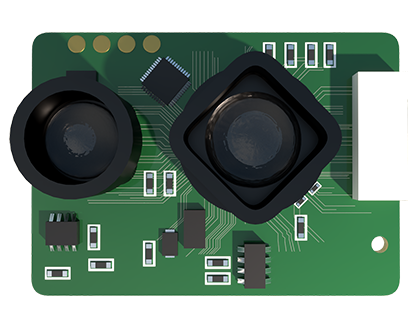
The fundamental principle begins with the sensor itself. A typical laser distance sensor, for example, emits a modulated laser beam towards a target. The reflected light is captured, and the sensor's internal processor calculates parameters like time-of-flight or phase shift to determine distance. This raw measurement is converted into a digital or analog electrical signal. This signal is the payload that must be transmitted. For simple on/off detection (like a laser photoelectric sensor), the output might be a basic switch signal. For complex profiling sensors, the output is a high-speed digital data stream containing thousands of data points per second.
The choice of transmission protocol and medium is paramount and depends on factors such as required speed, distance, environmental noise, and system architecture. Traditional analog voltage or current signals (e.g., 0-10V, 4-20mA) are still widely used for transmitting a single, continuous value, like a distance measurement. They are relatively noise-resistant over short to medium distances and easily interfaced with programmable logic controllers (PLCs). However, they are susceptible to signal degradation over long cables and cannot convey complex, multi-parameter data sets.

For modern, high-performance applications, digital serial communication protocols dominate. RS-232, while older, is common for short-range, point-to-point connections between a sensor and a computer. RS-422 and RS-485 offer greater robustness, longer transmission distances (up to 1200 meters), and multi-drop capabilities, allowing several sensors to communicate on a single bus network. This is highly efficient in factory automation setups with numerous sensor nodes.
The advent of industrial Ethernet protocols has revolutionized laser sensor data transmission. Protocols like EtherNet/IP, PROFINET, and EtherCAT offer blistering speeds, deterministic real-time performance, and seamless integration into larger Industrial Internet of Things (IIoT) infrastructures. Using standard Ethernet cables, these protocols can handle the high-bandwidth demands of 3D laser scanners or vision sensors, transmitting not just a value but entire point clouds or images with precise timestamping. They also enable two-way communication, allowing for remote configuration, diagnostics, and firmware updates of the sensor itself.

Wireless transmission is an increasingly viable option, especially for mobile robotics, remote monitoring, or applications where cabling is impractical. Technologies like Wi-Fi (IEEE 802.11), Bluetooth, and specialized industrial wireless standards (e.g., WirelessHART) transmit digitized sensor data over the air. While offering unparalleled flexibility, engineers must carefully consider potential challenges such as latency, data packet loss, signal interference, and power consumption for battery-operated sensors. Robust encryption is also essential for security.
Beyond the physical and protocol layers, data packaging is crucial. Manufacturers often define specific command sets and data frame structures. A data packet might include a header (with sensor ID), the actual measurement values, status information (e.g., signal strength, error flags), and a checksum for error detection. Adherence to open standards like IO-Link, a point-to-point serial communication protocol for sensors and actuators, simplifies this process. IO-Link adds a digital communication channel to traditional sensor wiring, enabling the transmission of detailed process data, device parameters, and diagnostic events from a laser sensor directly to the master controller.
The ultimate destination of the data dictates the transmission requirements. In a high-speed sorting system, data must travel with ultra-low latency to a real-time controller to make instant accept/reject decisions. For quality assurance logging, data might be bundled and sent to a database server for analysis and traceability. In autonomous vehicles, LiDAR (Light Detection and Ranging) sensors generate gigabytes of data per second, requiring onboard, high-speed data buses like Automotive Ethernet to feed perception algorithms without bottleneck.
In conclusion, transmitting data from laser sensors is far more than running a cable. It is a deliberate engineering decision involving the selection of an appropriate interface that balances speed, distance, noise immunity, and network topology. From the simplicity of a 4-20mA loop to the complexity of a real-time Ethernet network carrying 3D point clouds, the transmission pathway ensures that the precision captured by the laser light is faithfully delivered to where it creates value: in control, analysis, and decision-making systems that drive modern automation forward.