In the world of automation and smart technology, the ability to detect the presence or absence of an object without physical contact is fundamental. This capability is provided by proximity sensors, devices that have become ubiquitous in industrial, consumer, and automotive applications. A proximity sensor is an electronic sensor that can detect the presence of nearby objects without any physical contact. It often emits an electromagnetic field or a beam of electromagnetic radiation and looks for changes in the field or return signal. The object being sensed is often referred to as the proximity sensor's target.
The core principle behind most proximity sensors involves generating an electromagnetic field. When a target enters this field, it causes a detectable change—such as a change in oscillation amplitude, capacitance, or magnetic flux—which is then converted into an electrical signal by the sensor's circuitry. This signal triggers an output, signaling the object's presence. The key advantage is the complete lack of mechanical contact, leading to longer service life, higher reliability, and the ability to detect fragile or easily marred objects.
Several primary types of proximity sensors dominate the market, each with distinct operating principles and ideal use cases. Inductive proximity sensors are among the most common. They generate an oscillating electromagnetic field and detect the eddy current losses caused when a conductive metal target enters the field. They are robust, reliable, and exclusively used for detecting metallic objects, making them perfect for machine automation, position sensing, and metal detection in harsh industrial environments.
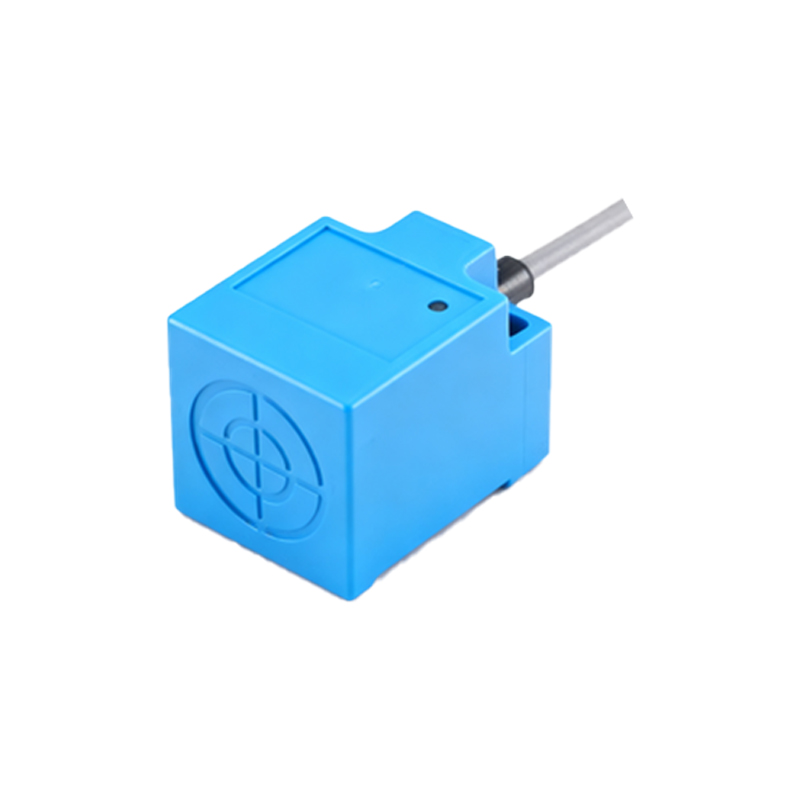
Capacitive proximity sensors, on the other hand, can detect both metallic and non-metallic targets, including liquids, powders, and plastics. They work by generating an electrostatic field and sensing the change in capacitance when a target with a different dielectric constant enters the field. This makes them versatile for applications like liquid level detection, material handling, and touch-sensitive interfaces.
Magnetic proximity sensors, often called reed switches or Hall-effect sensors, detect the presence of a permanent magnet. They are simple, cost-effective, and used extensively for door and window position sensing in security systems, and for detecting the position of cylinders in pneumatic systems. Photoelectric sensors, while sometimes categorized separately, function as proximity devices by using a light beam (visible, infrared, or laser). They detect an object by either the interruption of the beam (through-beam) or the reflection of the beam (reflective and diffuse modes). They offer the longest sensing ranges and can detect virtually any material.
Ultrasonic proximity sensors measure the time it takes for a high-frequency sound wave to reflect off a target and return. They are excellent for detecting objects regardless of color, transparency, or material, and are commonly used for distance measurement, level sensing in tanks, and obstacle detection in robotics and vehicles.
The applications of proximity sensors are vast and growing. In manufacturing, they are the eyes of assembly lines, used for part counting, jam detection, and precise positioning. In the automotive sector, they enable parking assist systems, collision avoidance, and activation of interior lights. In consumer electronics, they deactivate smartphone touchscreens during calls to save power and prevent accidental touches. They are also critical in aerospace, food and beverage processing, and pharmaceutical packaging.
Selecting the right proximity sensor requires careful consideration of several factors. The nature of the target material (metal, plastic, liquid) is the first determinant, pointing towards inductive or capacitive types. The required sensing distance, or range, is crucial; ultrasonic and photoelectric sensors typically offer the longest ranges. Environmental conditions such as temperature extremes, presence of dust, oil, or water (requiring specific IP ratings), and potential electrical interference must be accounted for. Finally, the output type needed—such as a simple digital switch (PNP/NPN), analog signal (4-20mA, 0-10V), or a specific communication protocol—must match the control system's input requirements.
Installation and maintenance are generally straightforward. Proper mounting, ensuring the correct orientation and avoiding sensor-to-sensor interference, is key to reliable operation. Most modern sensors feature LED indicators for diagnostics, showing power status and output activation. Regular cleaning of the sensing face to remove contaminants like dust or metal shavings is often the only maintenance required.
As technology advances, proximity sensors are becoming smarter, smaller, and more integrated. The integration of IO-Link communication allows for detailed parameter setting, real-time diagnostics, and process data monitoring directly from the sensor, facilitating predictive maintenance and Industry 4.0 initiatives. The development of miniaturized sensors continues to open new applications in wearable devices and compact machinery.
In conclusion, proximity sensors are indispensable components in modern electronic systems. Their non-contact nature provides a reliable and durable solution for object detection across countless industries. Understanding the different types, their operating principles, and key selection criteria is essential for engineers, technicians, and designers to implement effective and efficient sensing solutions, driving automation and innovation forward.
SEO关键词