In the realm of precision measurement and industrial automation, the high-speed laser distance sensor stands as a pivotal technology, enabling rapid, accurate, and non-contact data acquisition. Unlike conventional measurement tools, these sensors utilize the principle of time-of-flight (ToF) or phase-shift measurement with laser light to determine distance. A laser diode emits a focused beam of light towards a target. The sensor then precisely measures the time it takes for the reflected light to return to a detector. Given the constant speed of light, this time interval is directly proportional to the distance between the sensor and the target. Advanced signal processing algorithms convert this raw time data into highly accurate distance readings.
The defining characteristic of these sensors is their exceptional speed. Modern high-speed variants can perform tens of thousands, or even hundreds of thousands, of measurements per second. This capability is not merely about taking many measurements; it is about capturing dynamic processes in real-time. For instance, in manufacturing, a product moving on a conveyor belt at several meters per second can have its dimensions, position, or profile monitored continuously without any physical contact, eliminating wear and tear and allowing for 100% inline inspection.
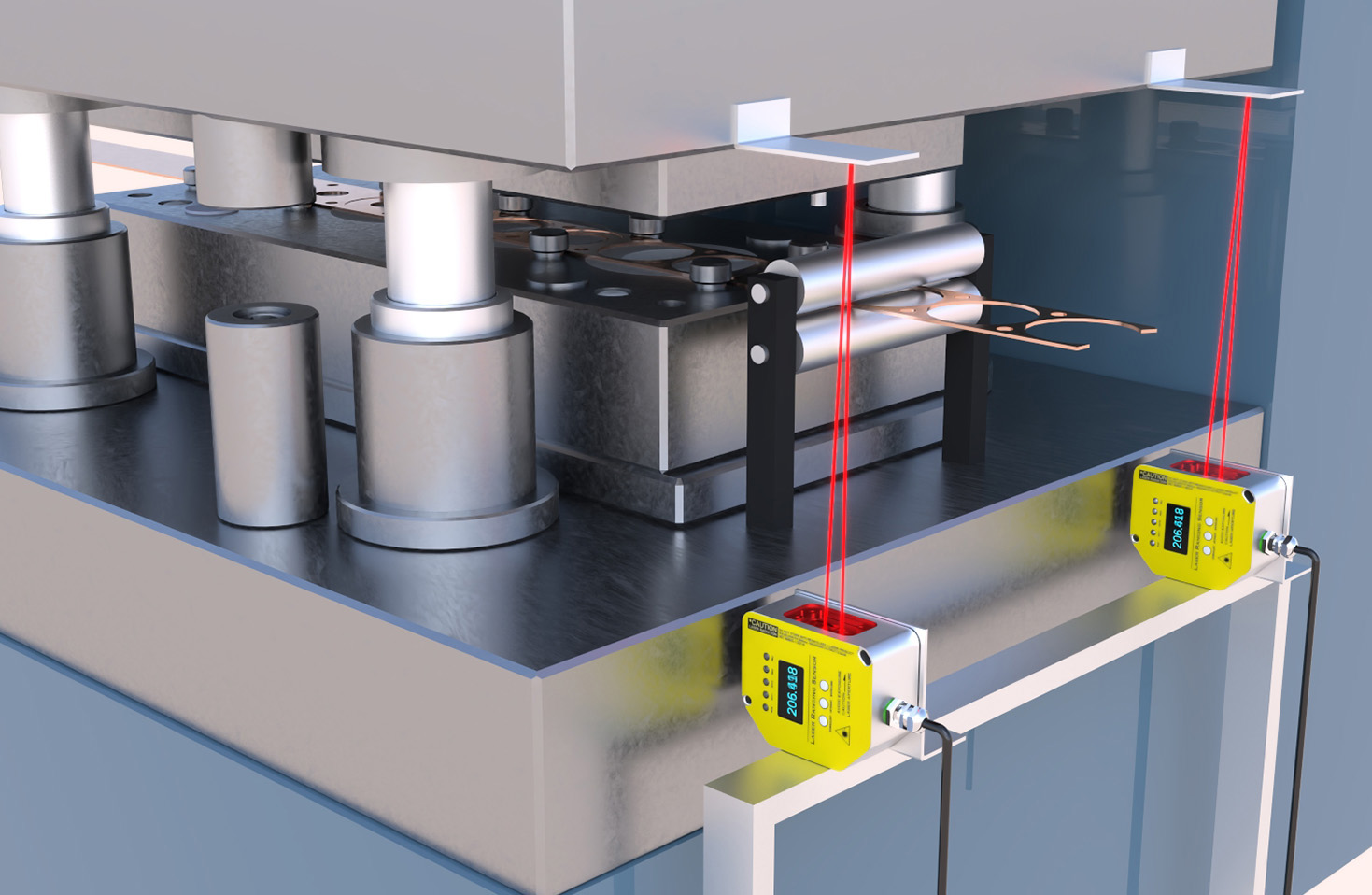
The applications for high-speed laser distance sensors are vast and transformative across multiple sectors. In industrial automation, they are indispensable for robotics, providing real-time feedback for precise positioning, pick-and-place operations, and robotic guidance. They ensure quality control by measuring thickness, width, height, and detecting surface defects on products ranging from semiconductor wafers to food packaging. In the automotive industry, they are used for body-in-white gap and flush measurement, wheel alignment, and crash test analysis.
Beyond the factory floor, these sensors play a critical role in logistics and warehousing for volume measurement of parcels and pallets, optimizing storage space and shipping costs. In research and development, they facilitate vibration analysis, deformation monitoring, and high-speed profiling of objects. Emerging fields like autonomous vehicles rely on LiDAR (Light Detection and Ranging), a sophisticated array of laser distance sensors, to create real-time 3D maps of the environment for navigation and obstacle avoidance.

Selecting the appropriate high-speed laser sensor requires careful consideration of several key parameters. Measurement range defines the minimum and maximum distances the sensor can reliably handle. The measuring rate, often listed in Hertz (Hz), dictates how many readings are taken per second—a higher rate is crucial for fast-moving targets. Accuracy and resolution determine the smallest detectable change in distance, which is vital for precision tasks. The type of target surface also matters; while most sensors work well on diffuse surfaces, specialized models are needed for transparent, shiny, or dark materials. Environmental factors like ambient light, dust, and temperature must be accounted for, with many industrial sensors boasting robust IP ratings for protection.
The integration of these sensors into larger systems is facilitated by various digital and analog output interfaces, such as Ethernet, RS-422, or IO-Link, allowing seamless communication with PLCs (Programmable Logic Controllers) and data acquisition systems. This connectivity is the cornerstone of Industry 4.0, where sensor data feeds into centralized systems for analytics, predictive maintenance, and process optimization.
Looking ahead, the evolution of high-speed laser distance sensors points towards even higher measurement frequencies, improved accuracy in challenging conditions, miniaturization, and lower costs. The convergence with artificial intelligence for data interpretation will unlock new predictive and adaptive capabilities. As industries strive for greater efficiency, quality, and automation, the demand for these powerful, fast, and reliable measurement tools will only continue to accelerate, solidifying their role as a fundamental component in the technology-driven landscape of modern engineering and manufacturing.