In today's fast-paced industrial and technological landscape, off-the-shelf components often fall short of addressing specific operational challenges. This is particularly true for proximity sensors, the silent workhorses of automation, safety systems, and countless smart devices. Custom proximity sensor development emerges not as a luxury, but as a strategic necessity for businesses seeking precision, reliability, and a competitive edge.
The journey toward a custom sensor begins with a deep understanding of the application's unique demands. Standard sensors are designed for common scenarios, but real-world conditions are rarely ideal. Factors such as the target material, required sensing distance, environmental extremes, physical space constraints, and output signal requirements can render generic solutions ineffective. For instance, a sensor needed for detecting transparent glass bottles on a high-speed filling line has vastly different requirements than one monitoring the position of a metal component in a high-temperature forging press. Customization allows engineers to specify the exact sensing technology—whether inductive, capacitive, ultrasonic, or optical—optimized for the specific target and environment.
The core advantage of a bespoke solution lies in performance optimization. By tailoring the sensor's characteristics, manufacturers can achieve unparalleled accuracy and repeatability. This includes calibrating the exact switching distance, designing a housing that fits seamlessly into the mechanical assembly, and selecting materials that withstand specific chemical exposures, washdowns, or temperature cycles. Electrical integration is another critical facet. A custom project can define the perfect cable length, connector type, output format (e.g., NPN, PNP, analog, IO-Link), and supply voltage to plug directly into the existing control system, eliminating the need for adapters and reducing installation complexity.
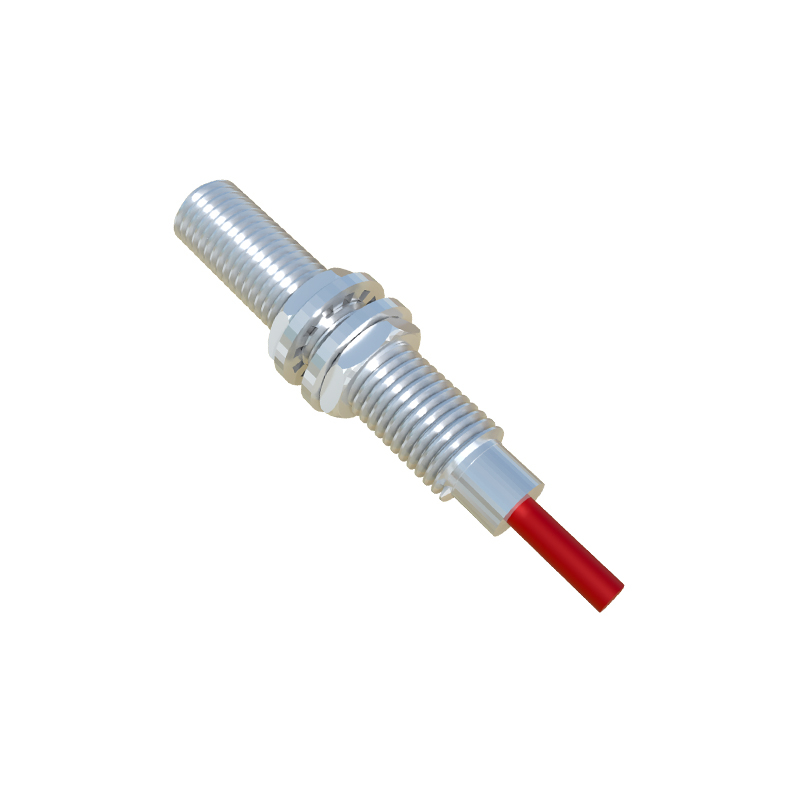
Beyond performance, durability and total cost of ownership are paramount. A sensor built for its environment from the ground up will inherently have a longer service life than a standard unit forced into an unsuitable role. This reduces unplanned downtime, maintenance costs, and replacement frequency. While the initial unit cost of a custom design may be higher, the long-term savings in operational efficiency, reduced waste, and improved product quality often deliver a significantly higher return on investment. It transforms the sensor from a commodity component into a value-adding asset.
Collaboration with the right sensor manufacturer is the cornerstone of a successful custom project. A proficient partner will guide clients through a structured development process. This typically starts with a detailed consultation to capture all technical and application parameters. Prototyping follows, where initial designs are tested and refined in real or simulated conditions. Rigorous validation ensures the sensor meets all performance and reliability specifications before moving into production. A trusted manufacturer will also consider scalability, ensuring the design can be produced consistently at the required volumes.
The applications for custom proximity sensors are boundless. In automotive manufacturing, they enable precise robotic welding and part verification. In food and beverage processing, they use specialized hygienic designs for detection tasks. In renewable energy, robust sensors monitor turbine blade positions. Even consumer electronics, like smartphones and appliances, rely on miniaturized custom sensors for touchless interfaces and status detection.
Ultimately, opting for a custom proximity sensor is an investment in optimization. It addresses the limitations of standard products by providing a solution engineered for a singular purpose. In an era where efficiency and data accuracy are critical, a tailored sensor ensures that machines and systems perform not just adequately, but exceptionally. It closes the gap between what is available and what is truly needed, driving innovation and operational excellence across industries.