Laser photoelectric sensors represent a critical category within industrial automation and safety systems, utilizing a focused beam of light for precise detection. Unlike diffuse or retro-reflective sensors, the classic through-beam (or opposed) configuration involves separate transmitter and receiver units. The transmitter emits a continuous or modulated laser beam, which is then captured by the receiver positioned directly opposite. Any object interrupting this beam path triggers an output signal from the receiver. This fundamental principle underpins their exceptional reliability and accuracy.
The core advantages of laser sensors stem from their focused beam characteristics. The highly collimated light beam minimizes dispersion over distance, enabling reliable operation over long ranges—often tens of meters—far exceeding standard LED-based photoelectric sensors. This focused nature also provides superior resistance to environmental interference such as ambient light, dust, or steam, which can scatter broader beams. The small, precise spot size allows for the detection of minute objects or precise positioning at specific points, a key requirement in electronics assembly or precision manufacturing.
In practical application, laser through-beam sensors are indispensable across diverse sectors. In material handling and logistics, they are deployed for object detection on high-speed conveyor belts, pallet presence verification, and precise package counting. Their long-range capability makes them ideal for large-area monitoring, such as gate or door control in warehouses and security perimeters. Within automated machinery, they provide critical feedback for robot positioning, part verification before a machining operation, and detecting the breakage or absence of tiny components like drill bits or filaments. The safety industry heavily relies on certified safety laser scanners to create invisible protective fields around hazardous machinery, instantly halting operation when the beam is breached.
Selecting the appropriate laser photoelectric sensor requires careful consideration of several technical parameters. Operating range is paramount; ensure the sensor's specified maximum distance exceeds the actual installation gap. The size of the object to be detected must be larger than the laser spot diameter at that distance. Environmental conditions dictate the needed ingress protection (IP) rating—sealed housings (e.g., IP67) are necessary for washdown or outdoor applications. The choice of output type (PNP/NPN transistor, relay, analog) must match the control system's input requirements. For challenging environments with airborne particulates, models with modulated laser light and advanced signal processing can distinguish the true beam break from background noise.
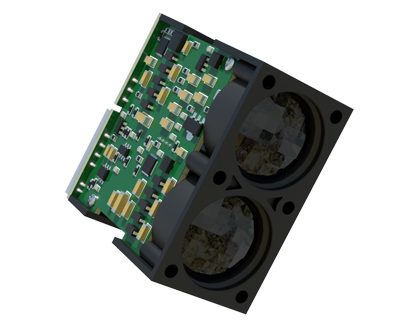
Installation and alignment, while straightforward in concept, demand attention. The units must be securely mounted to prevent vibration-induced misalignment. Many modern sensors incorporate visual or audible alignment aids, such as a visible red pilot beam or LED indicators that signal optimal reception strength. Proper alignment ensures maximum signal integrity. Regular maintenance involves keeping the lenses clean from obstructions like dirt or oil film, which can attenuate the beam.
Compared to alternative sensing technologies, laser through-beam sensors offer a unique balance. They provide higher precision and longer range than ultrasonic sensors, which can be affected by temperature and soft materials. While contrast or color sensors analyze surface properties, laser beams simply detect presence or absence, offering robust simplicity. The primary consideration is the need for two mounting points and precise alignment, which can be more complex than installing a single diffuse sensor.
Future trends point towards increased integration and intelligence. Sensors with IO-Link or other industrial communication protocols facilitate remote configuration, diagnostics, and parameter tuning, reducing downtime. Miniaturization continues, enabling installation in tighter spaces. Enhanced algorithms are improving stability in the presence of heavy contamination or intense ambient light fluctuations.

In conclusion, laser photoelectric sensors are a powerful and versatile solution for demanding detection tasks where accuracy, range, and reliability are non-negotiable. By understanding their operating principle, recognizing their ideal application scenarios, and following a structured selection process based on range, environment, and output needs, engineers and technicians can effectively leverage this technology to enhance system performance, safety, and automation efficiency.
