Introduction to Reflective Photoelectric Sensors
Reflective photoelectric sensors are widely used in industrial automation for object detection, positioning, and counting. Unlike through-beam sensors, they integrate both the emitter and receiver in a single housing, relying on reflected light from the target. Understanding their key parameters is crucial for reliable system design and performance optimization.
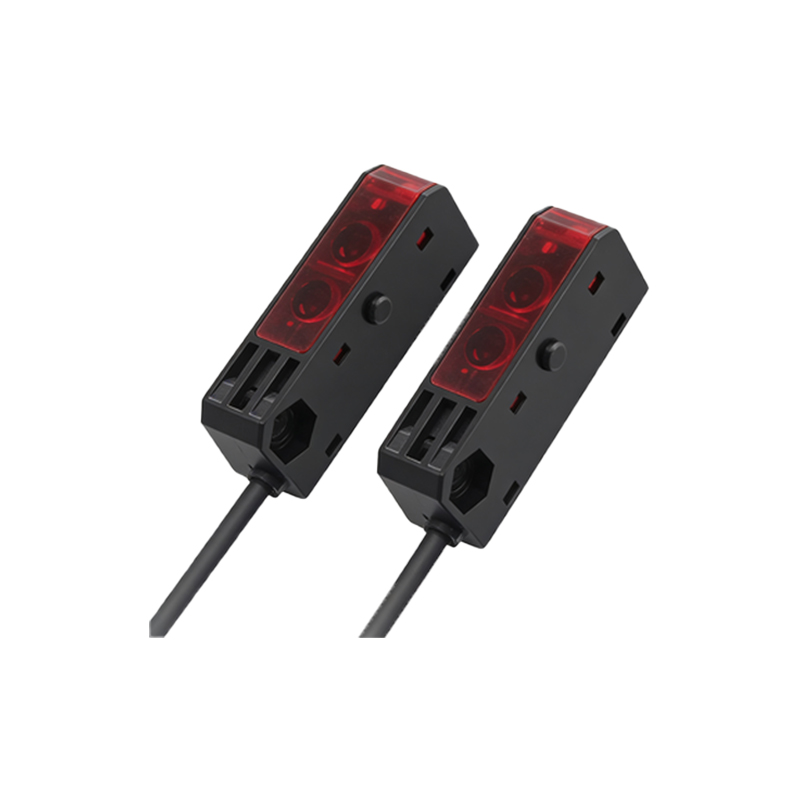
Detection Range and Distance
The detection range defines the maximum distance at which the sensor can reliably detect a target. For reflective sensors, this depends on the reflectivity of the target surface, the ambient light conditions, and the sensor’s optical design. Common ranges vary from a few centimeters to several meters. Engineers must consider the target material (e.g., shiny metals vs. matte plastics) because reflectivity directly affects effective range. Always check the datasheet for specified range under standard conditions.
Response Time and Switching Frequency
Response time is the delay between target detection and output signal change. In high-speed applications like conveyor belt sorting, fast response times (e.g., 1 ms or less) are critical. Switching frequency indicates how many times per second the sensor can reliably detect and output a signal. For sensors with a response time of 0.5 ms, the switching frequency is typically around 1 kHz. These parameters impact system throughput and must align with the PLC or controller’s scan cycle.
Output Type and Electrical Specifications
Common output types include NPN (sinking), PNP (sourcing), and push-pull configurations. Voltage ratings typically range from 10 to 30 VDC, though some sensors support 24 VAC. Current sinking capacity is also important; typical values are 100 mA to 200 mA. Engineers should match the output type to the input requirements of the controller to avoid signal mismatch. Additionally, short-circuit protection and reverse polarity protection are essential for industrial robustness.
Environmental Protection and IP Rating
IP rating (e.g., IP67 or IP69K) indicates resistance to dust and water ingress. For sensors used in washdown environments or harsh industrial settings, an IP69K rating ensures protection against high-pressure steam cleaning. Temperature range is another key factor; most sensors operate from -25°C to +55°C, but specialized models can extend to -40°C to +70°C. These specifications ensure long-term reliability in challenging conditions.
Light Source and Wavelength
Reflective sensors use various light sources, such as red LED (660 nm), infrared (850 nm or 940 nm), or laser. Red light is common for general applications, while infrared suits longer ranges or dusty environments. Lasers offer precise detection for small targets but require careful alignment. The wavelength also influences immunity to ambient light: sensors with modulated light (e.g., pulse-coded) reduce false triggers from sunlight or artificial lighting.
Adjustability and Sensitivity Settings
Many reflective sensors include a potentiometer or digital interface for adjusting sensitivity, detection distance, or hysteresis. This allows fine-tuning for specific target shapes, colors, or backgrounds. For example, in a dark target scenario, increasing sensitivity may help, but it also raises the risk of false detection from stray reflections. Engineers should calibrate sensors during installation to optimize performance without sacrificing stability.
Conclusion and Selection Criteria
Selecting the right reflective photoelectric sensor involves balancing range, response time, output compatibility, and environmental resilience. Always review the datasheet for detailed parameters like beam angle (e.g., 3° to 10°) and background rejection capability. For critical applications, consider models with teach-in functions or IO-Link communication for remote configuration. Proper parameter understanding ensures minimal downtime and accurate detection in automated systems.