In the world of industrial automation and machine safety, the ability to detect the presence or absence of an object without physical contact is paramount. Among the various technologies that enable this, the permanent magnet proximity sensor stands out for its simplicity, reliability, and robustness. This device, a fundamental component in countless systems, operates on a straightforward yet powerful principle, making it a preferred choice in environments where other sensors might fail.
At its core, a permanent magnet proximity sensor consists of two primary elements: a permanent magnet and a magnetically sensitive switch, most commonly a reed switch or a Hall-effect sensor. The permanent magnet generates a constant magnetic field. The switch is housed in a separate, often sealed, unit. When the magnet is brought within a specific range—the sensing distance—of this switch, the magnetic field actuates it. For a reed switch, the magnetic flux causes the ferromagnetic reeds inside the hermetically sealed glass capsule to flex and make contact, closing an electrical circuit. In the case of a Hall-effect sensor, the magnetic field generates a voltage difference across a conductor, which is then processed by integrated electronics to produce a clean switching signal. When the magnet moves away, the magnetic field strength drops below the threshold, and the switch returns to its original state, opening the circuit.
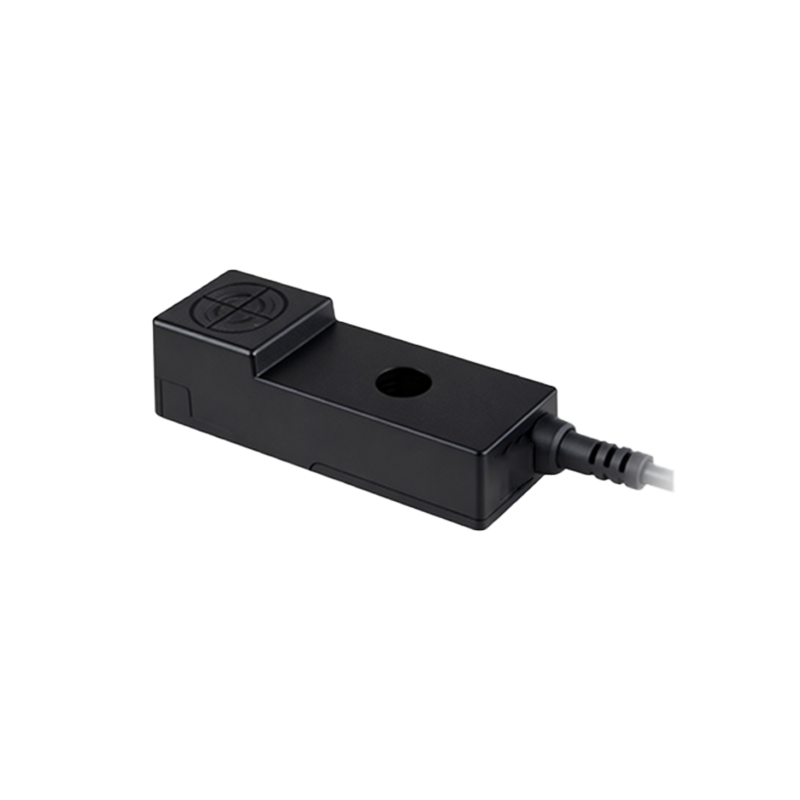
This non-contact detection mechanism is the source of the sensor's significant advantages. First and foremost is exceptional durability. With no mechanical linkage or moving parts in the sensing head (especially with solid-state Hall-effect types), and with critical components often encapsulated, these sensors are immune to wear from repeated operation. They can easily handle millions, even billions, of cycles. This makes them ideal for applications involving frequent or continuous motion. Furthermore, their operation is unaffected by environmental contaminants such as dust, dirt, oil, grease, and moisture, provided the housing integrity is maintained. They perform consistently in dirty, wet, or washdown conditions where optical sensors might be blinded or inductive sensors could be affected by conductive debris.
Another key benefit is insensitivity to the target material. Unlike inductive proximity sensors, which require a conductive metal target, or capacitive sensors, which detect materials based on dielectric constant, a permanent magnet sensor responds only to the magnetic field of its paired magnet. The object being detected is typically a moving part of a machine that has the magnet attached to it. This means the sensing performance is consistent regardless of the material (plastic, aluminum, stainless steel, etc.) of the object carrying the magnet, as long as the material is not ferromagnetic enough to shield or distort the magnetic field significantly.
The applications for permanent magnet proximity sensors are vast and varied. A classic and critical use is in cylinder position sensing. A magnet is embedded in the piston of a pneumatic or hydraulic cylinder. Sensors mounted on the cylinder's external body detect when the piston (and thus the magnet) reaches the end of its stroke, providing precise feedback for machine control sequences. They are ubiquitous in automotive systems, detecting the position of gear selectors, brake pedals, and doors. In the realm of safety, they form the basis of many door and guard interlock systems; a magnet on a hinged or sliding safety guard and a sensor on the frame ensure the machine cannot operate unless the guard is securely closed. They are also found in white goods (like detecting washing machine lid position), agricultural machinery, and even in simple consumer products like laptop lid switches.
When selecting and implementing these sensors, several factors require consideration. The sensing distance, typically ranging from a few millimeters to several tens of millimeters, must be chosen with a safety margin to account for mechanical tolerances and potential misalignment. The choice between a reed switch and a Hall-effect version is important. Reed switches are generally simpler and can switch higher loads directly but may be slower and susceptible to contact bounce. Hall-effect sensors are solid-state, faster, offer bounce-free switching, and can provide more sophisticated output signals (e.g., analog or PWM), but usually require a power supply and have lower direct switching current. The physical housing and electrical connection (e.g., M8, M12 connectors, or cable outlets) must suit the installation environment, with options available for high-temperature, high-pressure, or corrosive conditions.
Installation is relatively straightforward but demands attention to detail. The sensor and magnet must be aligned correctly, usually facing each other axially or laterally depending on the model. The use of non-ferromagnetic mounting hardware (like stainless steel or brass) is crucial to prevent magnetic field interference. Designers must also consider the potential influence of stray magnetic fields from other equipment, such as large motors or transformers, which could cause false triggering if the sensor is not adequately shielded or positioned.
In summary, the permanent magnet proximity sensor is a testament to elegant engineering. By harnessing a fundamental force of nature through a simple pair of components, it provides a highly reliable, maintenance