In the world of industrial automation, precision measurement, and robotics, laser sensors are indispensable tools. They offer non-contact, high-accuracy detection and measurement capabilities critical for quality control, positioning, and safety applications. A common and crucial question for engineers, system integrators, and procurement specialists is: "Which brand of laser sensor is the best?" The truth is, there is no single "best" brand universally. The optimal choice depends entirely on your specific application requirements, environmental conditions, and budget. This guide will explore leading brands in the market and the key factors to consider for making an informed decision.
The laser sensor market is populated by several established manufacturers, each with its own strengths and specializations. Here is an overview of some prominent players:
Keyence is often the first name that comes to mind for high-performance sensors. The Japanese company is renowned for its innovative technology, exceptional precision, and user-friendly interfaces. Their laser displacement sensors and micrometers are industry benchmarks for accuracy and stability in demanding environments like semiconductor manufacturing and precision assembly. However, this premium performance typically comes with a higher price tag.
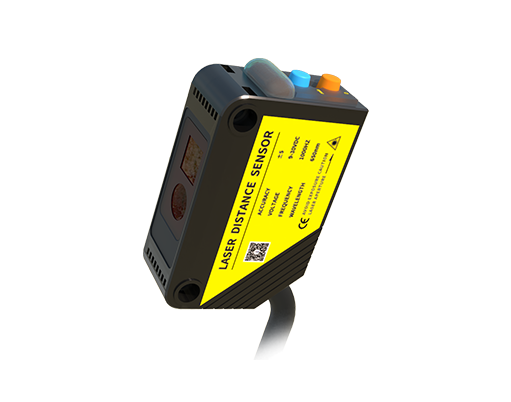
Omron, another Japanese powerhouse, offers a vast portfolio of reliable and robust laser sensors. They excel in providing versatile solutions for factory automation, including diffuse-reflective, through-beam, and distance measurement sensors. Omron products are known for their durability, ease of integration, and strong global support network, making them a trusted choice for a wide range of standard industrial applications.

SICK AG, a German leader in sensor technology, is synonymous with robustness and reliability, especially in harsh industrial settings. Their laser sensors are designed to withstand extreme temperatures, vibrations, and contaminants. SICK is particularly strong in logistics, material handling, and outdoor applications, offering specialized sensors for distance measurement, contour detection, and safety-related tasks.
Banner Engineering, an American company, is highly regarded for providing excellent value and innovative designs. They offer a comprehensive range of laser sensors that balance performance with cost-effectiveness. Banner sensors are known for their compact sizes, advanced features like precise background suppression, and intuitive setup tools, making them popular for packaging, material handling, and general manufacturing.
Panasonic offers a solid range of laser sensors that are competitive in both performance and price. Their sensors are known for good reliability and are commonly used in electronics assembly, automotive, and general industrial automation. They provide a dependable option for many standard sensing tasks.
Beyond brand reputation, selecting the right laser sensor requires a deep dive into your application's technical specifications. The "best" sensor is the one that meets these core parameters:
1. Measurement Principle & Type: Identify whether you need a through-beam (for reliable detection over long distances), diffuse reflective (for detecting objects regardless of color or material), or a precise displacement sensor (for measuring exact distance or height).
2. Range & Spot Size: The sensing distance and the size of the laser spot are critical. A long-range sensor with a small spot is needed for precise measurements on small features, while a larger spot may be better for detecting uneven surfaces.
3. Accuracy, Resolution, and Repeatability: These define the sensor's precision. High-accuracy applications in metrology demand sensors with micron-level resolution, while a counting application may prioritize high repeatability over absolute accuracy.
4. Response Time & Sampling Rate: For high-speed production lines or dynamic measurements, a fast response time and high sampling rate are essential to capture data without lag.
5. Environmental Robustness: Consider factors like ambient light immunity, IP rating for dust/water resistance, temperature range, and resistance to vibrations. Brands like SICK often excel here.
6. Output & Connectivity: Ensure the sensor's output (analog, digital, IO-Link, Ethernet) is compatible with your PLC or control system. Modern sensors with IO-Link offer advanced parameterization and diagnostics.
7. Ease of Use & Software: A user-friendly setup interface, whether via teach buttons, built-in displays, or PC software, can significantly reduce commissioning time and errors.
For research and development or ultra-high-precision laboratory environments, brands like Micro-Epsilon (known for exceptional accuracy in displacement sensing) or MTI Instruments might be the "best" despite a niche focus.
In conclusion, declaring one brand as the absolute best is impractical. For unparalleled precision and cutting-edge features in controlled environments, Keyence is a top contender. For rugged reliability in challenging conditions, SICK is a premier choice. For a balance of performance, value, and versatility in general automation, Omron and Banner Engineering are excellent options. The most effective approach is to clearly define your technical requirements, operational environment, and budget constraints. Then, evaluate products from these leading brands against your specific criteria. Requesting samples for on-site testing is often the most reliable way to determine which brand's laser sensor performs best for your unique application, ensuring optimal performance and return on investment.