Proximity sensors are indispensable components in modern industrial automation, and among the various output configurations, PNP sensors hold a prominent place. This guide delves into the specifics of PNP-type proximity sensors, explaining their operation, key characteristics, and typical applications to help engineers and technicians make informed selection decisions.
At its core, a proximity sensor detects the presence or absence of an object without physical contact. It does this by emitting an electromagnetic field or a beam of electromagnetic radiation and looking for changes in the field or return signal. The output type—PNP or NPN—refers to the transistor switching technology used inside the sensor to control the output signal to the load (like a PLC input or a relay).
A PNP proximity sensor, often described as "sourcing" logic, is designed to switch the positive voltage supply to the load. In a standard wiring configuration for a DC sensor, the sensor has three wires: brown for positive supply voltage (e.g., +24V DC), blue for common negative (0V), and black for the output signal. When the sensor is inactive (no target detected), the black output wire is effectively disconnected. Upon detecting a valid target within its sensing range, the internal PNP transistor switches ON, connecting the black output wire to the positive supply voltage (brown wire). This action "sources" current from the sensor's output to the load. The load is connected between the sensor's black output wire and the common negative (blue wire). Therefore, when activated, the PNP sensor provides a positive signal to the load.
This is fundamentally different from an NPN sensor, which is a "sinking" device. An NPN sensor switches the negative or 0V line to the load. The choice between PNP and NPN is crucial and depends primarily on the input circuitry of the controller (PLC, DCS, etc.) it connects to. Many European and Asian-made controllers are designed to work with PNP-sourcing inputs, while NPN-sinking inputs are common in some other regions, though this is not a strict rule. Always consult the controller's manual. A simple way to remember is: PNP = Positive-switched, Positive signal on activation.
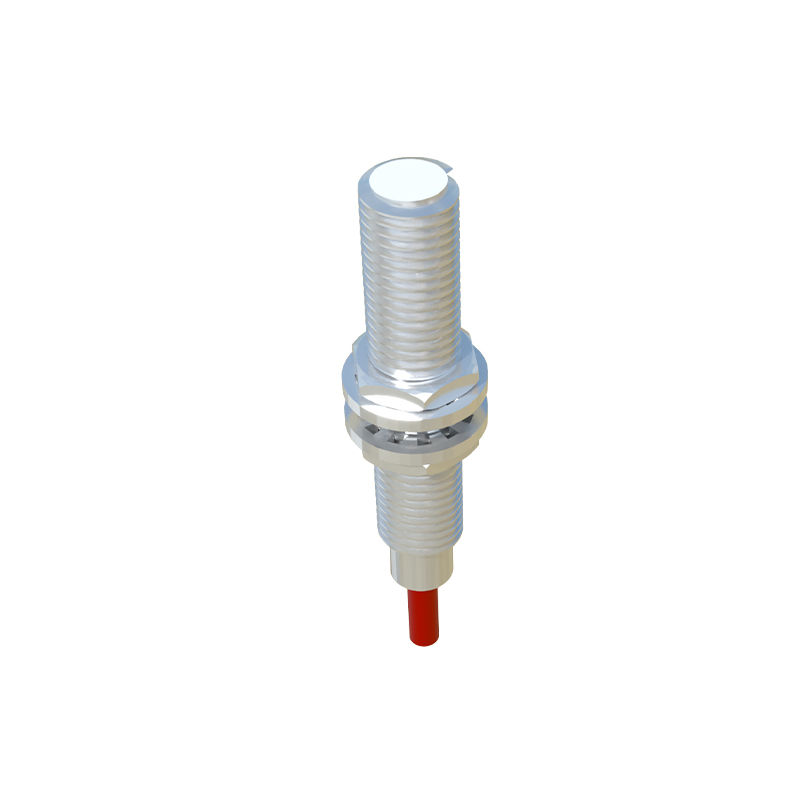
Key specifications for PNP proximity sensors include sensing distance, which is nominal and typically rated for a standard target material like mild steel. Factors like target size, shape, and material (e.g., aluminum, brass, stainless steel) affect the actual sensing range, often requiring a correction factor. The output current rating is critical; it must be sufficient to drive the connected load without damage. Most industrial PNP sensors are rated for 100mA to 200mA. Housing material, such as nickel-plated brass, stainless steel, or PBT plastic, is chosen based on the environmental conditions, including exposure to chemicals, washdowns, or physical impact.
PNP proximity sensors come in various sensing technologies. Inductive sensors are the most common for detecting metallic objects. Capacitive sensors can detect both metallic and non-metallic materials (liquids, plastics, wood) by sensing changes in capacitance. Ultrasonic sensors use sound waves to detect objects and measure distance, useful for challenging surfaces. Photoelectric sensors use light beams and are excellent for long-range detection of any object.
The advantages of PNP sensors are significant. Their sourcing nature often provides a more straightforward and intuitive wiring scheme for many common PLC input modules, which are designed to receive a positive voltage signal. They can offer better noise immunity in certain electrical environments. Furthermore, troubleshooting can be simpler, as a voltage measurement at the output wire (black) directly indicates the sensor's state: +V when active, ~0V when inactive.
In practical applications, PNP inductive sensors are ubiquitous on production lines for counting metal parts, detecting the position of a machine arm, or confirming the closure of a metal door. PNP capacitive sensors monitor fill levels in tanks containing liquids or granular materials. In automated packaging, PNP photoelectric sensors ensure a carton is in place before applying a label. The robustness and reliability of PNP sensors make them ideal for harsh environments like automotive manufacturing, food and beverage processing (with appropriate IP69K ratings), and material handling systems.
When installing a PNP sensor, ensure proper alignment with the target and maintain the recommended mounting clearances from metal surfaces to prevent false triggering. Always connect the wiring correctly, as reversing power leads can permanently damage the device. For applications involving multiple sensors or long cable runs, consider potential voltage drop, which might require a higher supply voltage at the source.
In summary, the PNP proximity sensor is a versatile, robust, and widely adopted solution for non-contact object detection in industrial settings. Its sourcing output logic aligns seamlessly with a vast array of control system inputs. Understanding its principle of operation, wiring methodology, and application considerations is essential for